
 Sign in
◫ Home & Objects · Tokyo
Why Mid-Century Furniture Matters Now: A Collector's Guide to Living With It
A practical guide to placing, choosing and keeping mid-century furniture, from the joinery tells that separate a Hans Wegner chair from a knockoff to the rooms where teak actually belongs.
 By Louis Trash·

The Chair That Started It All
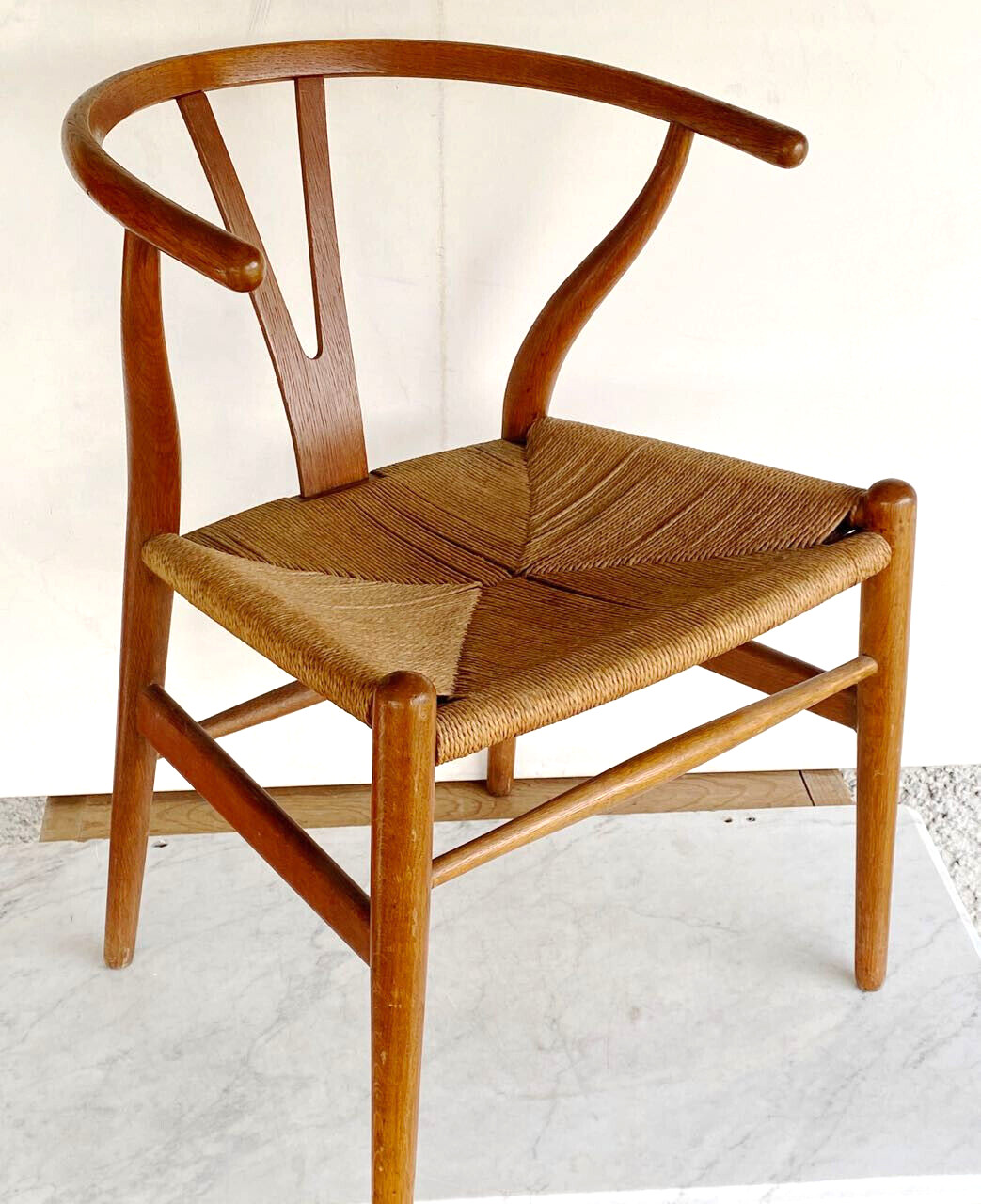
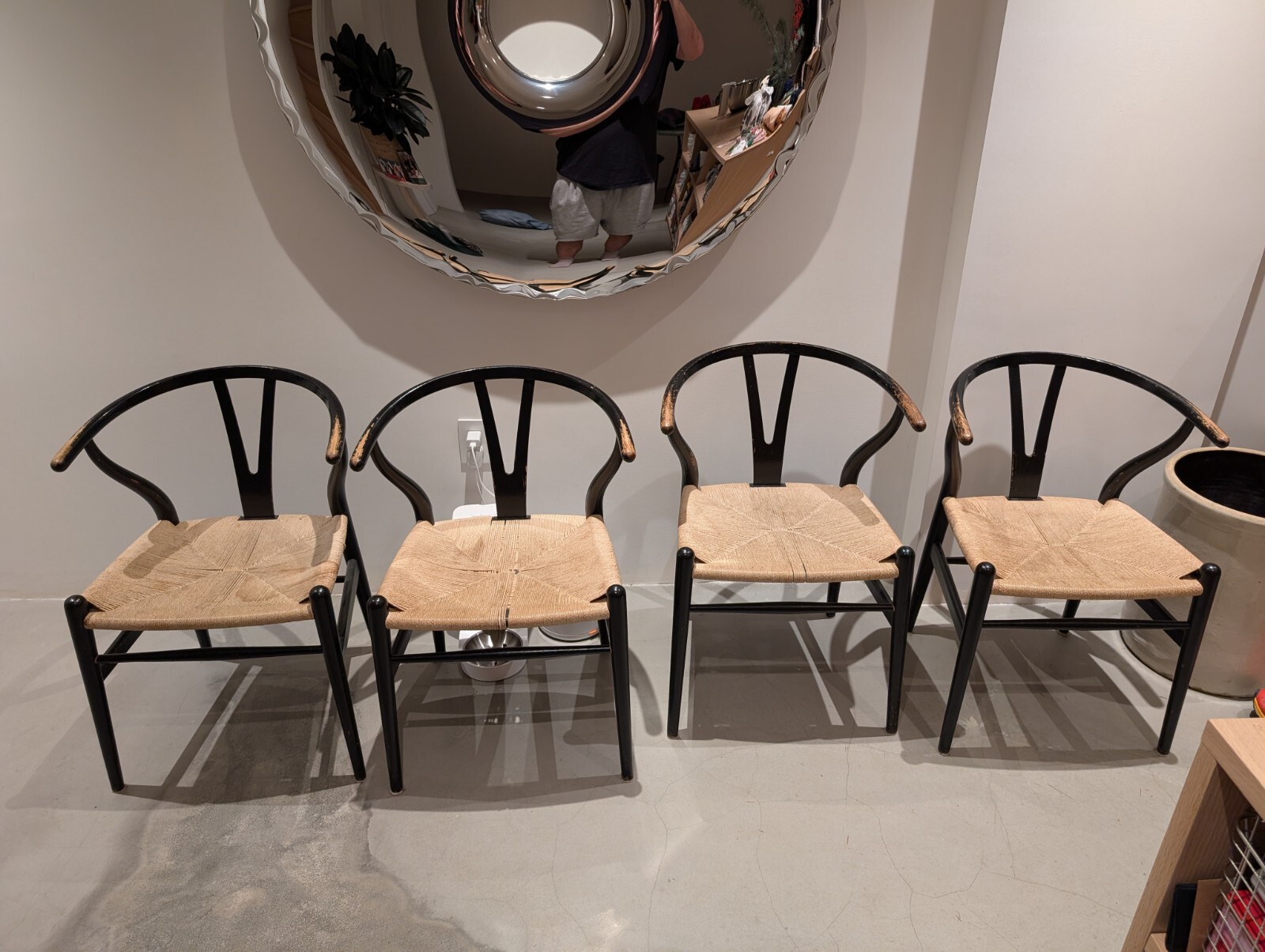
In 1949, Hans Wegner made a chair with no arms, a curved back and a seat woven from paper cord. He called it the Round Chair. Americans saw it two years later in a televised debate between Kennedy and Nixon, and suddenly everyone wanted one. The Danes had been making furniture like this for a decade by then, quietly, in small workshops outside Copenhagen. The world was late to the party.

That is the thing about mid-century furniture. Most of what people call an era was really a twenty-year run, roughly 1945 to 1965, with a long tail into the seventies. It came out of scarcity and good timber. Danish beech, walnut from America, teak from Thailand. Designers like Wegner, Arne Jacobsen, Eames, Bertoia and Florence Knoll were solving problems of comfort, weight and how many chairs you could fit in a small apartment. The look was a byproduct. That is why it still works in a room today.
Placing It Without Making a Shrine
A single piece does more than a matched set. This is the mistake I see most often. Someone buys six dining chairs and a sideboard from the same maker and the room turns into a showroom. Mid-century furniture is at its best when it sits next to something older or plainer. A 1958 teak sideboard under a Victorian mirror. A Poul Kjærholm steel chair near a pine table. The tension is the point.
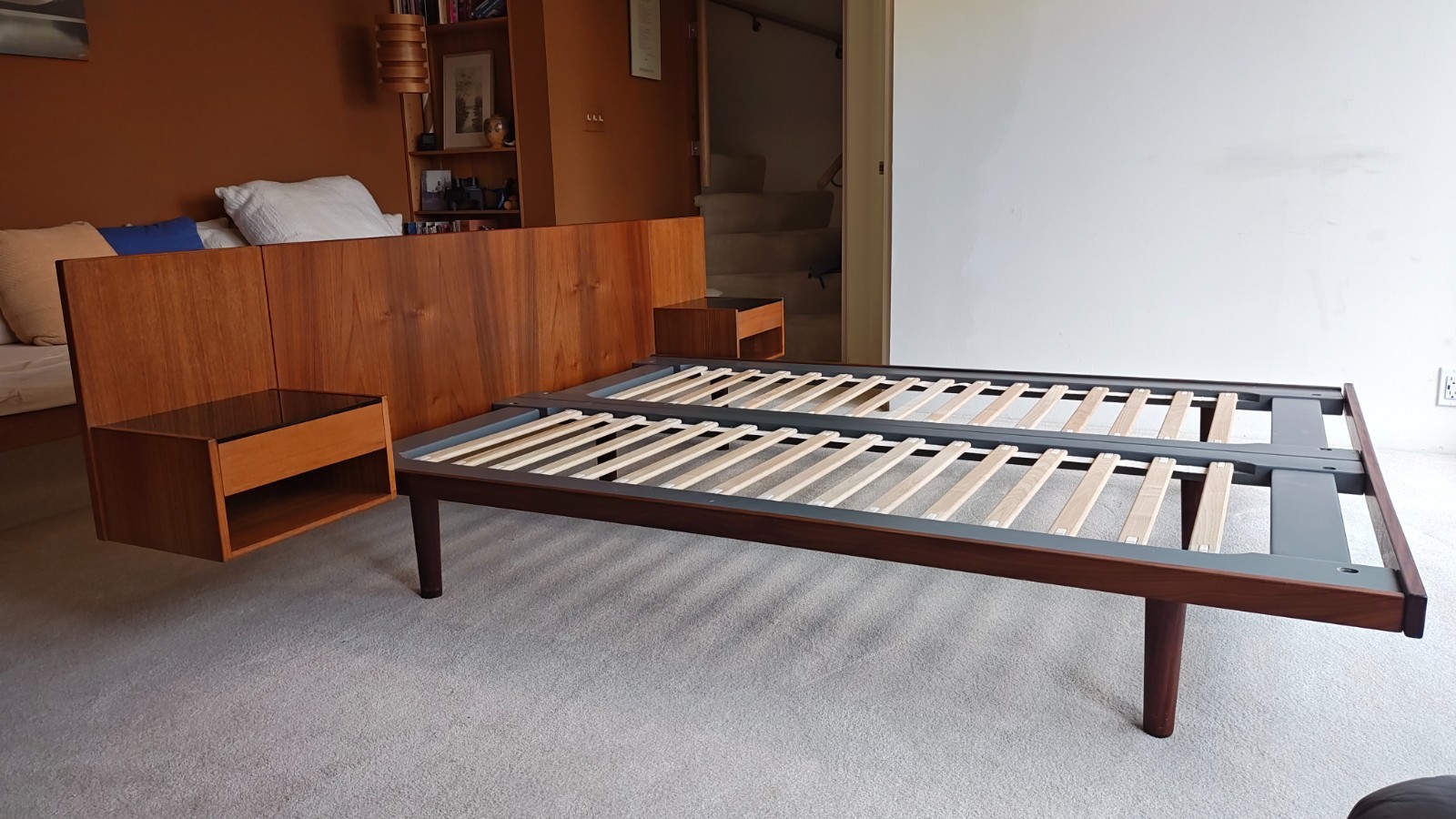
Proportions matter more than provenance. These pieces were designed low and long, often 28 to 30 inches at the back, which means they read smaller than they are. A sideboard that looks modest in a shop will anchor a whole wall at home. Measure your wall first. Leave 12 to 18 inches of breathing room on each side. If you are buying a lounge chair, the seat height is usually 15 to 17 inches, so a standard 17-inch sofa will sit well beside it. A coffee table should be within two inches of the sofa seat height. That is the only rule I follow.
Light matters too. Teak and walnut go flat in a north-facing room with no warmth. They come alive near a window with afternoon sun. If your room is cool and grey, look for rosewood or a darker stained oak. If it is bright and warm, pale beech and oak will hold their own.
What to Look For in the Wood and the Joints
Run your hand along the underside of a drawer. If it is rough, unfinished or splintery, put it back. Good mid-century case pieces have drawer sides in solid wood, often oak or beech, and the bottom is set into a groove, not stapled. Look at the back panel. A single wide board means an earlier piece. Plywood with visible screws means later, and often cheaper.
Teak has a straight grain and a slightly oily feel. If it has been sanded too hard, the grain looks fuzzy and the colour is flat. Walnut is darker with a chocolate undertone and a softer, more open pore. Rosewood, which you will see on Brazilian pieces from the 1950s and 60s, has a strong black striping and is now expensive and often protected. If someone offers you rosewood at $423, ask why.
Check the legs. Tapered legs should be solid, not veneered. On a chair, turn it over. Danish chairs from the 1950s and 60s usually have a maker's stamp or a paper label under the seat. A stamp from a known workshop is a good sign. No stamp is not a dealbreaker. Many pieces were made in small workshops that never marked anything.
The Makers Worth Knowing
Wegner, Jacobsen, Finn Juhl and Børge Mogensen are the Danish names you will see most. In America, Charles and Ray Eames worked for Herman Miller from 1946, and their moulded plywood chairs changed what furniture could be. Florence Knoll ran Knoll from 1946 and designed the pieces that made offices look human. Harry Bertoia made wire chairs for Knoll in 1952. In Italy, Gio Ponti and Carlo Mollino were doing stranger, more sculptural work that has only recently been understood.
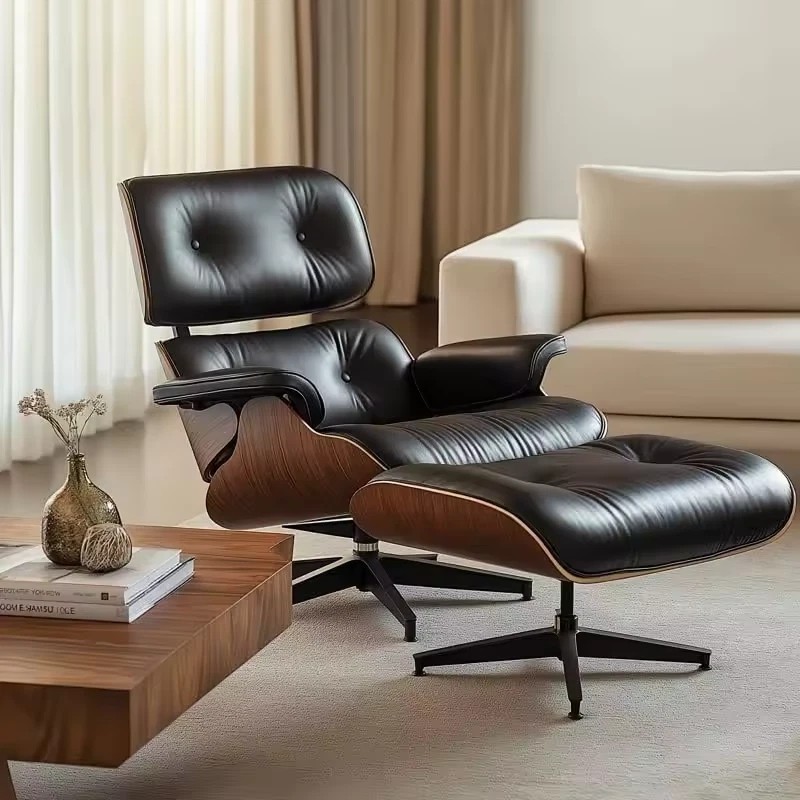
A word on the Eames lounge chair. It was released in 1956 and has been in continuous production since. That means you can buy a new one. An old one, from the first five years, has a five-ply rosewood shell and down cushions. A later one has seven plies and foam. Both are good chairs. Only one is a collectible.
Where It Goes and How It Ages
Mid-century furniture does not need a mid-century house. It needs a room that is not fighting it. Keep the walls plain. Let the floor be wood or a flat wool rug. Avoid heavy patterns and dark carpets, which swallow the legs. A single piece near a doorway, a sideboard in a hall, a pair of chairs by a window. That is enough.
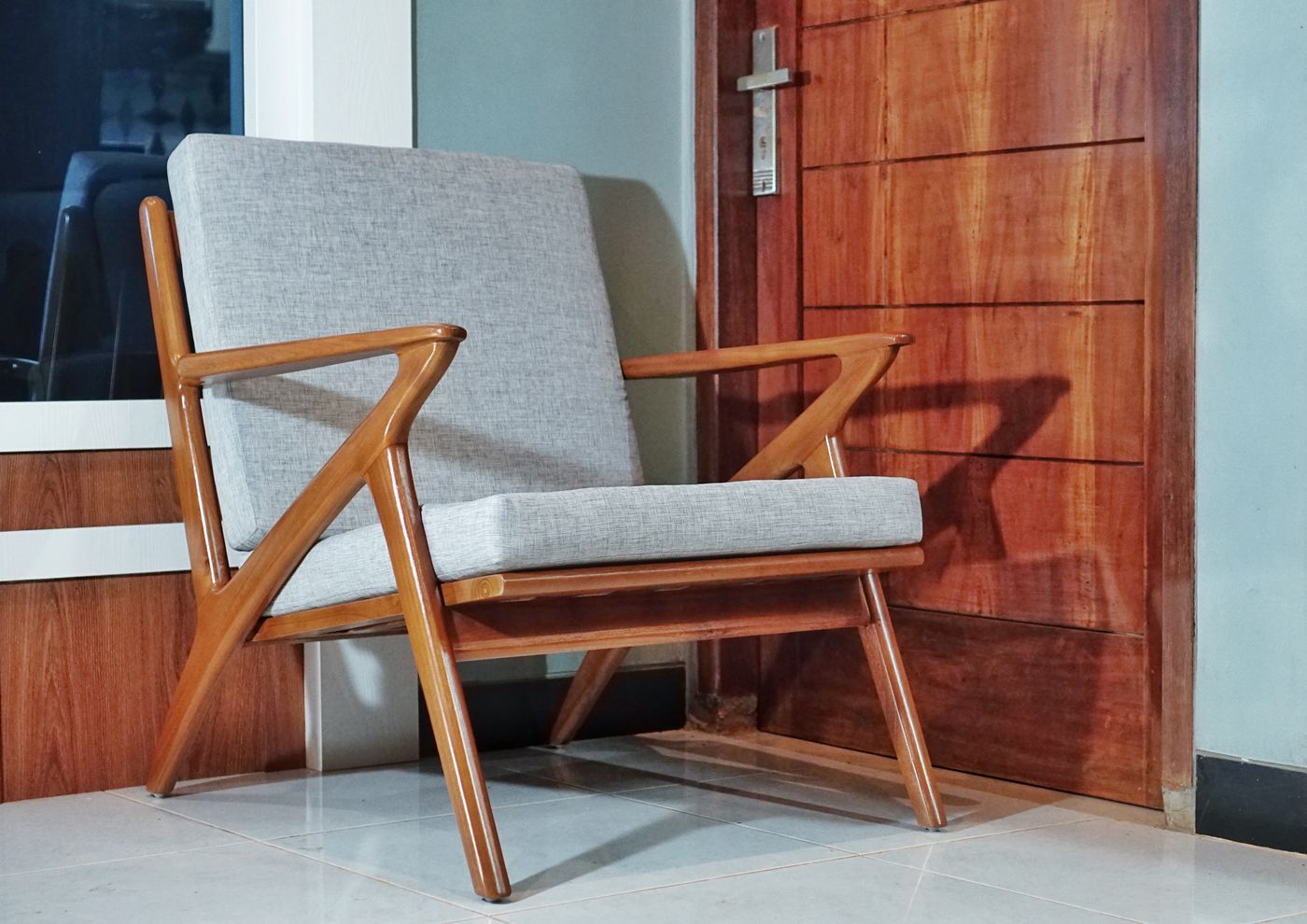
Foto: More Amore · Pexels
These pieces age well because they were built to be repaired. A wobbly leg can be re-glued. A faded top can be oiled. The paper cord on a Wegner chair can be rewoven by a specialist for a few hundred dollars, and the chair will last another fifty years. That is the real argument for buying old instead of new. You are buying something that can be kept.
City
Tokyo
Category
vintage mid century furniture
Published
24 October 2026
Where to find it
Shop the signals
What the market is offering right now on this exact subject.
stoelen
Set Of Four Vintage Hans Wegner CH24 Wishbone Chairs by Carl Hansen
stoelen
Vintage Pro Tall Eames Lounge Chair With Ottoman Cowhide Leather Armchair Swivel
stoelen
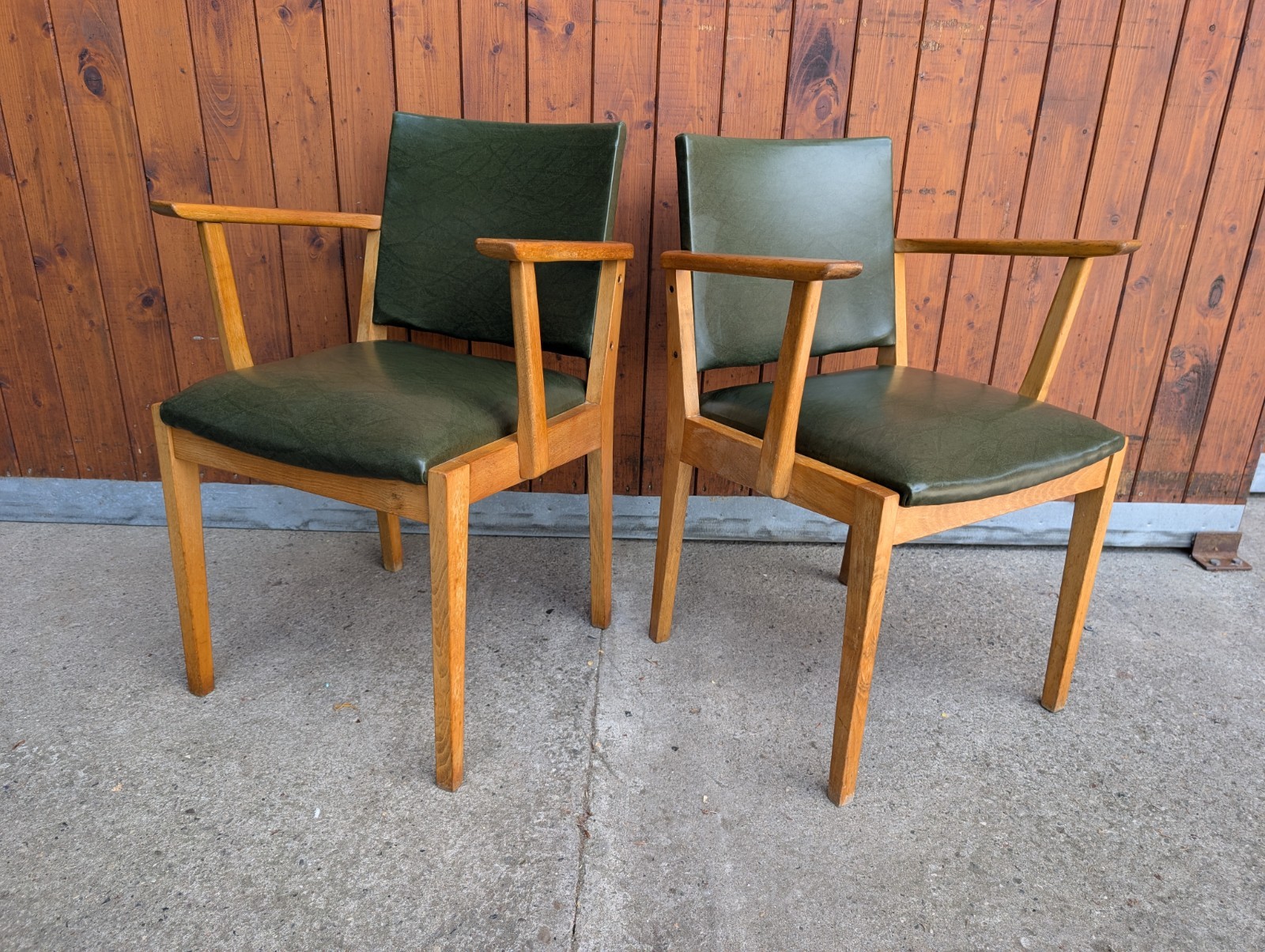
60s Vintage Lounge Chair Danish Armchair Mid Century Modern Original Wood, Green
meubels
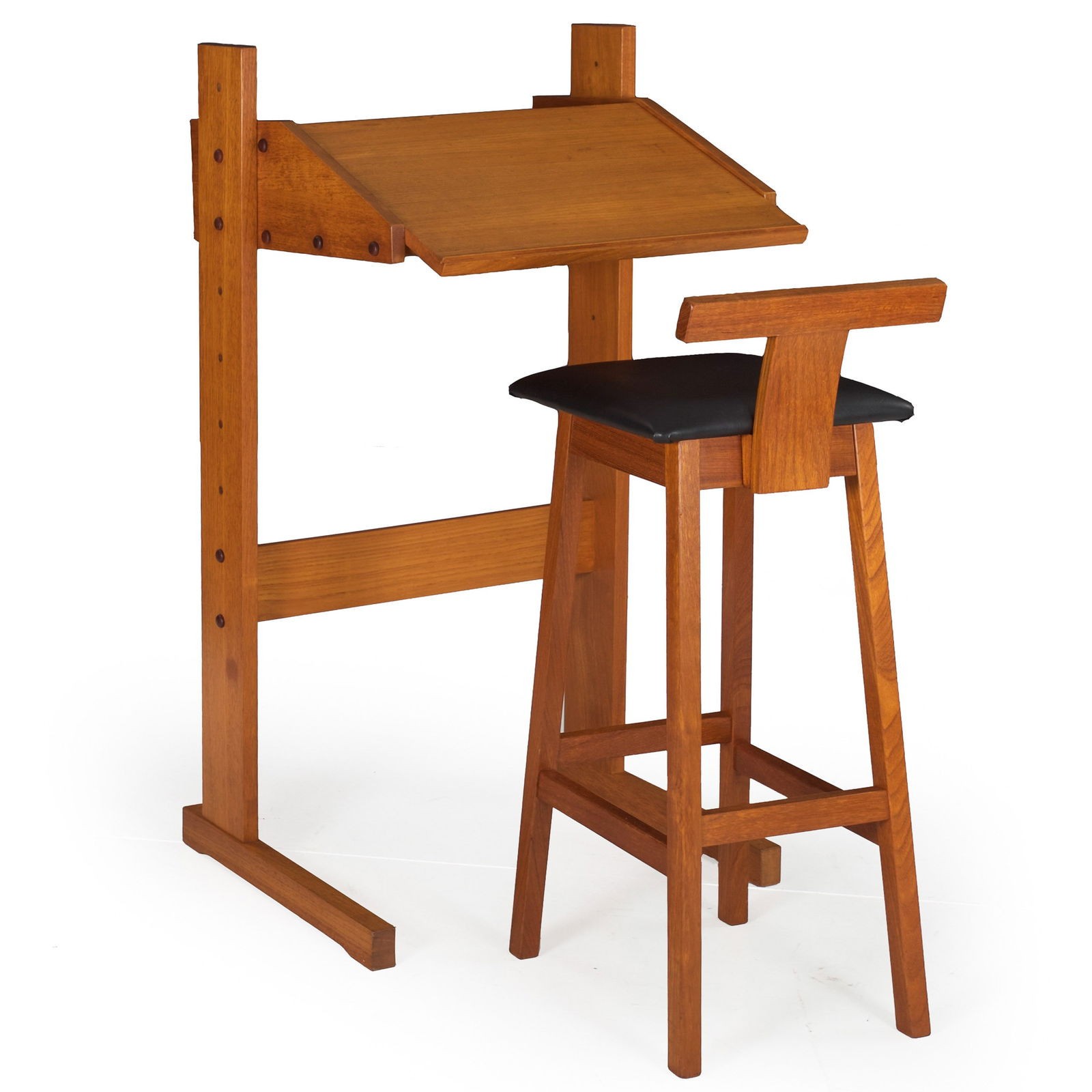
Danish Modern Teak Adjustable Height Desk with Chair, circa 1960s
meubels
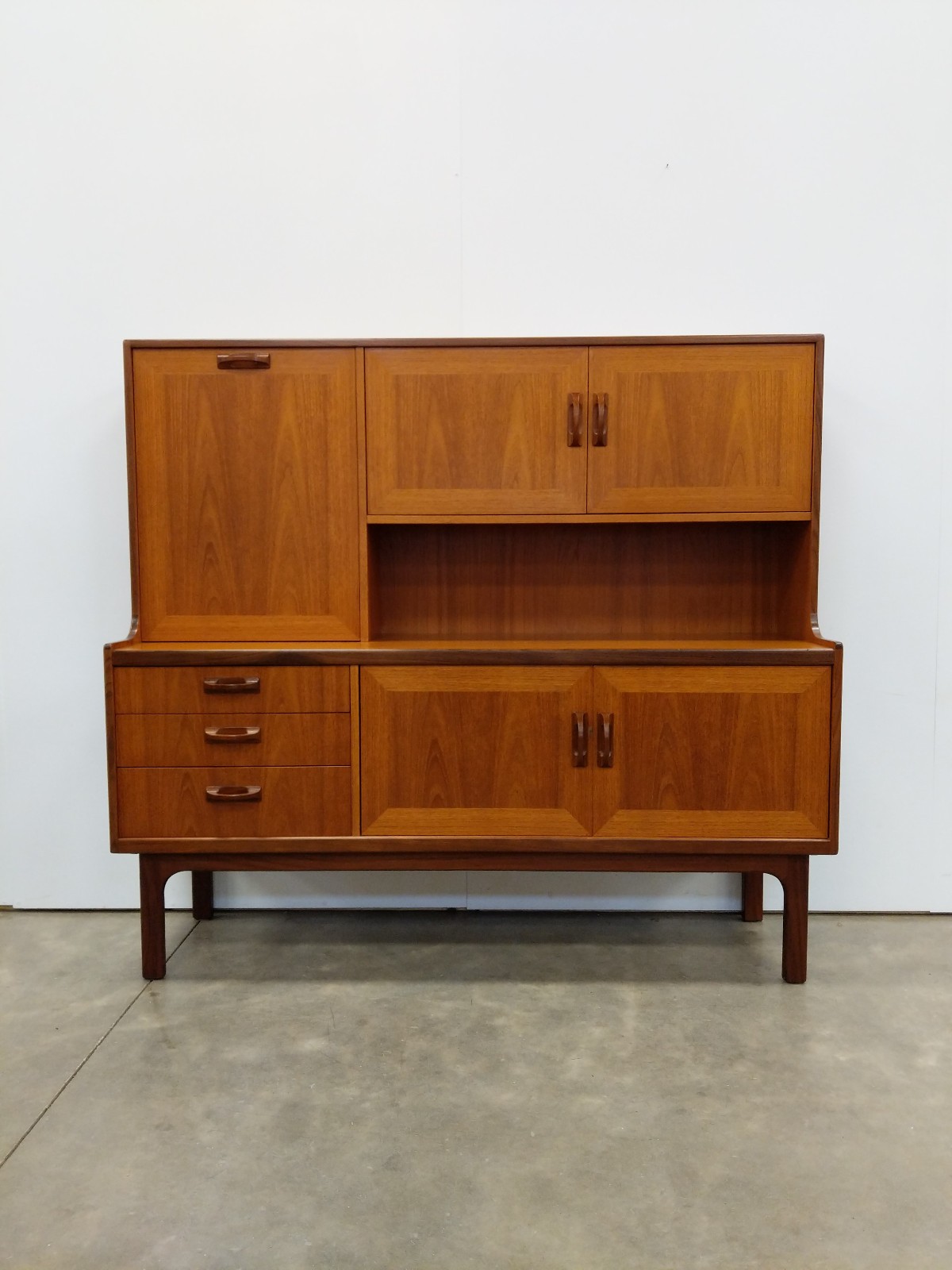
Vintage G Plan Mid Century Modern Teak Sideboard
meubels
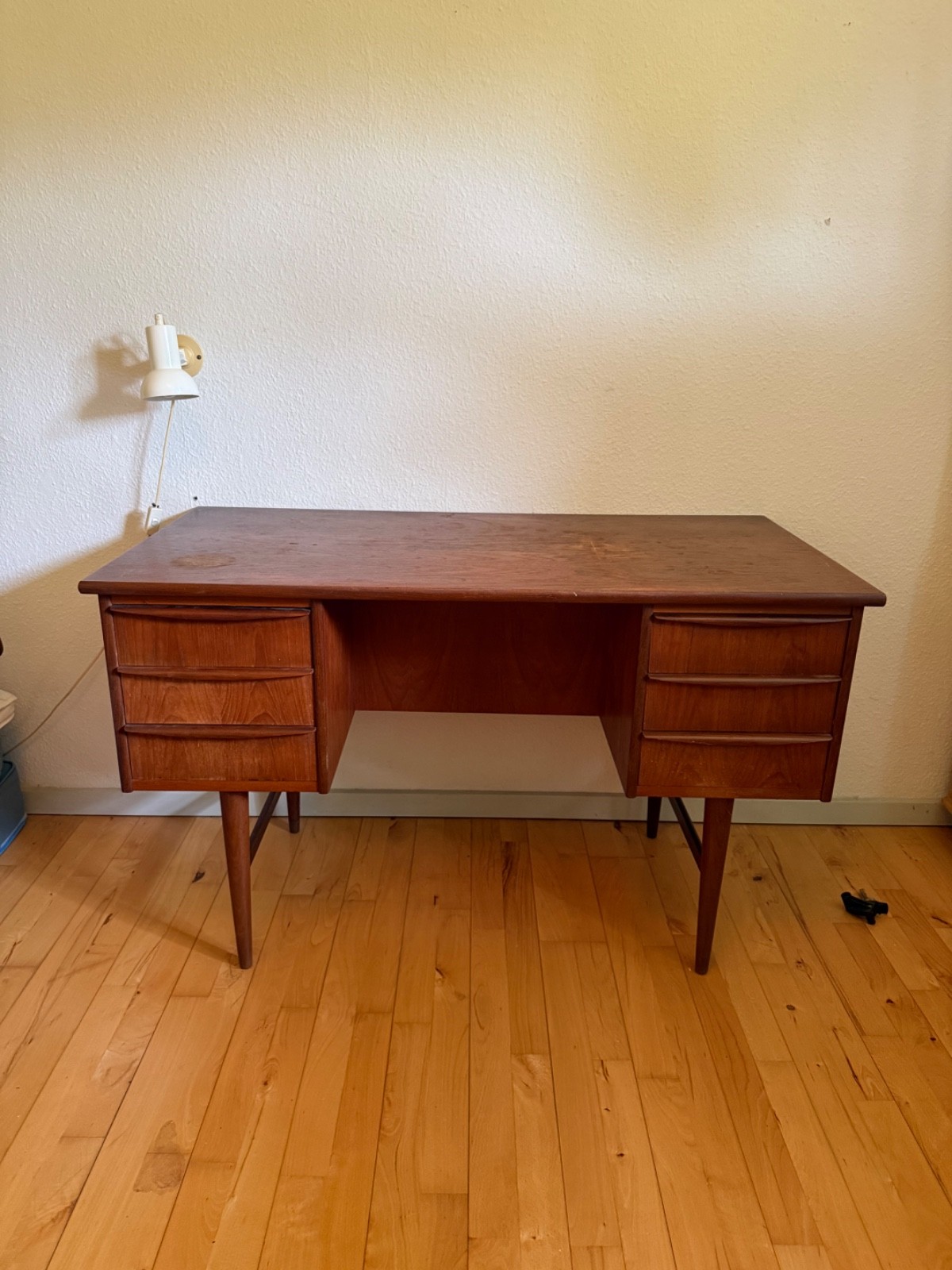
Vintage Danish Teak Desk – Mid-Century Modern Design, 1960s
stoelen
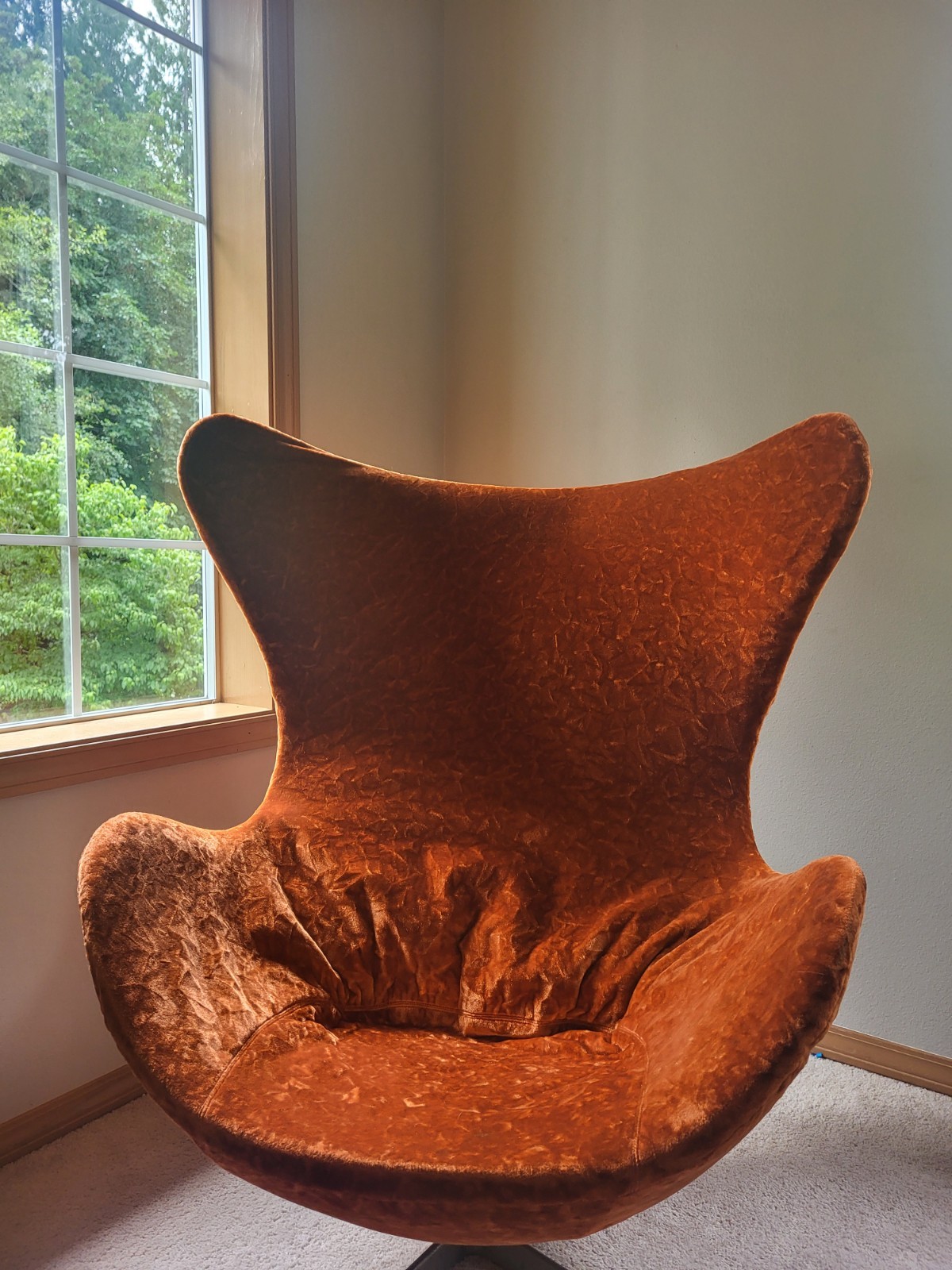
Vintage Fritz Hansen Egg ChairMade in Denmark - 1967
stoelen
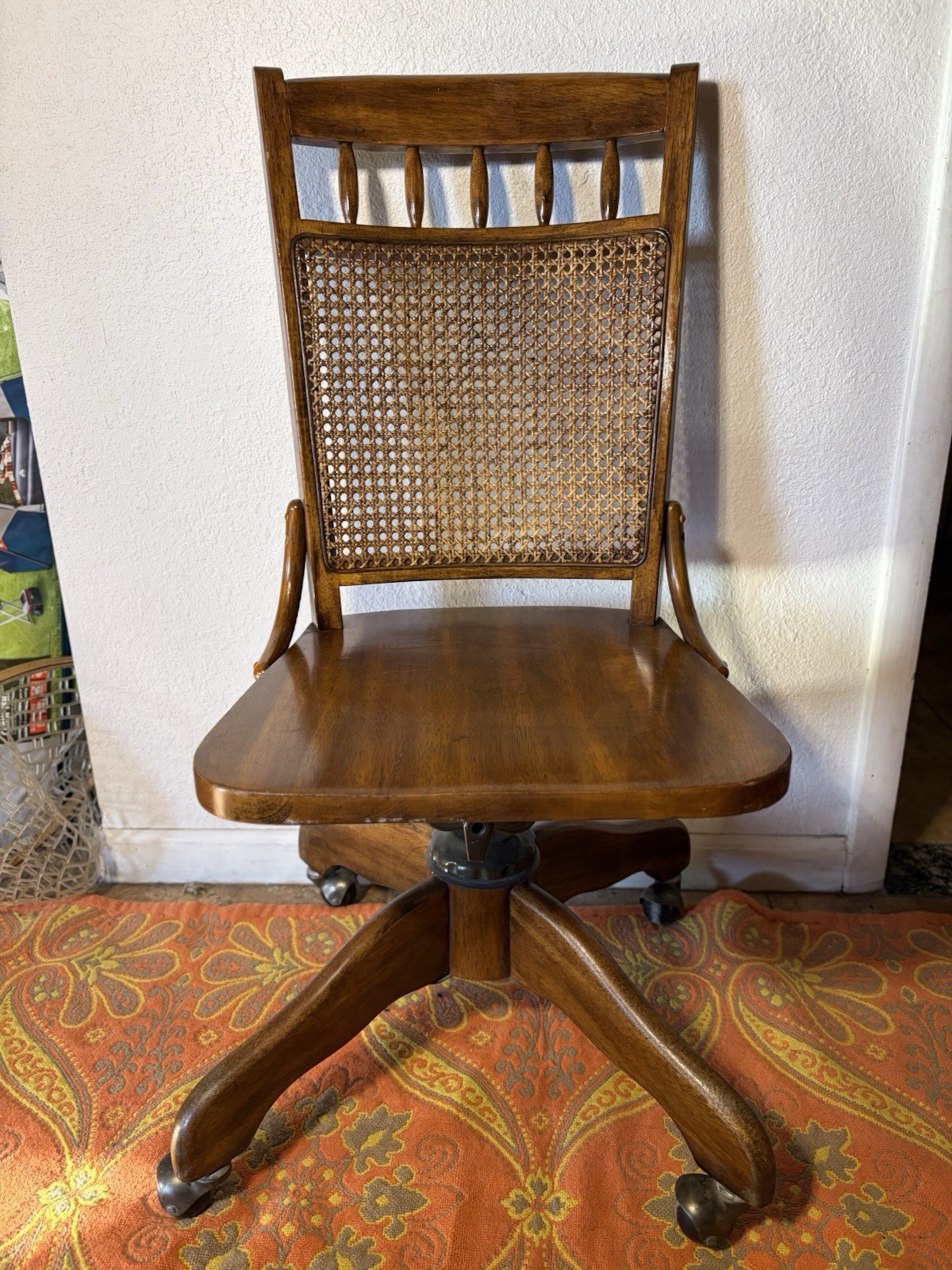
Antique Vintage Wood Desk Lawyer Banker Swivel Rolling Office Chair Farmhouse
The names
Meet the designers
The minds behind this story — each with a piece currently on the market.
Charles & Ray Eames
USA · 1940s
Moulded plywood & the Lounge Chair — the couple who made modern furniture feel human.
Moulded plywood & the Lounge Chair — the couple who made modern furniture feel human.
Top piece
View →
Børge Mogensen
Denmark · 1940s
The Spanish chair — honest, functional furniture for everyday life.
The Spanish chair — honest, functional furniture for everyday life.
Top piece
View →
Hans J. Wegner
Denmark · 1940s
The Wishbone & 500 chairs — joinery so pure it needs no ornament.
The Wishbone & 500 chairs — joinery so pure it needs no ornament.
Top piece
View →
Arne Jacobsen
Denmark · 1950s
The Egg & the Series 7 — chairs turned into quiet sculpture.
The Egg & the Series 7 — chairs turned into quiet sculpture.
Top piece
View →
Continue the edit
Further stories from the same world
Three more walks through the same vintage universe.
The Weight of a Good Chair: Living With Mid-Century Modern Furniture
How to read a piece of mid-century furniture before you buy it, where to put it once you own it, and why the joinery tells you more than the label ever will.
Read the story →Why Mid-Century Modern Furniture Matters Now
The pieces that defined the postwar American home are finding new life in apartments and houses where good design is lived with daily. Here is how to spot a well-made example, where to put it, and why it still works.
Read the story →Why Mid-Century Modern Furniture Matters Now: A Collector's Guide to Living With It Well
A practical, opinionated guide to buying and placing mid-century furniture: what the joinery tells you, which woods age honestly, and how to make a 1956 sideboard feel at home in a modern room without turning your living room into a showroom.
Read the story →