
 Sign in
◫ Home & Objects · Berlin
The Weight of a Good Chair: Living With Mid-Century Modern Furniture
How to read a piece of mid-century furniture before you buy it, where to put it once you own it, and why the joinery tells you more than the label ever will.
 By Louis Trash·

Start With the Frame, Not the Fabric
A walnut sideboard from 1962 will outlive three sofas. That is the first thing to understand about mid-century furniture: the good pieces were built by people who assumed you would keep them. The frame is the argument. Run your hand along the back rail of a chair and feel for the joinery. Dovetails, finger joints, dowels set deep and glued with hide glue: these are the marks of a workshop that expected the piece to be repaired, not replaced. Staples and Phillips-head screws on a frame that should be mortise-and-tenon are a warning. Someone built it fast.
Look at the timber where it meets the floor. Genuine teak and walnut from the period will have darkened unevenly, because the light in a room falls unevenly. An even, flat, uniformly orange finish on a fifty-year-old table is almost certainly a recent refinish, and a heavy one. Danish oil and a little wax are sympathetic. Polyurethane is not. If the seller cannot tell you what was applied, assume the worst and price accordingly. A good refinisher can strip it. A bad one has already been there.
What the Labels Actually Tell You
Most of what circulates is mixed. You will find a G-Plan chest beside an unmarked Danish cabinet and a Knoll chair with a replaced seat, all at roughly the same price, around $577 for the mid-range pieces. The label matters less than the details behind it.

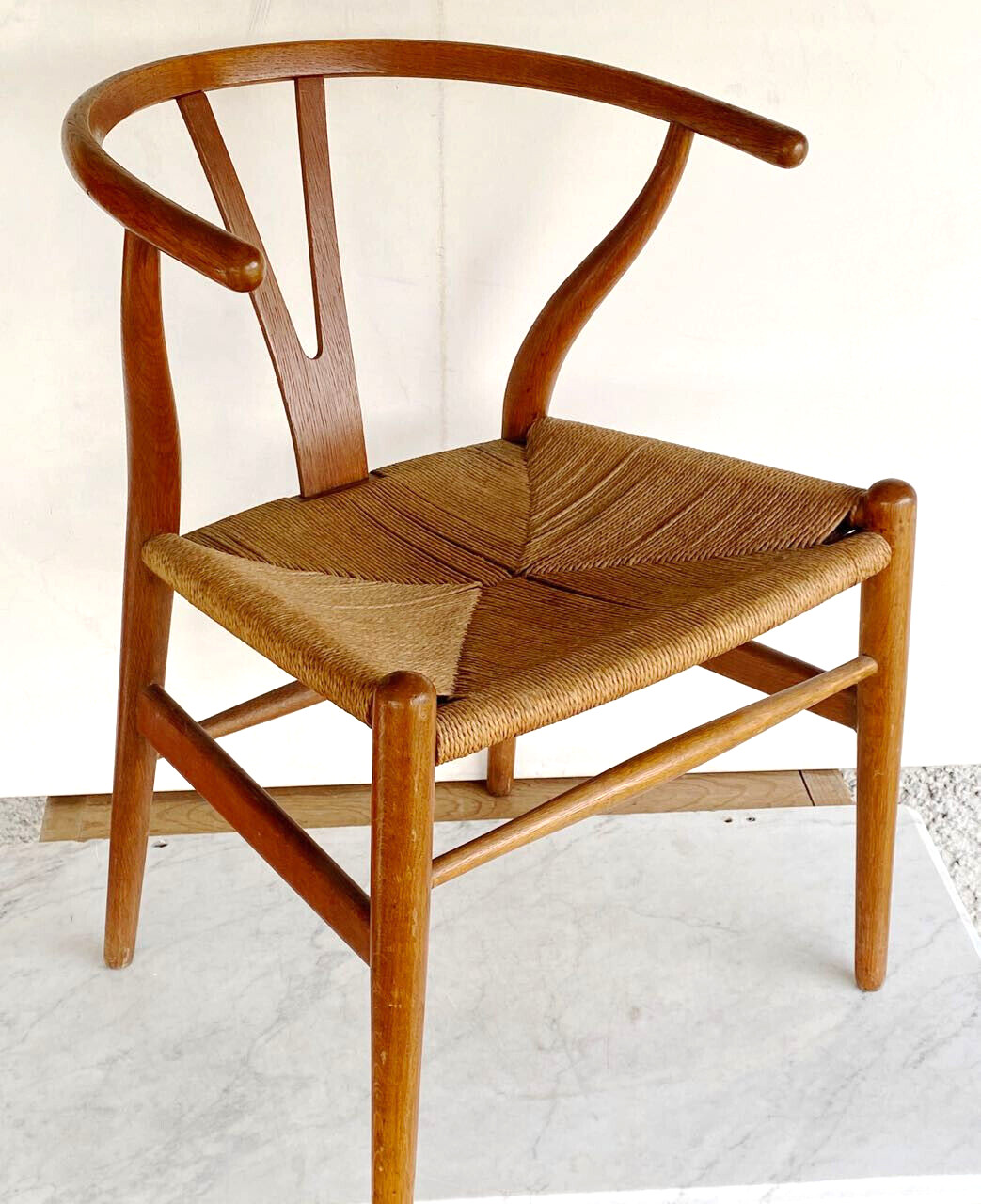
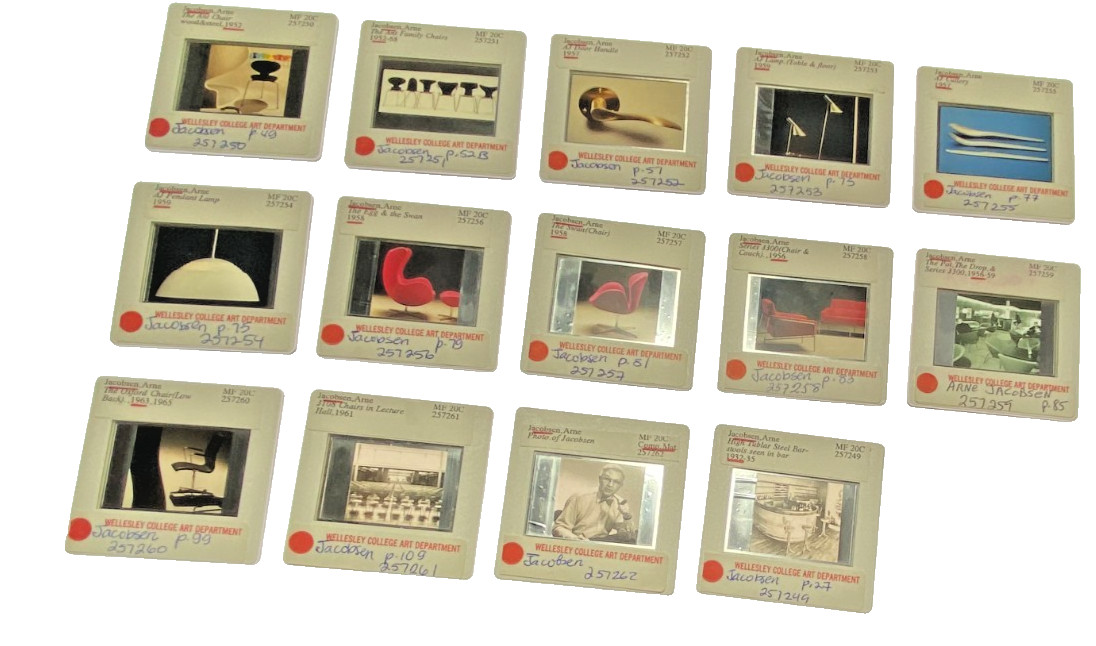
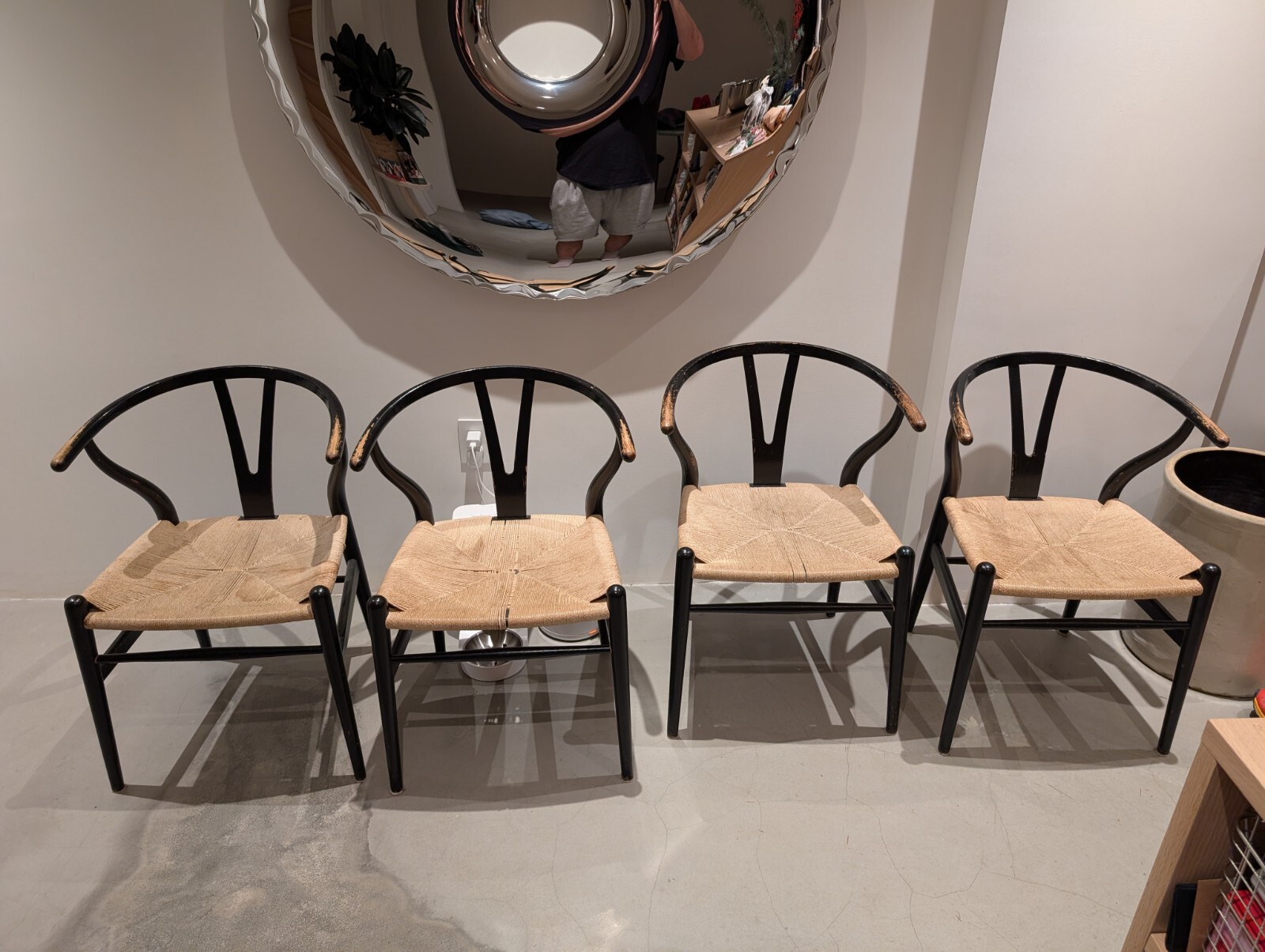
Know a few names and what they stood for. Hans Wegner's Wishbone chair, designed in 1949, is a study in restraint: the Y-shaped back splat, the paper cord seat woven by hand. That cord should be taut and evenly spaced. If it sags or has been stapled, walk away. Arne Jacobsen's Series 7, from 1955, was pressed plywood, and the early examples have a thinner shell than the later licensed versions. Børge Mogensen built for the ordinary Danish home, and his spindle-back sofa from 1945 is still the most comfortable thing you can put in a small room. In Britain, Ercol used elm and beech and a wedge-joint system that needs no glue, which is why so many of their 1950s pieces are still standing. Look for the blue and gold label under the seat.
Eames moulded fibreglass shells changed colour over decades. The early Zenith Plastics shells from 1950 to 1953 have a rougher, more matte surface than later Herman Miller production, and the shock mounts underneath are the thing to check. If they are cracked or replaced with screws, the shell is compromised.
Placing It Without Making a Museum
A room full of mid-century furniture looks like a showroom. One good piece, given air, looks like a home. The mistake is buying a suite. Buy the sideboard and stop. Let a Victorian mirror hang above it. Put a wool rug underneath that has nothing to do with 1958.
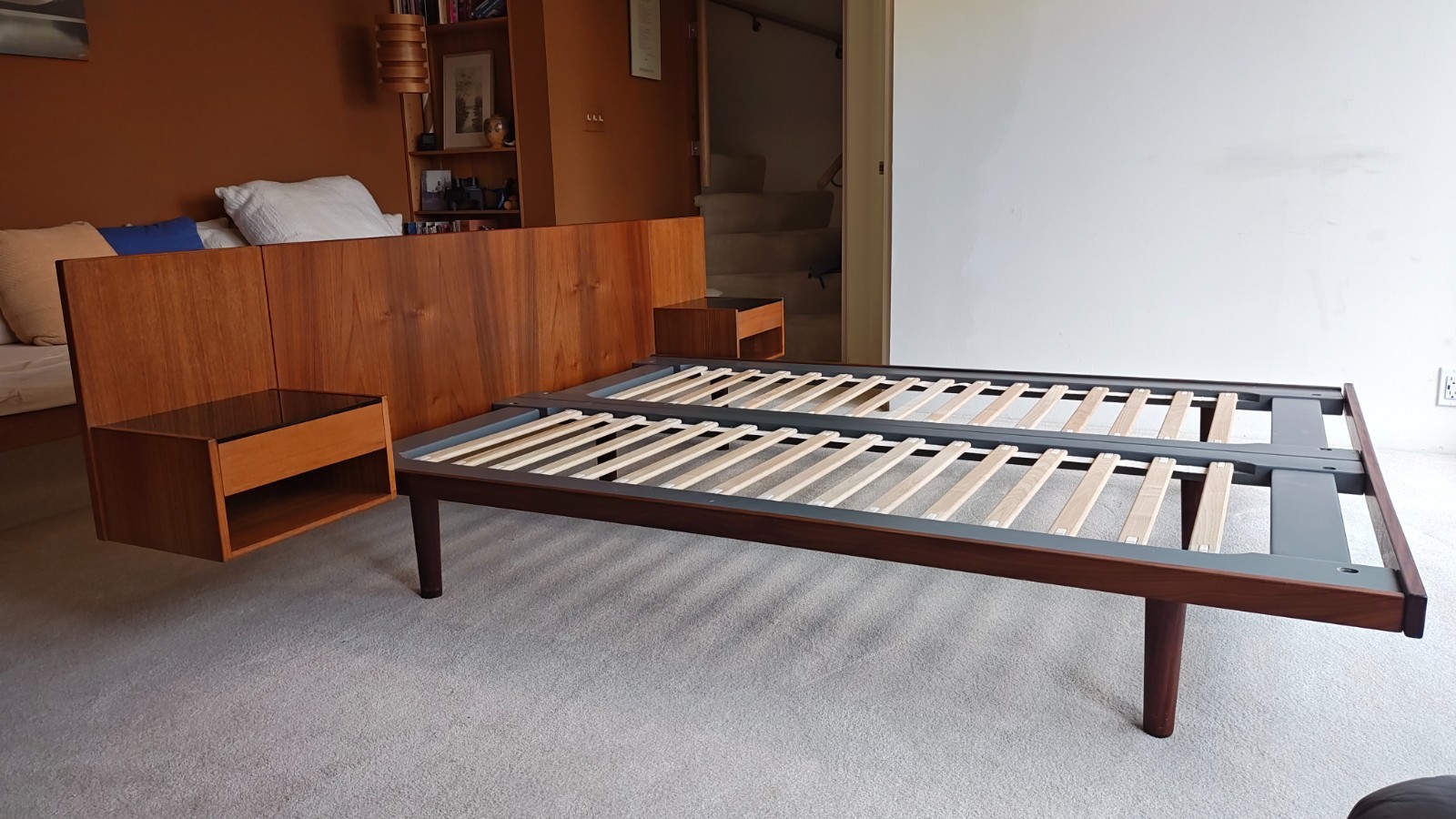
Proportion is everything. A low, long sideboard wants a wall with room to breathe on either side. Do not push it into a corner. A lounge chair with a high back, like a Papa Bear or a wing chair from the period, needs space behind it or it reads as a lump. Pull it a foot off the wall. The splayed legs on so many of these pieces were designed to be seen, so let the floor show beneath them.
Height matters more than most people admit. Mid-century seating sits low. If your sofa is 18 inches off the floor, a 30-inch coffee table will feel like a barrier. Go lower. A nesting table or a long, shallow bench works better than a heavy block. And keep the palette quiet. Walnut and teak are warm; let them be warm against plaster, linen, and one strong colour. A single oxblood cushion on a pale sofa does more than a room of pattern.
The Atmosphere It Creates
These pieces were made for rooms with daylight and not much else. That is their native condition. A teak dining table under a window in the morning is a different object from the same table under a pendant at night, and both are correct. The furniture was designed in an era when the wall was coming down between the kitchen and the living room, when the house was opening up to the garden. Keep that openness. Do not fill the surfaces. A sideboard with three objects on it looks considered. A sideboard with twelve looks like a shop.
What to Check Before You Hand Over the Money
Turn the piece over. Look at the underside of a seat, the back of a cabinet, the inside of a drawer. Original finish will be thinner and darker where hands have touched it. Check that drawers run true: pull them out, push them in, listen for the scrape. A drawer that sticks has swollen with damp or was never square. Both are fixable, but know what you are buying.
Smell the inside of a cabinet. Old wood and wax smell of nothing much. A sharp, sweet, chemical smell means recent treatment, possibly against woodworm, and possibly hiding it. Look for tiny flight holes in the legs and the back panel. One or two old ones are common and harmless. A cluster near a joint is a conversation.
And check the feet. Legs get cut down, chipped, and replaced. A chair that has lost half an inch off one leg will rock, and you will feel it every time you sit. Set it on a flat floor before you agree to anything.
A Closing Thought on Keeping Things
The point of a well-made chair is that it asks nothing of you but use. Sit in it every day. Let the finish wear at the arm where your hand rests. That patina is the record of a life, and it is the one thing a reproduction can never have. Buy the piece you will still want to look at in twenty years, and then let it get old with you.
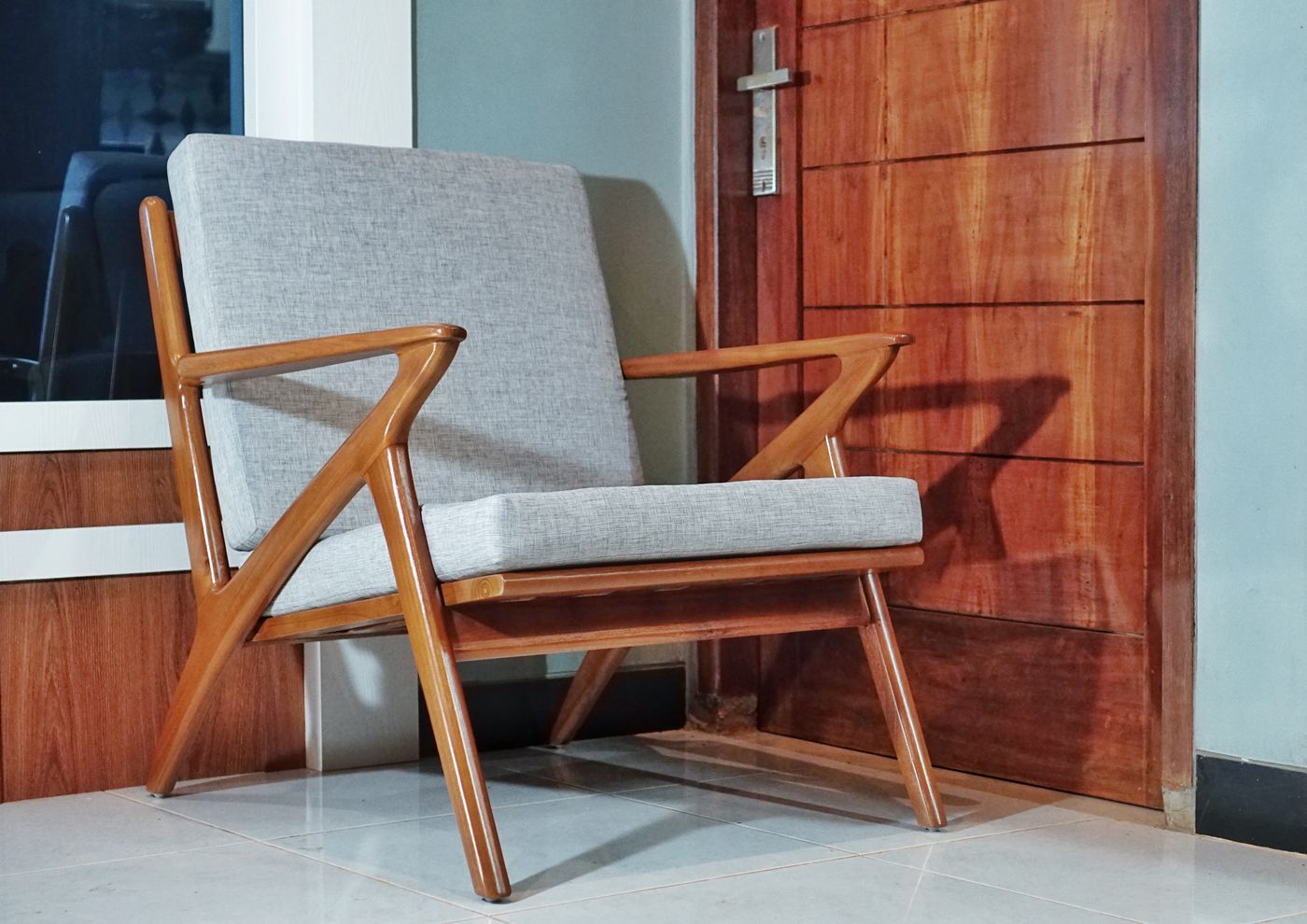
Foto: More Amore · Pexels
 ◫ The Edit
One to watch
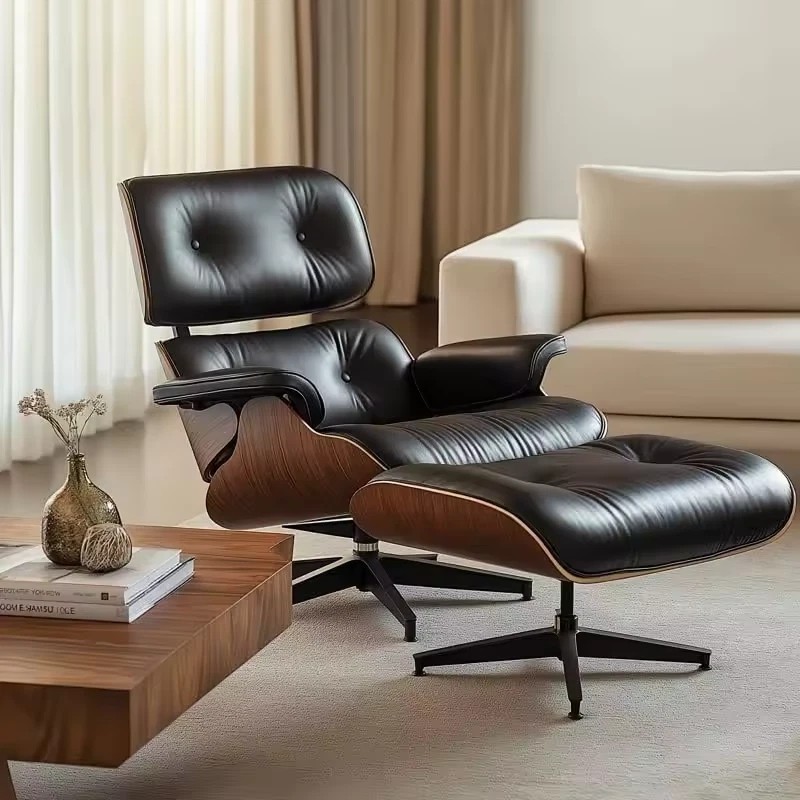
Vintage Pro Tall Eames Lounge Chair With Ottoman Cowhide Leather Armchair Swivel
Design for everyone, made like it was for one. This honestly worn chair in leather carries exactly the quality that made Eames worth collecting in the first place. Some things you wear until they wear you out; this one wears you in.
On the market now
The names
Meet the designers
The minds behind this story — each with a piece currently on the market.
Arne Jacobsen
Denmark · 1950s
The Egg & the Series 7 — chairs turned into quiet sculpture.
The Egg & the Series 7 — chairs turned into quiet sculpture.
Top piece
View →
Hans J. Wegner
Denmark · 1940s
The Wishbone & 500 chairs — joinery so pure it needs no ornament.
The Wishbone & 500 chairs — joinery so pure it needs no ornament.
Top piece
View →
Børge Mogensen
Denmark · 1940s
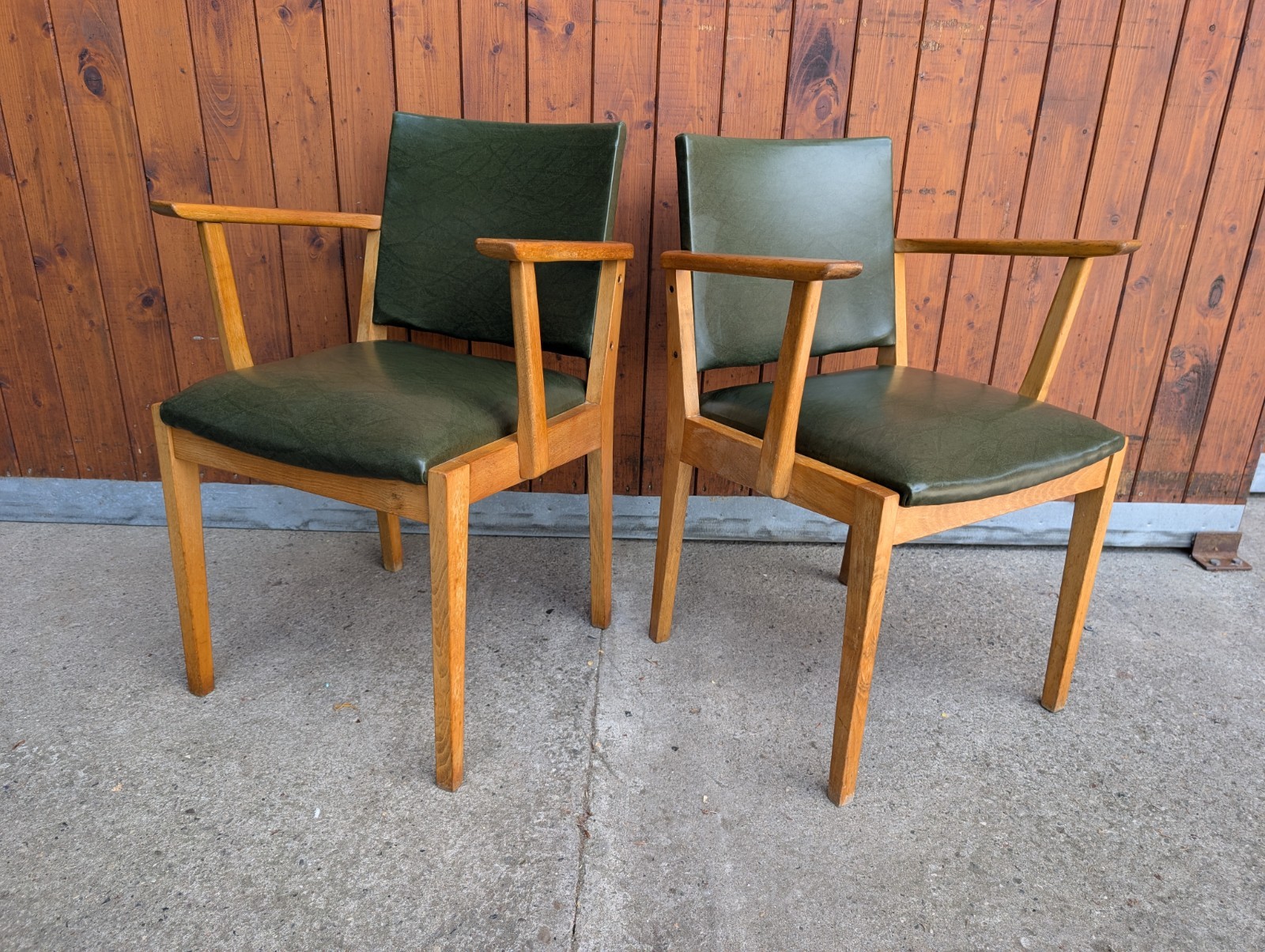
The Spanish chair — honest, functional furniture for everyday life.
The Spanish chair — honest, functional furniture for everyday life.
Top piece
View →
Charles & Ray Eames
USA · 1940s
Moulded plywood & the Lounge Chair — the couple who made modern furniture feel human.
Moulded plywood & the Lounge Chair — the couple who made modern furniture feel human.
Top piece
View →
Continue the edit
Further stories from the same world
Three more walks through the same vintage universe.
Why Mid-Century Modern Furniture Matters Now
The pieces that defined the postwar American home are finding new life in apartments and houses where good design is lived with daily. Here is how to spot a well-made example, where to put it, and why it still works.
Read the story →Why Mid-Century Modern Furniture Matters Now: A Collector's Guide to Living With It Well
A practical, opinionated guide to buying and placing mid-century furniture: what the joinery tells you, which woods age honestly, and how to make a 1956 sideboard feel at home in a modern room without turning your living room into a showroom.
Read the story →Why Mid-Century Furniture Matters Now
A walnut sideboard with tapered legs and a decent finish will outlast most of what sits beside it in a room. Here is how to find one, place it, and live with it for the next thirty years.
Read the story →