
 Sign in
✦ Culture · Berlin
Why Vintage Jewelry Matters Now: Wear the Past, Style It Forward
Forget the market. Here's how to find, wear, and love vintage jewelry that fits your life and your wardrobe, from Art Deco diamonds to bold 1980s gilt.
 By Louis Trash·
The Allure of Worn Gold
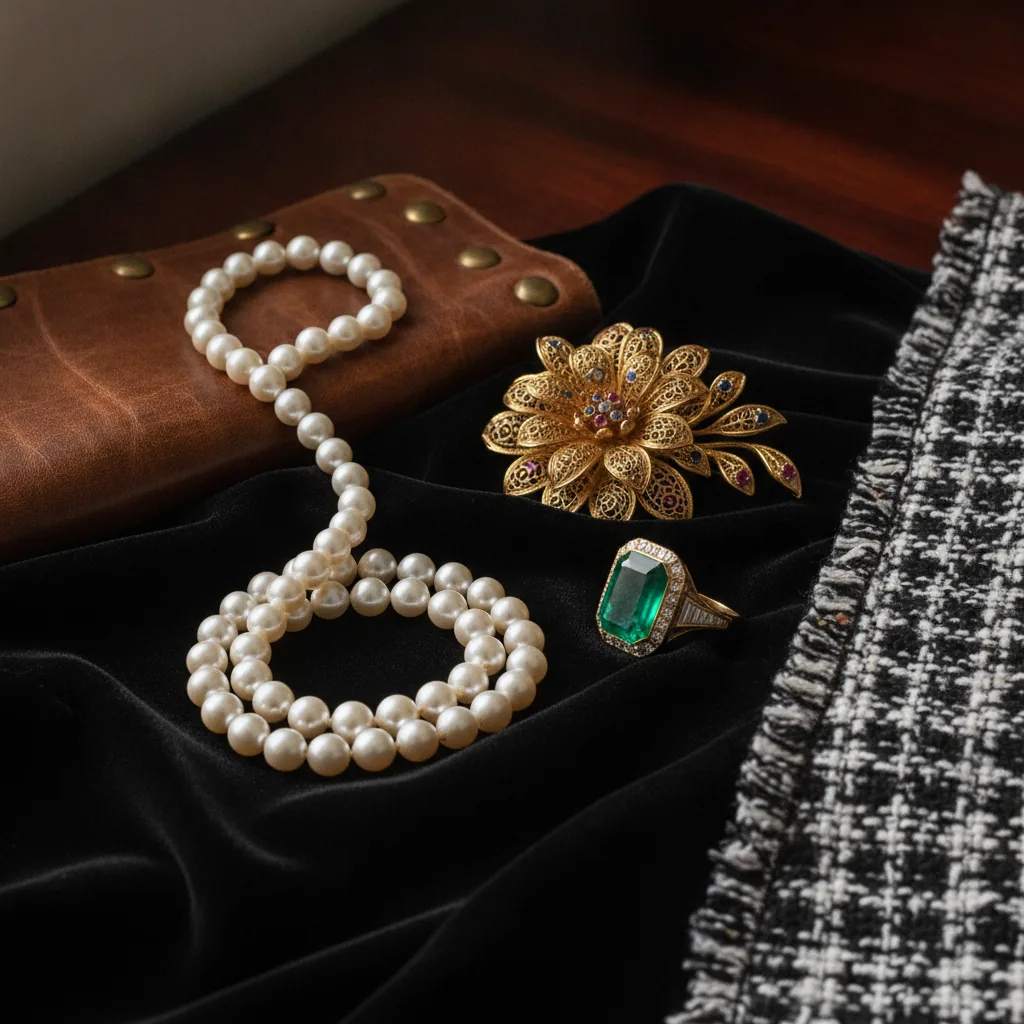
A friend recently inherited a 1940s gold-filled brooch, a simple knot of metal that had belonged to her grandmother. She pinned it to the lapel of a navy blazer and wore it to a meeting. Three people asked where she got it. That's the power of vintage jewelry: it carries a story, it's often better made than what you'll find at the mall, and it adds instant character to any outfit. Right now, pieces from the 1920s through the 1990s are plentiful and priced for real life, typically around $220.35 for a quality find. This isn't about investment or flipping. It's about wearing something with soul.
Styling: From Grandma's Brooch to Modern Minimal
The key to wearing vintage jewelry well is contrast. A heavy Art Deco diamond brooch looks fresh against a plain white T-shirt and jeans. A delicate Edwardian lavaliere necklace adds a whisper of elegance to a chunky knit sweater. Don't be afraid to mix eras: a 1970s gold chain with a 1950s pearl choker. Proportion matters. If you're wearing a bold 1980s statement necklace, keep the rest of your outfit simple. If you're layering delicate chains, go for a lower neckline to show them off. For rings, stack a vintage signet with a modern band. The goal is to make the piece look like it belongs to you, not like you're wearing a costume.
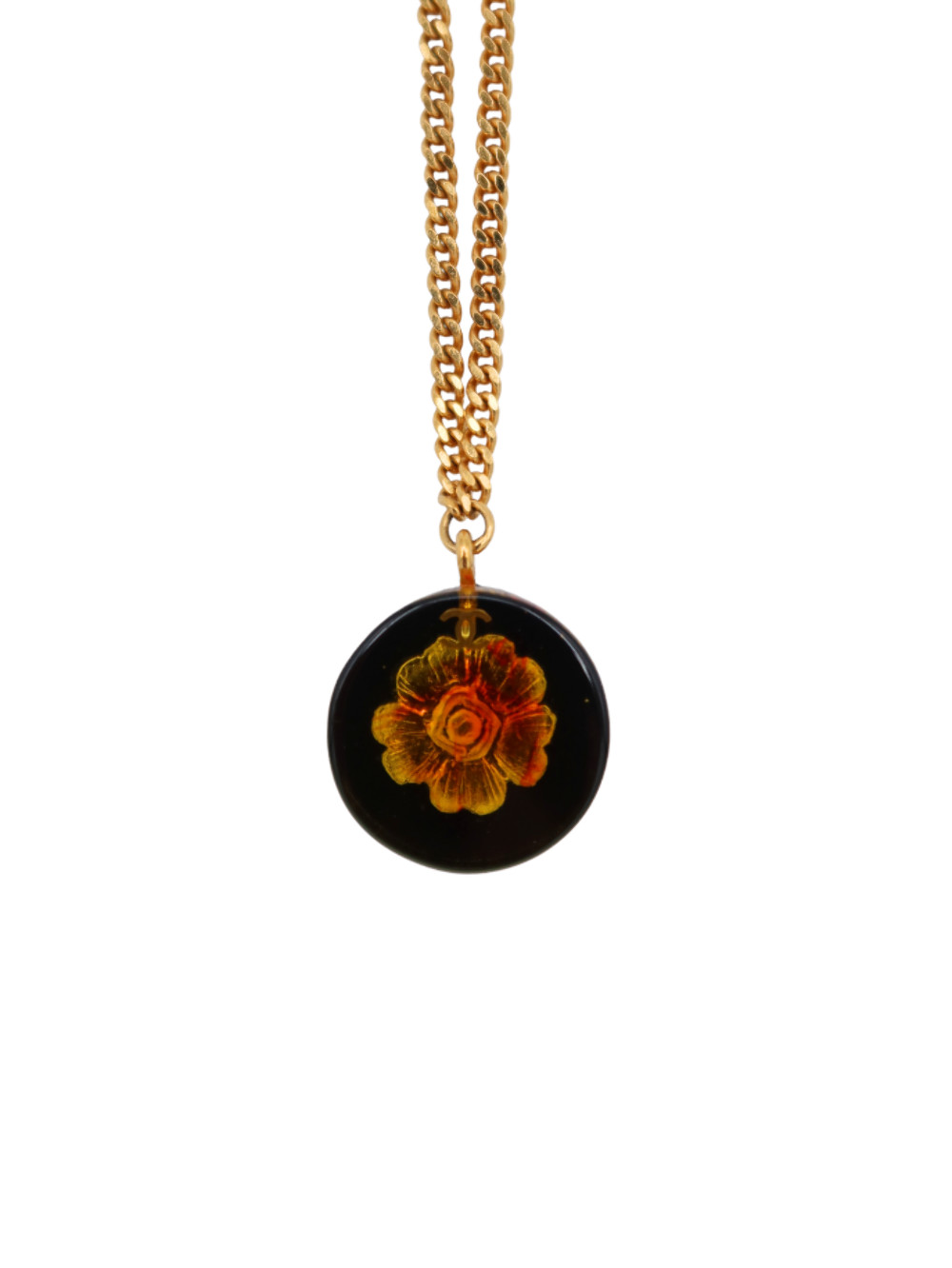
Consider the metal tone. Yellow gold warms up cool-toned clothing like grey or blue. Silver and white gold pop against earth tones. Mixing metals is fine if you do it deliberately: repeat one metal in your belt buckle or watch to tie it together. And don't overlook men's jewelry. Vintage cufflinks, tie clips, and signet rings work for anyone. A 1920s platinum and onyx cufflink set adds a sharp edge to a woman's tailored shirt.
What to Look For: Era Tells and Quality Clues
Start with the clasp. A well-made piece will have a secure, solid clasp. Spring rings are common in mid-century costume jewelry; they're fine if they're tight. Look for wear on the plating: if the gold is rubbed off to the base metal, it's not worth your money unless you love the design. Check for hallmarks. In the US, pieces from the 1900s onward may have a maker's mark or a quality stamp like '14K' or 'Sterling'. European pieces often have assay marks. A loupe helps, but you can also feel the weight: gold and silver have a heft that base metal lacks.
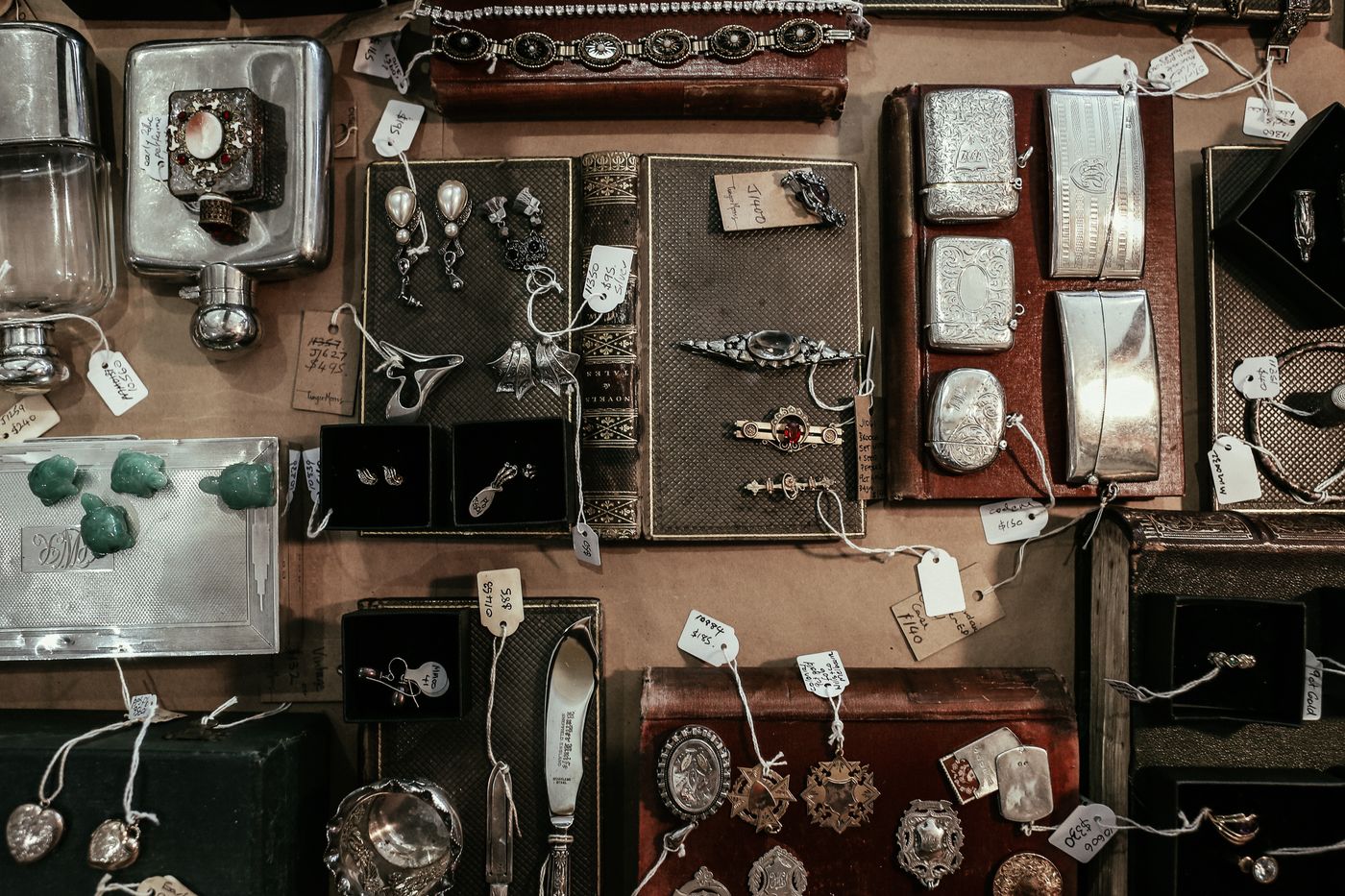
Foto: Rachel Claire · Pexels
Era tells are your friend. Art Deco (1920s-1930s) means geometric shapes, diamonds, platinum, and calibré-cut stones. Retro (1940s) brings chunky gold, oversized brooches, and patriotic motifs. Mid-century (1950s-1960s) offers delicate rhinestones, pearls, and floral designs. The 1970s gave us bold gold chains and organic shapes. The 1980s brought oversized faux pearls, enamel, and gilt. Know these markers and you can date a piece at a glance.
Makers to know: Trifari, Coro, and Napier for costume jewelry; Cartier, Van Cleef & Arpels, and Tiffany for fine. But don't dismiss unsigned pieces. Some of the best finds are anonymous. Look for quality construction: smooth soldering, even plating, and stones that are prong-set, not glued.
A Brief History: From Cleopatra to Studio 54
Vintage jewelry has always been about more than adornment. In the 1920s, Coco Chanel made costume jewelry chic, layering faux pearls over real ones. The Art Deco period saw a boom in platinum and diamond designs, inspired by the discovery of Tutankhamun's tomb in 1922. In the 1930s, during the Depression, costume jewelry took off as a way to look glamorous on a budget. The 1940s brought patriotic pins and bold gold, partly due to metal rationing during the war. The 1950s saw the rise of rhinestones and pearls, popularized by Marilyn Monroe and Grace Kelly. The 1960s and 1970s embraced ethnic and organic forms, with designers like Elsa Peretti for Tiffany. The 1980s were all about excess: oversized earrings, bold necklaces, and faux gems, worn by the likes of Diana Vreeland and seen on Dynasty. Each era reflects its time, and wearing a piece connects you to that history.
The Modern Wardrobe: Where Vintage Fits In
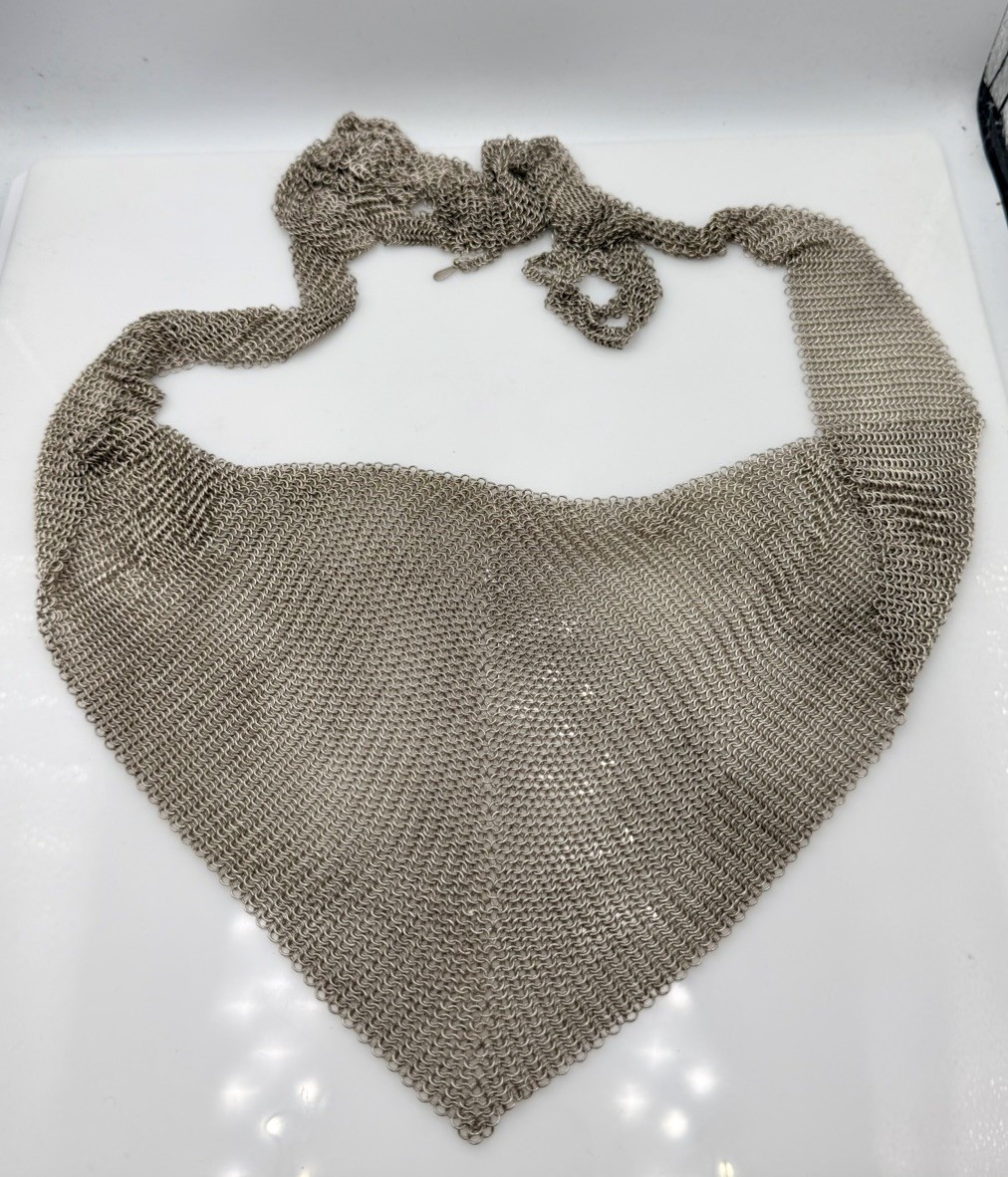
Your vintage jewelry should work with what you already own. A 1950s rhinestone brooch can secure a silk scarf or decorate a plain clutch. A 1970s gold collar necklace elevates a simple black dress. A 1940s charm bracelet adds personality to a denim jacket. For work, a single strand of vintage pearls or a delicate gold chain is understated and professional. For evening, go bold with a statement piece. The trick is to let the jewelry be the focal point. If you're wearing a vintage necklace, skip the earrings or keep them small. If you're wearing a vintage brooch, don't add a necklace.
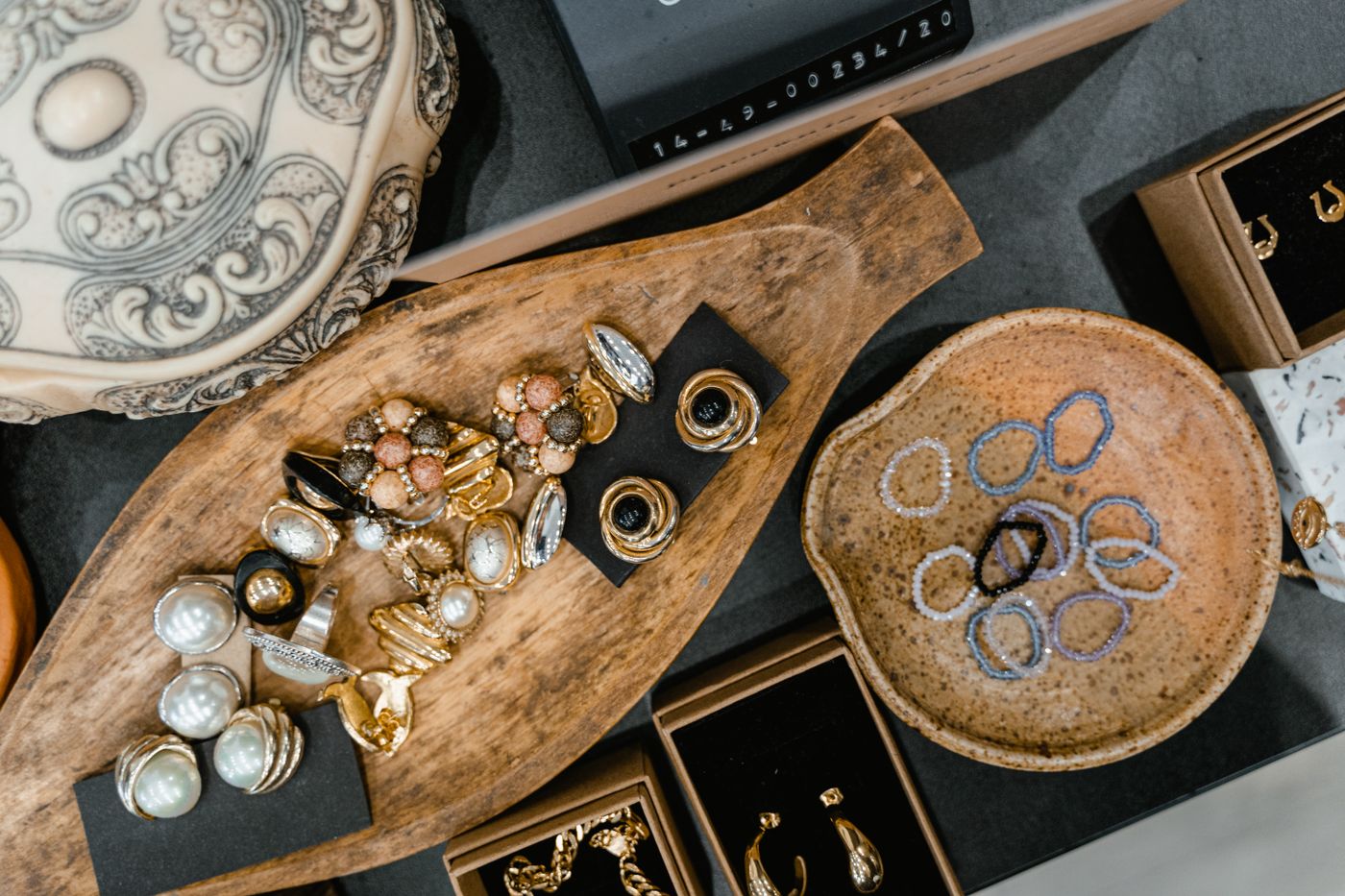
Foto: MART PRODUCTION · Pexels
Caring for Your Finds
Vintage jewelry needs gentle care. Store pieces separately in soft pouches to avoid scratches. Clean with a soft cloth and mild soap; avoid harsh chemicals, especially on pearls and opals. Check clasps and stones regularly. If a piece needs repair, find a jeweler who specializes in vintage. They can source period-appropriate stones and metals.
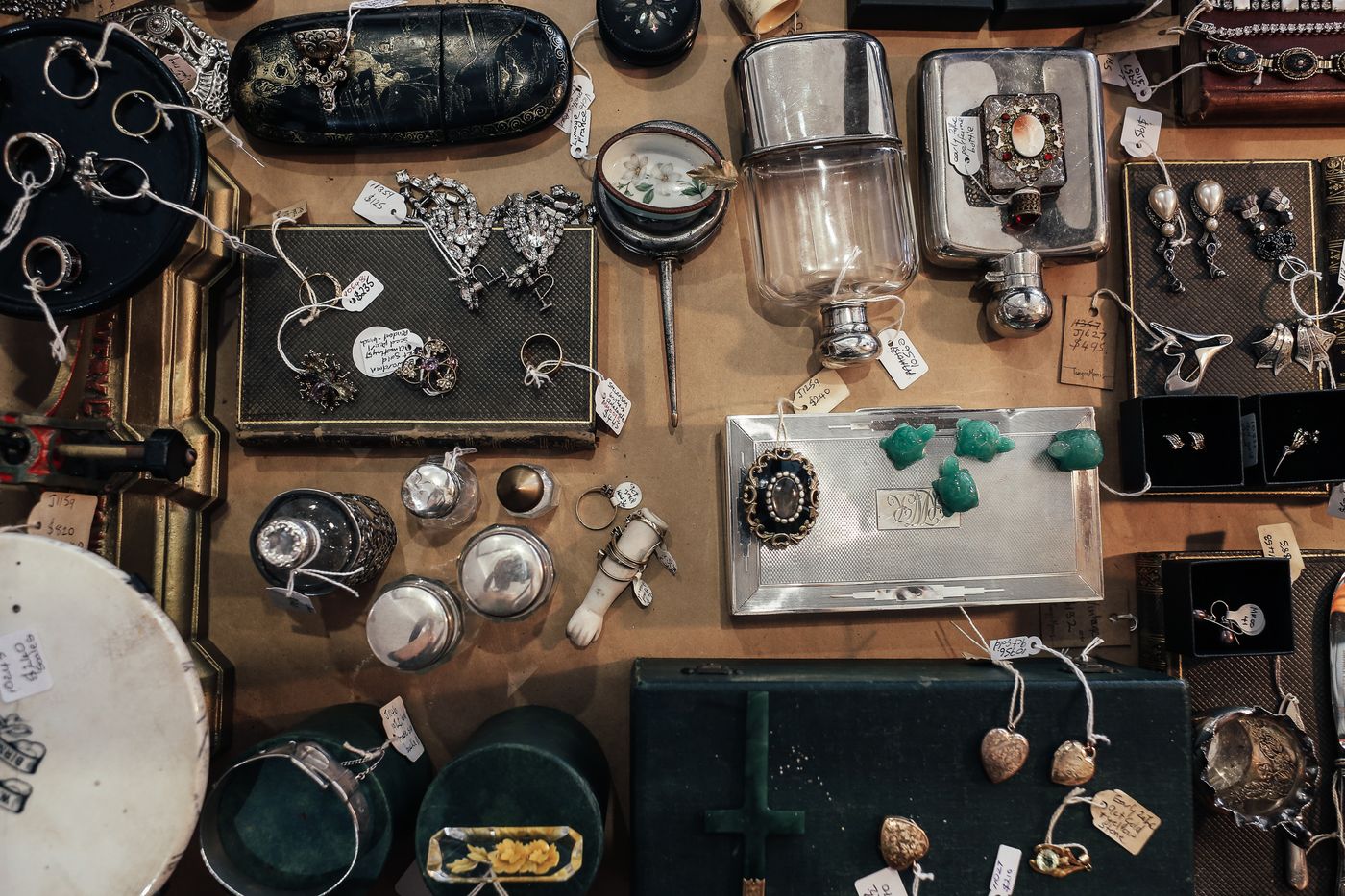
Foto: Rachel Claire · Pexels
A Closing Thought
Vintage jewelry is not about nostalgia. It's about adding depth to your daily uniform. The scratches and wear are proof of a life lived. When you put on a 1930s brooch, you're not just accessorizing; you're continuing a story. And that story looks good with jeans.

City
Berlin
Category
vintage jewelry
Published
28 October 2026
Where to find it
Shop the signals
What the market is offering right now on this exact subject.
sieraden
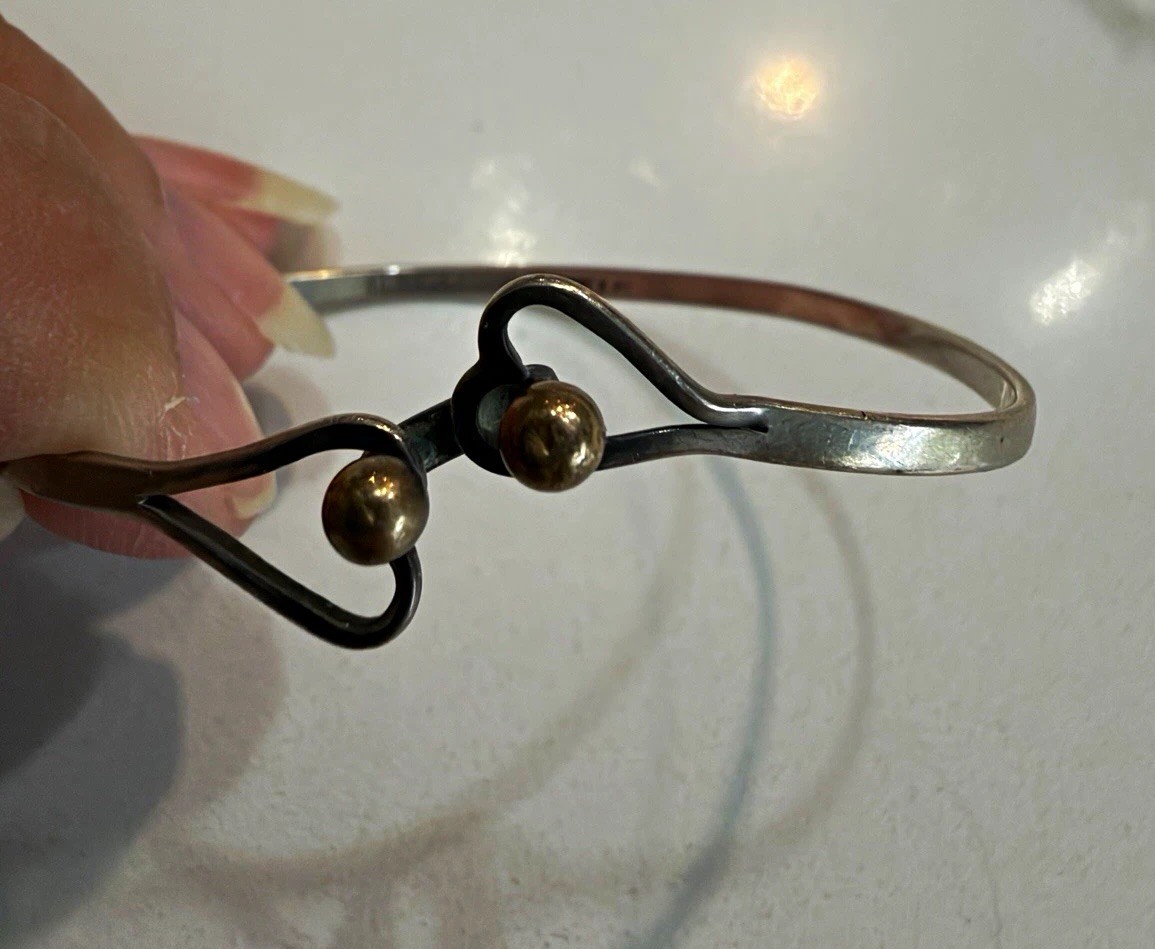
Vintage Tiffany & Co Sterling Silver 14K Gold Hook Eye Bracelet 6.5”
sieraden
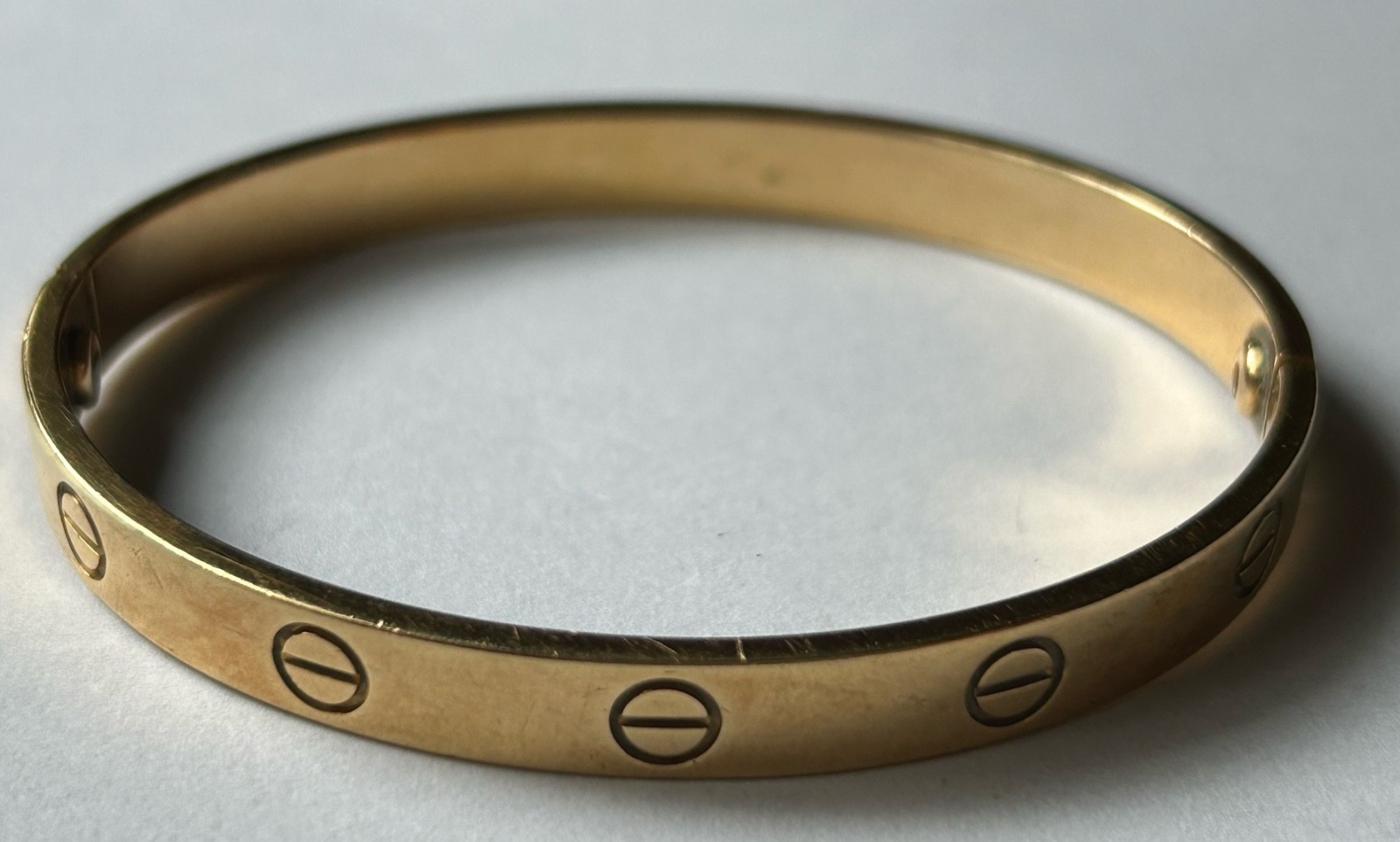
Cartier Love Bracelet 18K Yellow Gold Vintage Old Screw System Size 17 Box Paper
sieraden
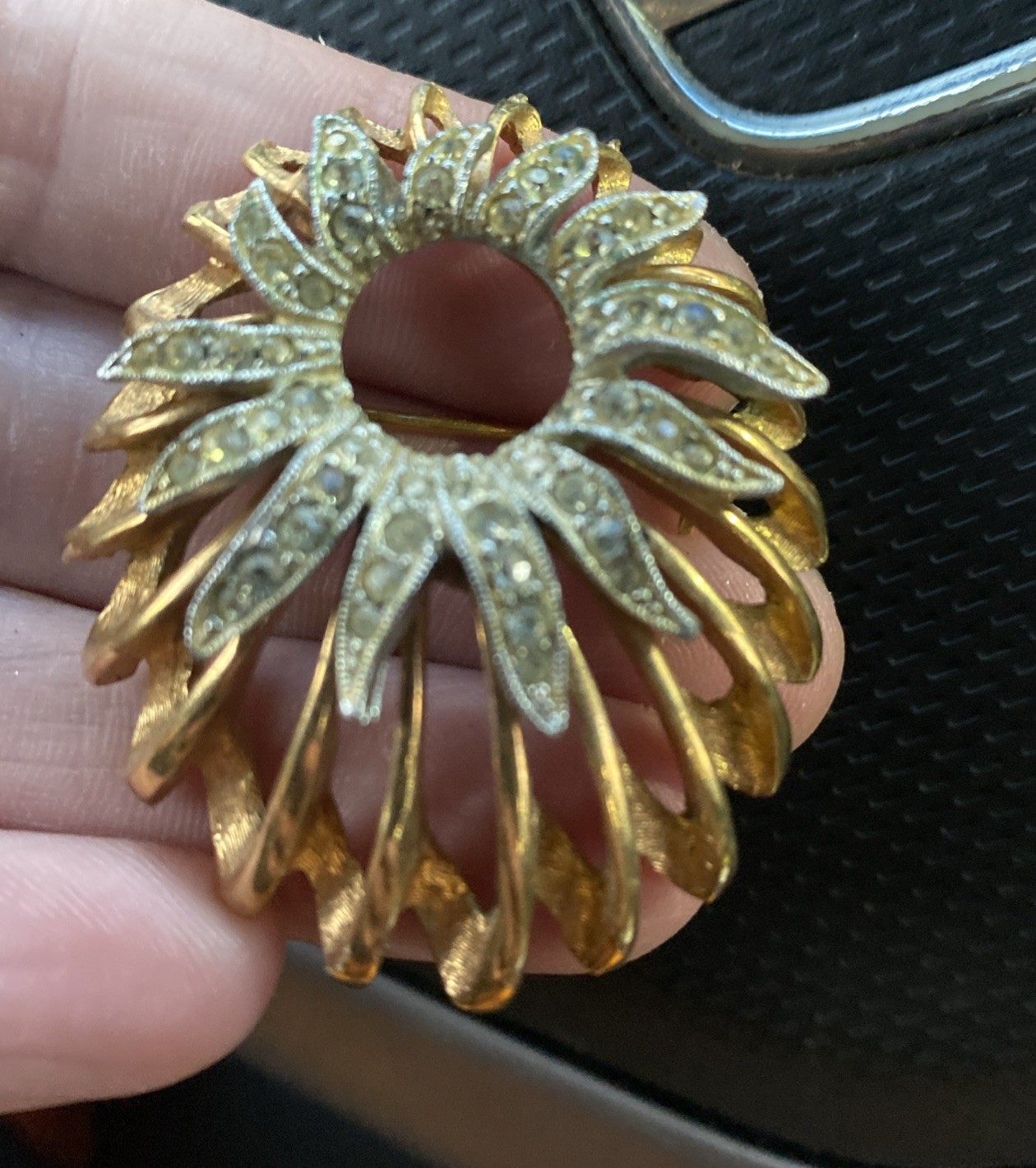
Incredibly Rare Jean Schlumberger Pre-Tiffany's Crystal Floral Costume Brooch
sieraden
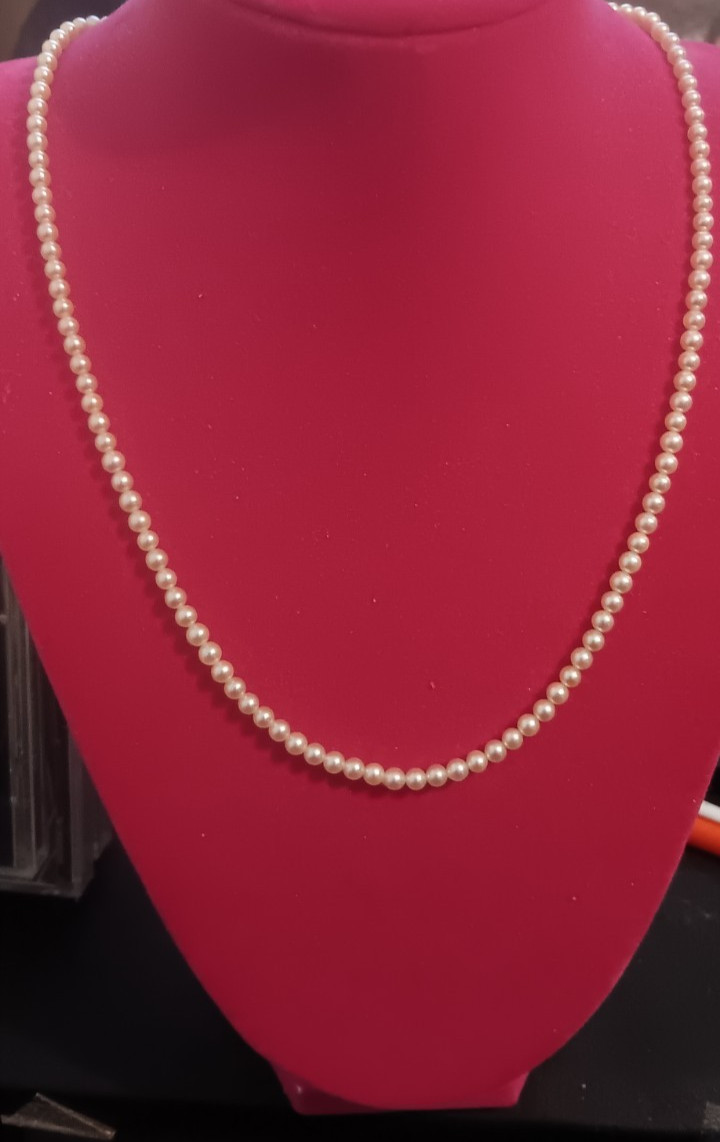
Vintage 14 k Gold Clasp Cultured Pearl Strand Necklace 18 inch Small Hand Knott
sieraden
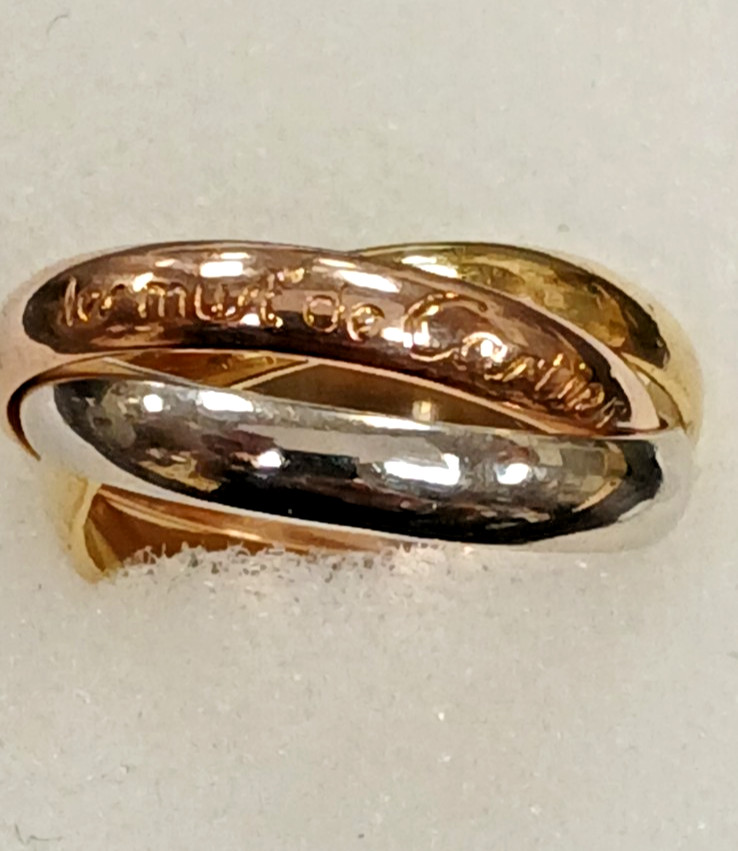
Vintage Cartier Trinity Ring 18K Tri-Color Gold 3.4mm MM Classic Size 54 8.5g
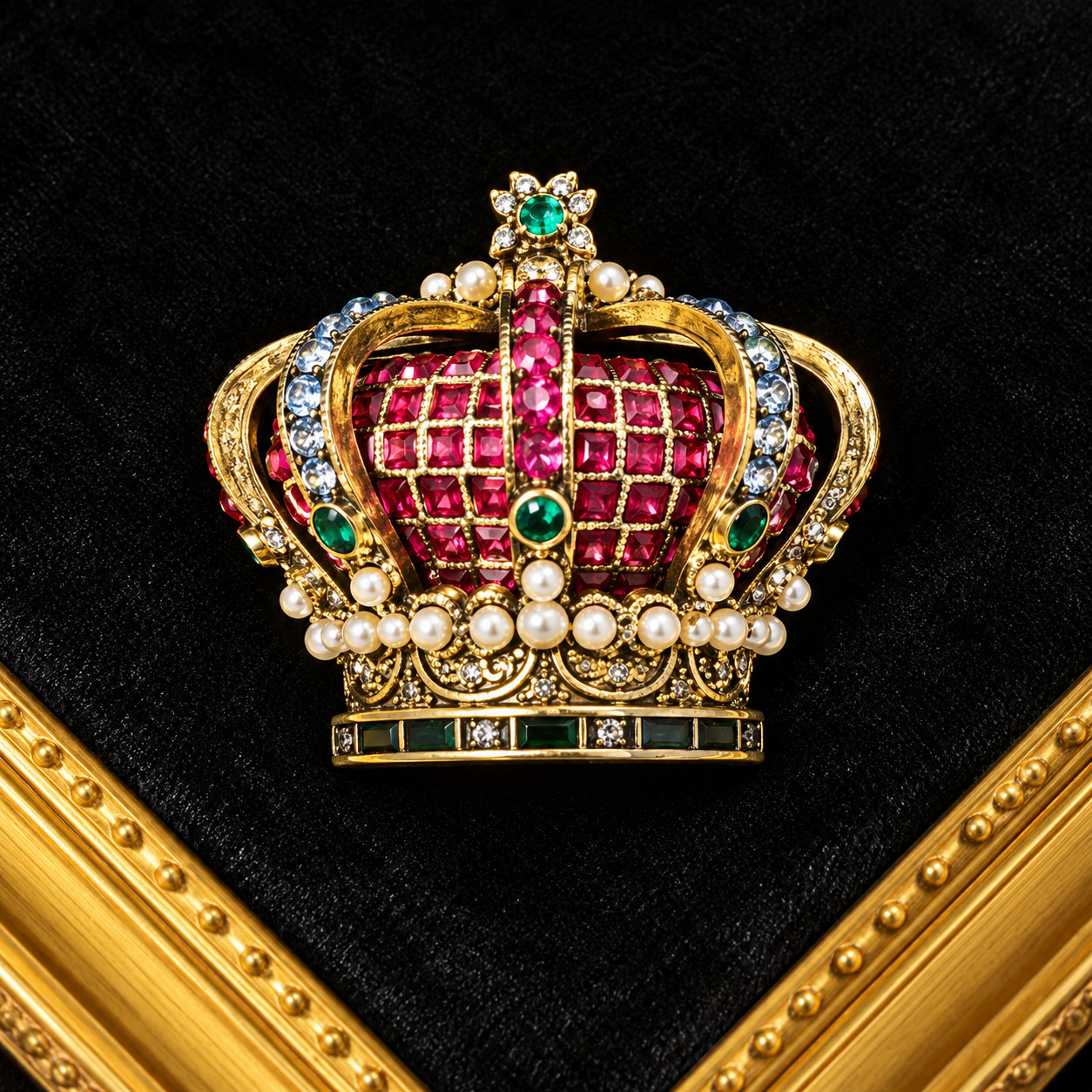
sieraden
Vintage Crystal Crown Brooch Pin Colorful Rhinestone Royal Jewelry Elegant Gift
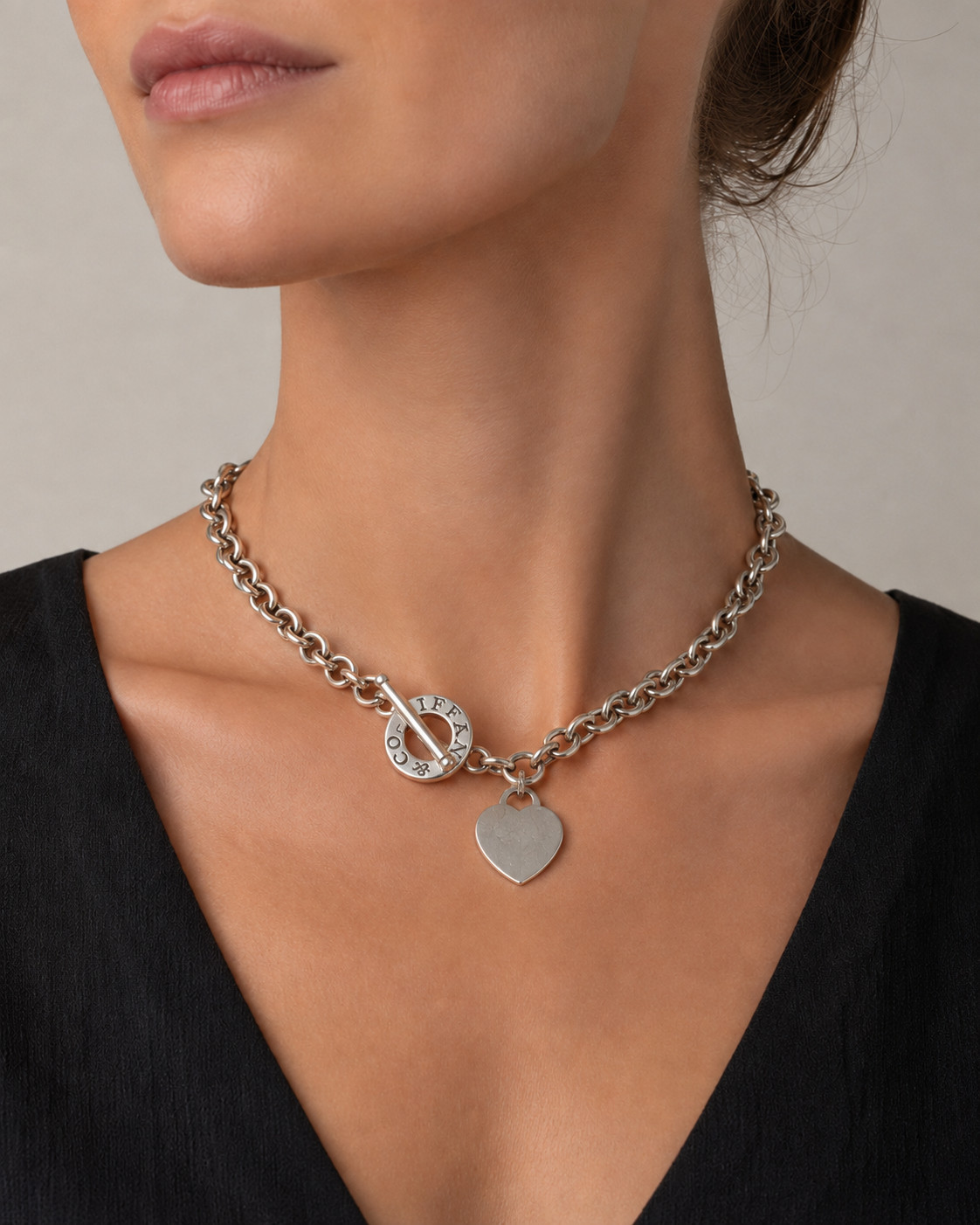
sieraden
Vintage Return Tiffany & Co Toggle Heart Tag Necklace Sterling Silver Authentic
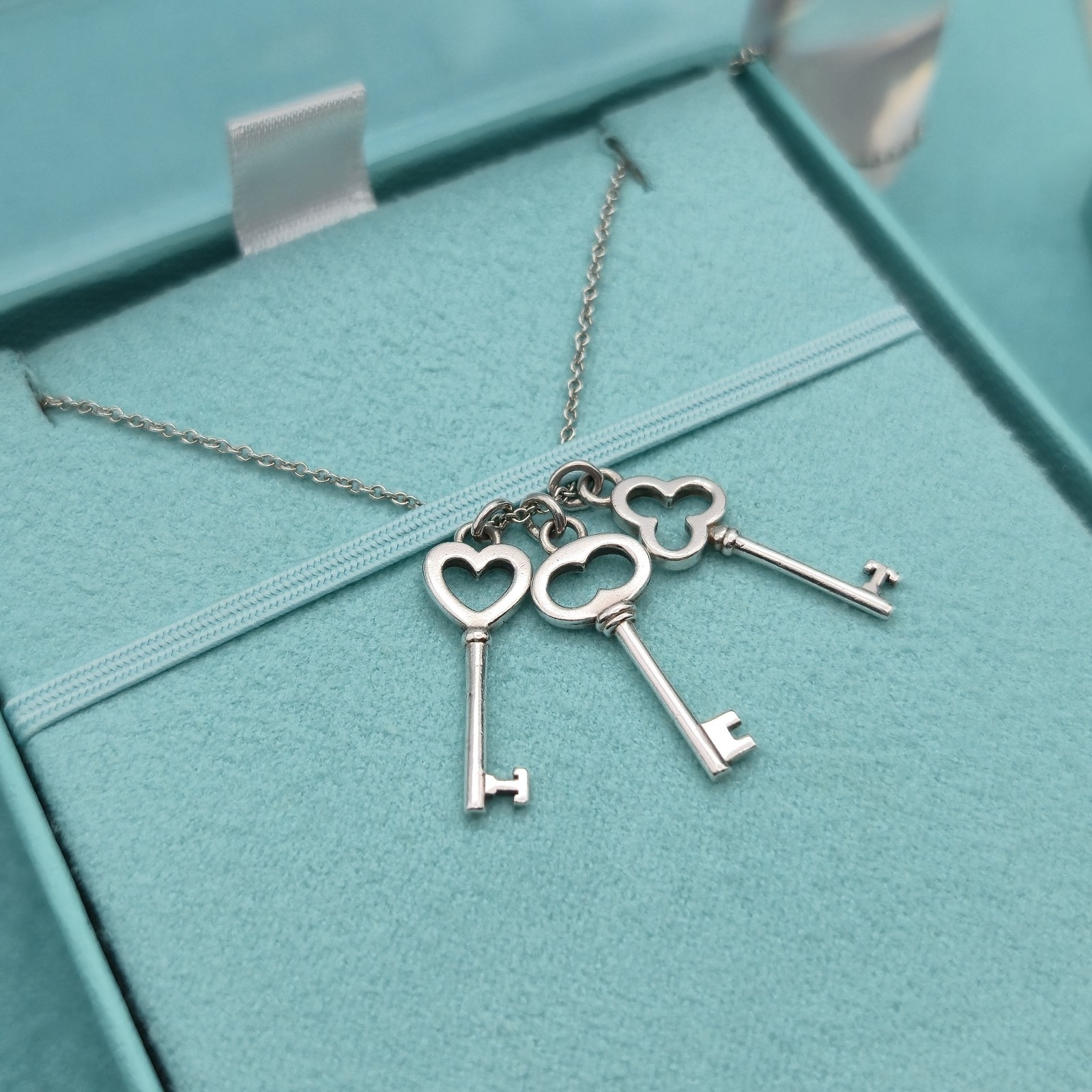
sieraden
Vintage Tiffany & Co. Triple Mini 3 Keys Pendant 16" Necklace in Sterling Silver
The names
Meet the designers
The minds behind this story — each with a piece currently on the market.
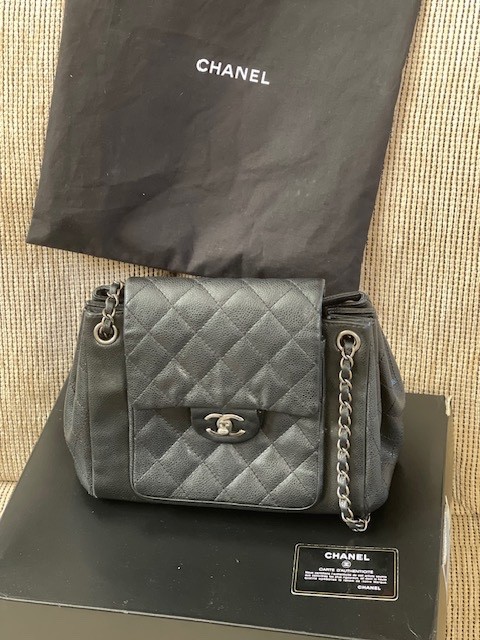
Chanel
France · 1910s
The little black dress & the 2.55
The little black dress & the 2.55
Top piece
View →
Arne Jacobsen
Denmark · 1950s
The Egg & the Series 7 — chairs turned into quiet sculpture.
The Egg & the Series 7 — chairs turned into quiet sculpture.
Top piece
View →
Børge Mogensen
Denmark · 1940s
The Spanish chair — honest, functional furniture for everyday life.
The Spanish chair — honest, functional furniture for everyday life.
Top piece
View →
Calvin Klein
USA · 1960s
Minimalism & the 90s slip
Minimalism & the 90s slip
Top piece
View →
Continue the edit
Further stories from the same world
Three more walks through the same vintage universe.
Vintage Jewelry: The Art of Wearing History
Forget the glass case. The best vintage jewelry is meant to be worn, not admired from afar. Here's how to style it, spot a gem, and know its stories.
Read the story →Why Vintage Jewelry Matters Now: A Wearer's Guide
Forget the market. This is about finding a piece with a past and making it yours, from the right era to the perfect clasp.
Read the story →Why Vintage Jewelry Matters Now
Forget the vault. Vintage jewelry belongs on your body, mixed with denim and tailored wool, where its scratches and history can catch the light. Here is how to wear it well, what to look for, and why a $111.27 brooch can outshine anything new.
Read the story →