
 Sign in
✦ Culture · New York
The Sneaker That Earned Its Scuffs
An editor's guide to wearing vintage Nike and Adidas without looking like you raided a display case: what to pair them with, which era details actually matter, and the court history behind the shapes on the shelf.
 By Louis Trash·
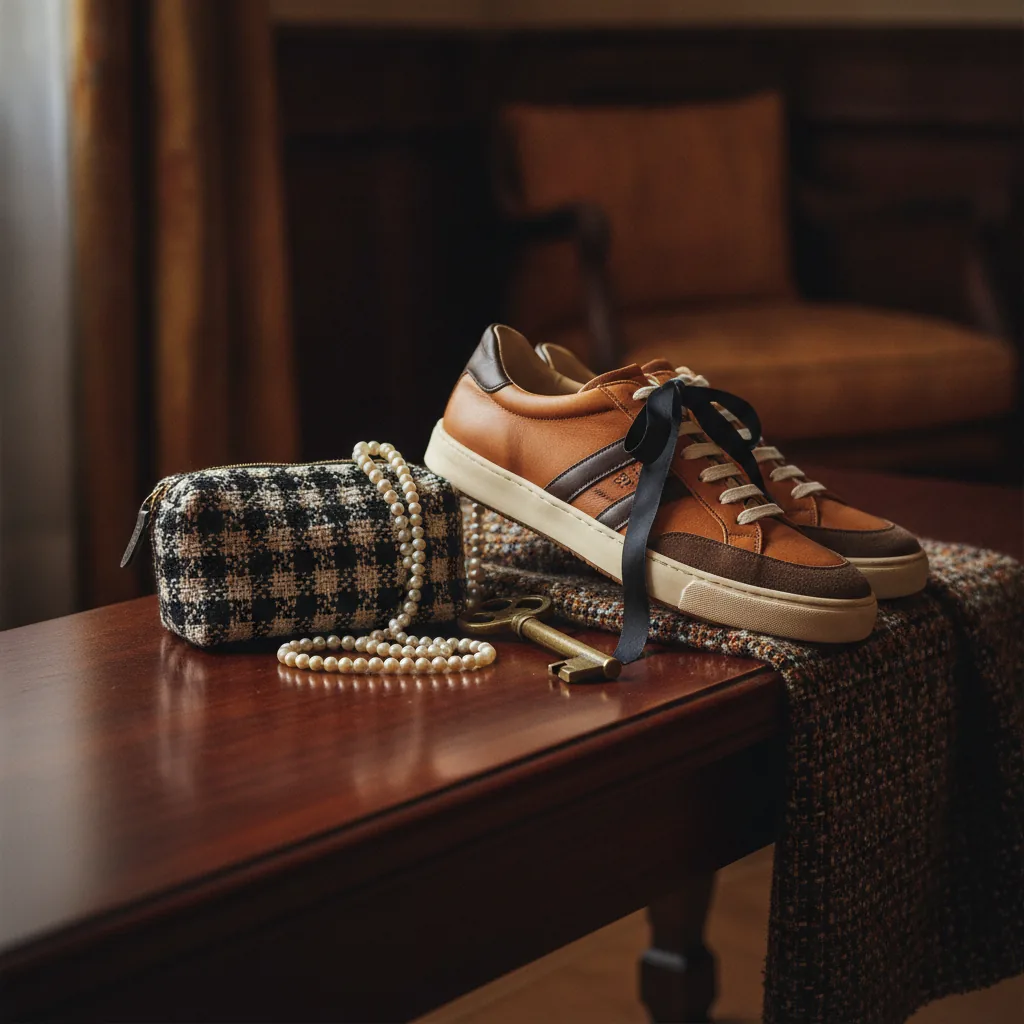
Start With the Shoe You Already Own
A pair of 1980s Adidas Superstars looks wrong with fresh denim and right with denim that has been washed forty times. That is the whole lesson. Vintage sneakers reward clothes that have lived a little. They punish anything too crisp. If you are building an outfit around a pair of old Nikes, begin with the trousers. A straight leg that breaks once over the laces, a little shorter than you think, keeps the shoe visible and keeps the proportion honest. Skinny jeans make a chunky 1990s runner look like a cartoon. Wide, cropped trousers make it look deliberate.
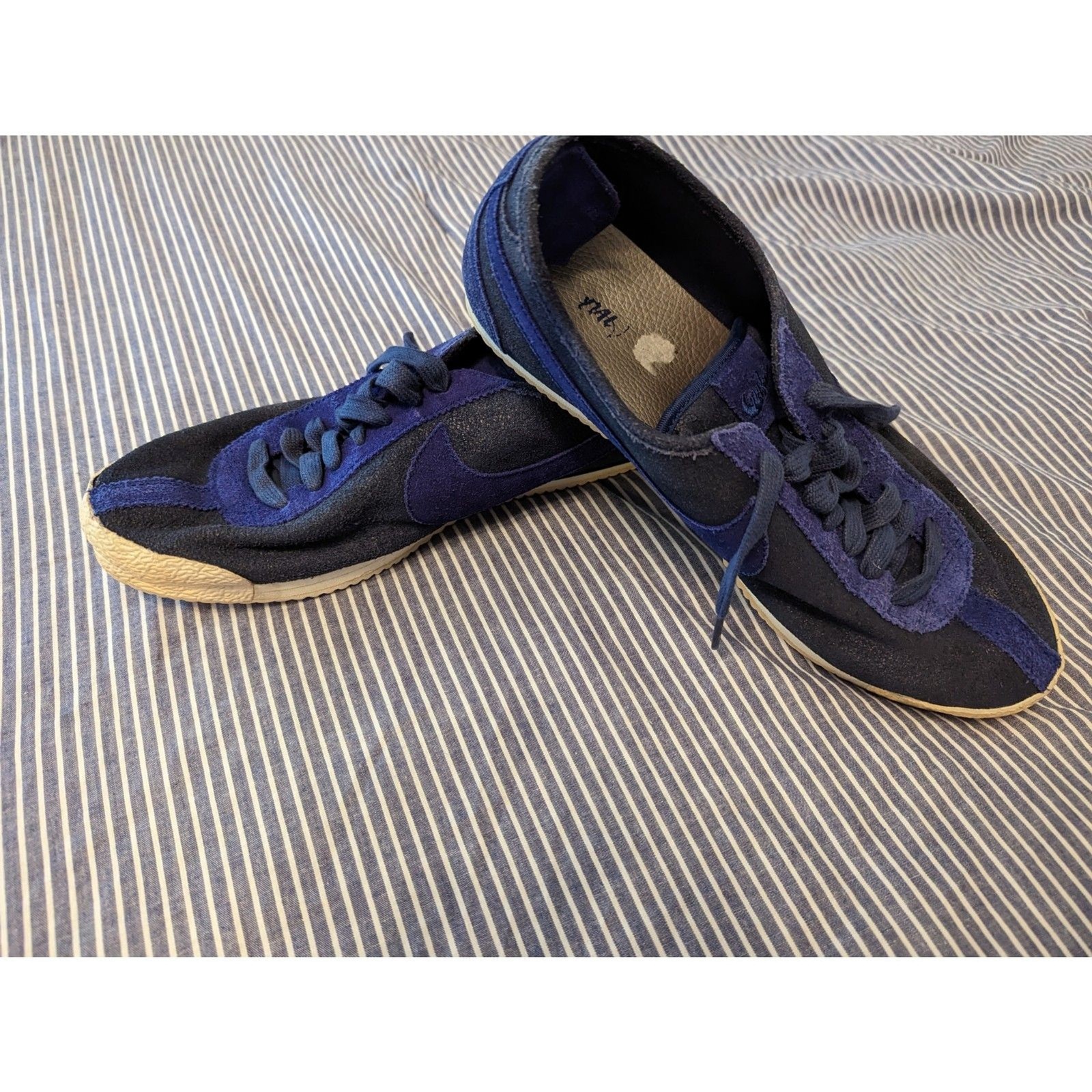
The safest pairing is a plain crewneck, a straight chino or a broken-in jean, and nothing else competing for attention. The shoe is the statement. Let it be. If you want a second idea, try a tailored wool trouser with a low-profile 1970s silhouette, something like an Adidas Country or a Nike Waffle Trainer. That contrast, formal cloth against a rubber sole, is the move that separates people who wear vintage from people who collect it.
What the Court Actually Gave Us
Nike's Waffle Trainer came out of Bill Bowerman's kitchen in 1974, and the story is true: he poured rubber into his wife's waffle iron to make a grippier sole. The shoe that resulted was cheap, ugly, and perfect for the running boom that followed. Adidas had already put the three stripes on the Superstar in 1969, and by the mid-1970s half of the NBA was wearing them. Kareem Abdul-Jabbar wore them. So did every kid who could afford the $20 or so they cost.

Foto: Jonathan Cooper · Pexels
The 1980s brought the Air Force 1 in 1982, designed by Bruce Kilgore, and it changed what a basketball shoe could look like. The 1990s brought the runner era, the Air Max line, and a generation of shoes that were engineered for a sport most buyers never played. That history matters when you are standing in front of a shelf. A shoe from 1985 has a different sole unit and a different toe box than a reissue from 2015, and the difference shows on the foot.
The Details That Tell You It Is Real
Look at the stitching first. Older shoes have denser stitching, often with a slight irregularity that machine production later smoothed out. Check the tongue. Early Superstars have a shorter, flatter tongue than the modern version. Check the heel tab and the logo placement. A 1970s Adidas logo sits differently than a 1990s one, and that is your era tell.
Foto: Frans van Heerden · Pexels
Material is the other giveaway. Pre-1990 uppers are usually full-grain leather or a heavy suede that has softened with wear. Later shoes use split leather or synthetic panels that crease sharply rather than gently. Run your thumb across the toe box. Old leather gives. New leather resists.
Soles matter more than people admit. A 1980s rubber sole will have yellowed unevenly and may have hardened, which is fine for wearing but a warning sign if it has cracked at the flex point. Ask about the midsole foam on any 1990s runner. Polyurethane from that era crumbles, and no amount of cleaning fixes it. A pair at around $119 is usually priced for wear, not for the archive, so treat small scuffs as part of the deal and structural cracks as a reason to walk away.
The Modern Wardrobe Test
A vintage sneaker works best when it is the only old thing you are wearing. Pair it with a new coat, a new bag, a new pair of socks. The shoe carries the age, and the rest of the outfit keeps the look current. That is the opposite of how people style vintage clothing, and it is why sneakers are easier to wear than a 1970s jacket.

Foto: Dương Nhân · Pexels
Color is your friend here. A white or cream shoe with a gum sole goes with almost everything. A navy or forest green suede is more interesting and slightly harder to place, but it works with grey wool, olive canvas, and dark denim. Avoid the temptation to match the shoe to the outfit. Let it sit slightly apart.
Socks are the detail people miss. A low-cut sock disappears and makes the ankle look bare in a way that reads as gym, not street. A ribbed crew sock in white or oatmeal, pulled up, gives the shoe a frame and makes the whole look intentional. That single change does more than any other styling decision.
Wearing Them Without Worshipping Them
The point of a vintage sneaker is that it has already been somewhere. Scuffs, a slightly yellowed sole, a crease across the toe: these are the record of use, and they are why the shoe looks better than a new one. Do not baby them. Wear them in the rain once and see how the leather responds. Clean them with a soft brush and a little saddle soap, not a washing machine. Let them dry away from heat.
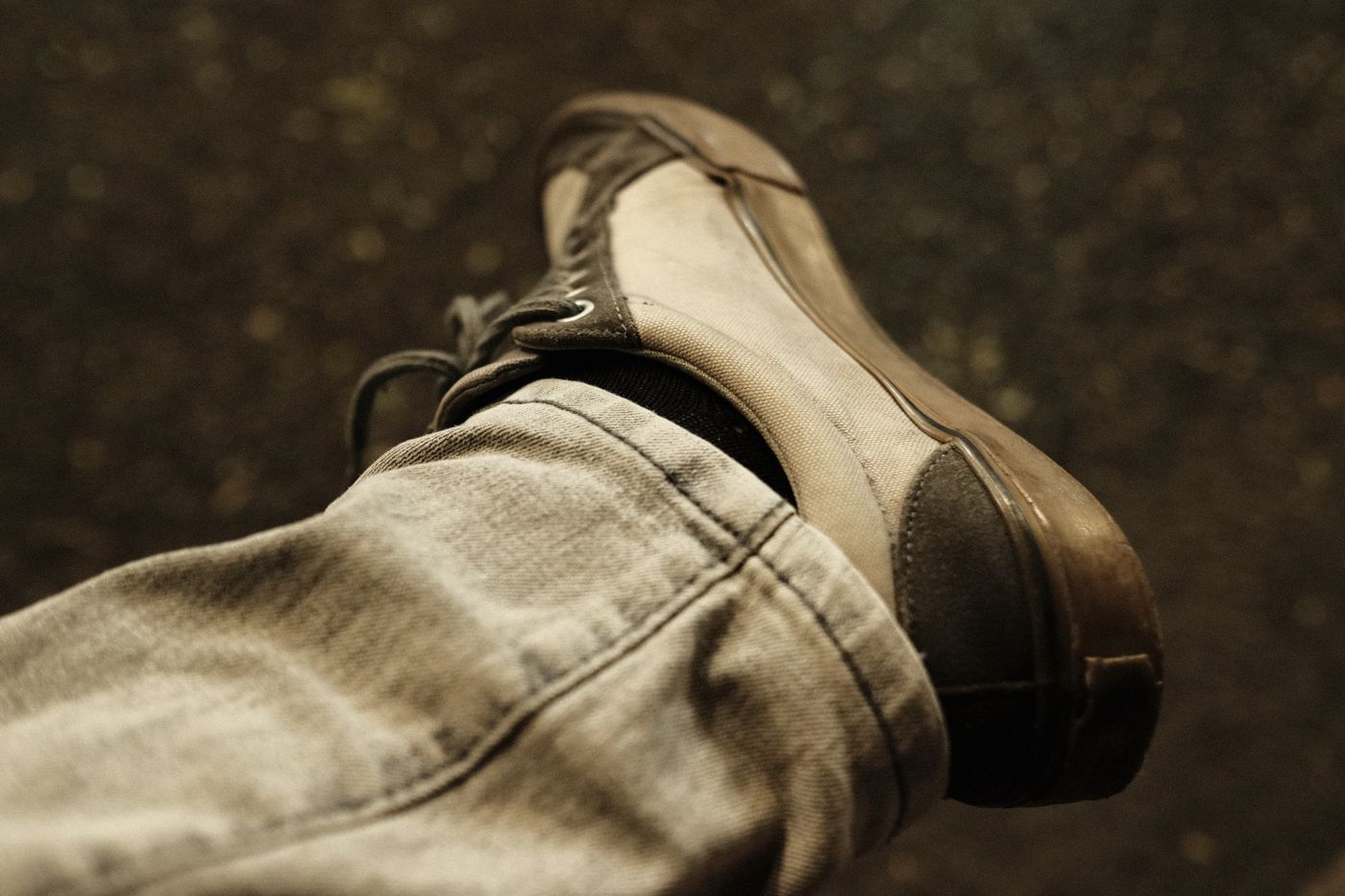
Foto: Nguyễn Minh Thắng · Pexels
If a pair feels too precious to wear, it is the wrong pair. The shoes worth owning are the ones you reach for on a Saturday without thinking, the ones that make a plain outfit look considered. That is the whole test. A vintage sneaker earns its place by being worn, not by being stored, and the scuffs are the proof that someone before you understood that too.
 ✦ The Edit
One to watch
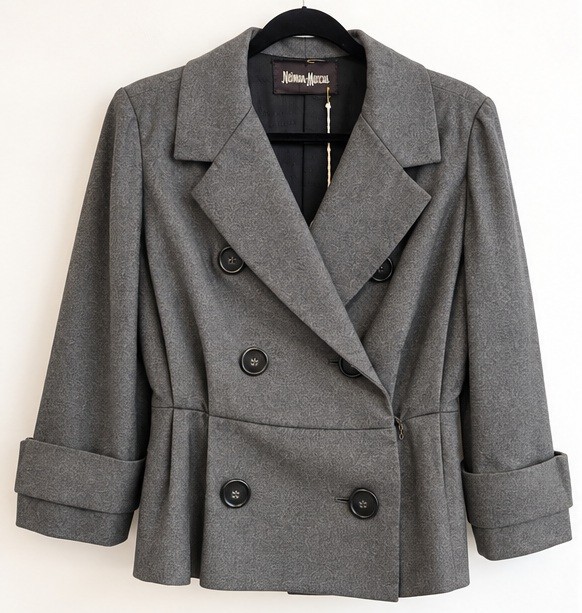
Vintage 1950s Christian Dior Jacket Neiman Marcus Gray New Look Style Blazer
The New Look that rebuilt fashion. This honestly worn blazer from the 1950s carries exactly the quality that made Dior worth collecting in the first place. This is the kind of thing that only improves the longer you live with it.
On the market now
The names
Meet the designers
The minds behind this story — each with a piece currently on the market.
Adidas
Germany · 1940s
The three stripes & the Samba
The three stripes & the Samba
Nike
USA · 1960s
Air Max & the Swoosh
Air Max & the Swoosh
Dior
France · 1940s
The New Look & the Lady Dior
The New Look & the Lady Dior
Top piece
View →
Jean Prouvé
France · 1930s
Structural steel & the Standard chair — an engineer of furniture.
Structural steel & the Standard chair — an engineer of furniture.
Top piece
View →
Continue the edit
Further stories from the same world
Three more walks through the same vintage universe.
Why Vintage Sneakers Matter Now
A field guide to wearing the old Nikes and Adidas that still turn up: how to style them without looking like a costume, what era tells to check at the till, and the 1972 origin story most sellers get wrong.
Read the story →The Sneaker You Actually Wear: A Field Guide to Vintage Nike and Adidas
A practical, opinionated guide to buying and wearing old Nikes and Adidas: which eras to hunt, how to spot a pair worth keeping, and how to make a 1982 runner look like it belongs in a 2025 wardrobe.
Read the story →The Sneaker You Can Wear With Anything (Except Running)
A field guide to wearing old Nikes and Adidas like clothes rather than collectibles: the proportions that work, the era tells worth knowing, and why the scuff is part of the point.
Read the story →