
 Sign in
✦ Culture · Amsterdam
The Sneaker You Can Wear With Anything (Except Running)
A field guide to wearing old Nikes and Adidas like clothes rather than collectibles: the proportions that work, the era tells worth knowing, and why the scuff is part of the point.
 By Louis Trash·
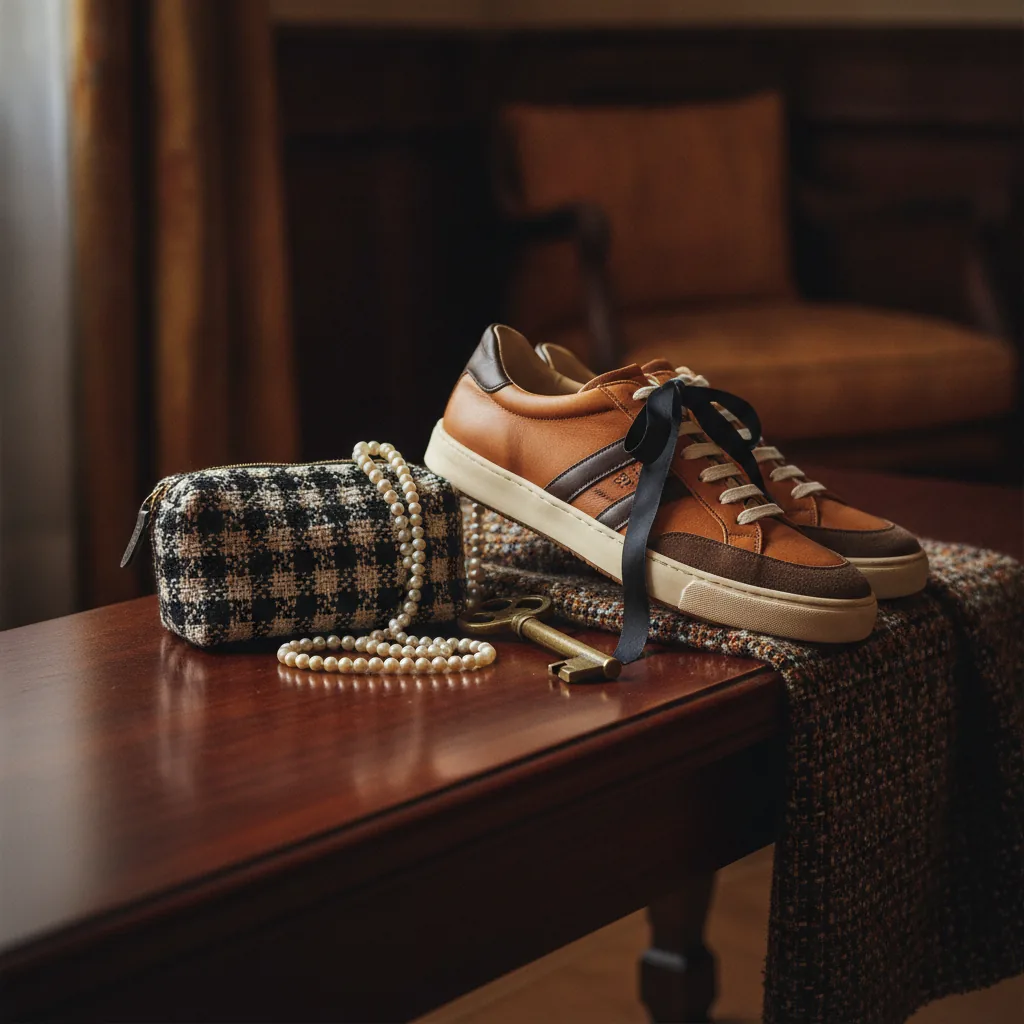
The shoe that stopped being sportswear
In 1972, Bill Bowerman poured rubber into his wife's waffle iron and ruined it. What came out was a sole with a grip that changed how people ran, and by extension, how the rest of us walked. Fifty years on, that waffle tread is still the detail you hunt for on a vintage Nike Waffle Trainer. It is still the reason the shoe looks right with a pair of wide-leg wool trousers. The original intent was a running shoe. The current use is a shoe you wear to a gallery on a Saturday. That gap is where the pleasure lives.
I wear old sneakers the way I wear old watches. They are the quietest thing in the outfit and the one people ask about. A pair of suede Adidas Gazelles in a colour that has faded to something the factory never intended does more for a plain oxford shirt and chinos than any new shoe I own. The trick is to stop thinking of them as athletic equipment. They are footwear now. Treat them with the same seriousness you'd give a loafer.
Proportions before colour
The common mistake is a slim jean. A low-profile vintage runner like the Nike Cortez, which first appeared in 1972, needs volume somewhere else or the whole thing looks pinched at the ankle. I pair mine with a straight-leg chino that breaks once over the shoe, or a pleated trouser with a 22cm hem. The shoe disappears under the cloth and reappears at the toe. That is the correct effect.
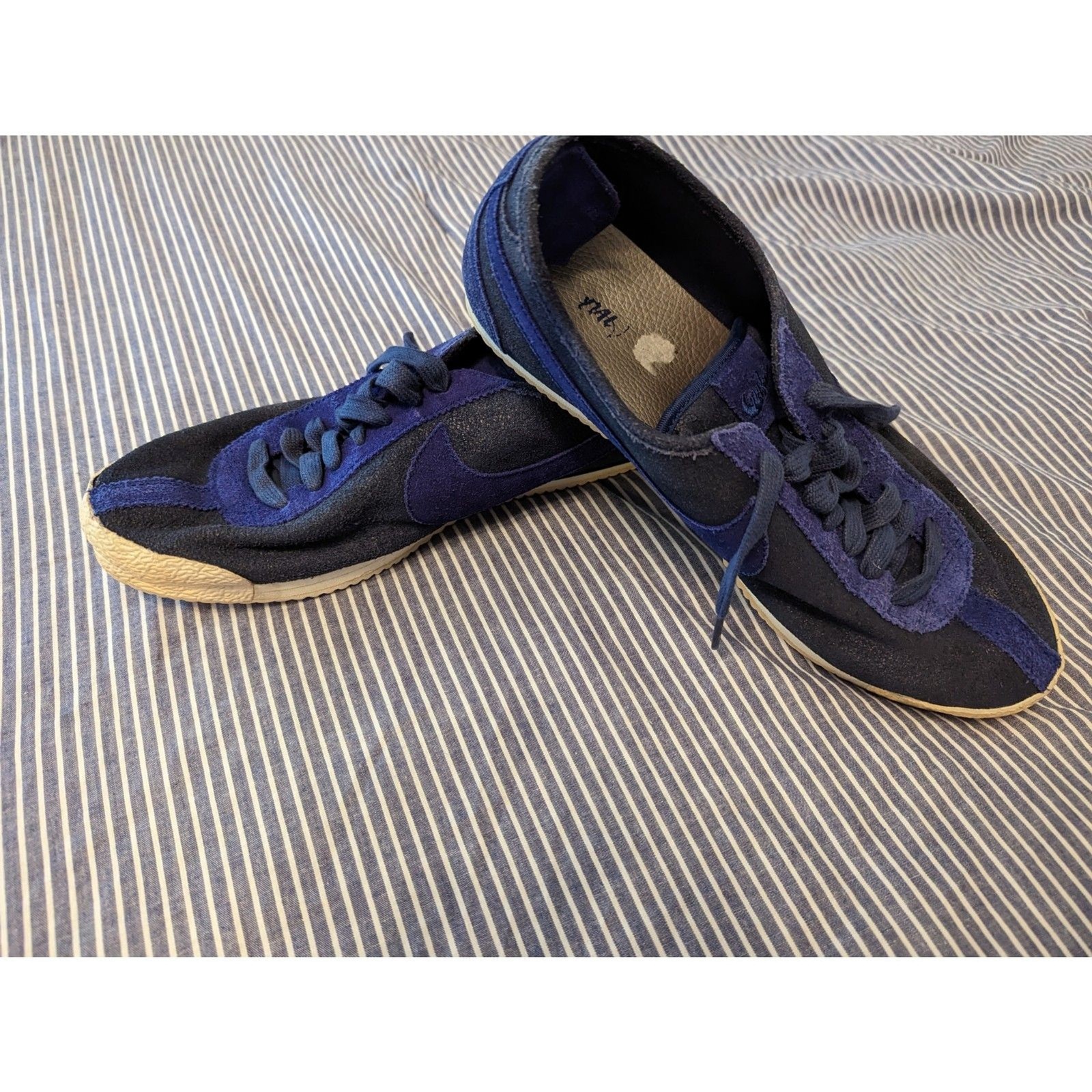
For the chunkier shapes, the Adidas Country or an early Nike Internationalist, go the other way. A cropped trouser, a rolled cuff, an ankle on show. The shoe becomes the anchor and the leg is the line above it. I have a pair of 1980s Adidas Country in navy suede that I wear almost exclusively with a slightly cropped, wide cotton trouser in ecru. The contrast of the pale leg and the dark shoe is the whole outfit.
Socks matter more than people admit. A white cotton crew, ribbed, sitting just above the collar of a low shoe, reads as deliberate. A trainer sock reads as an afterthought. If the shoe is suede, avoid a sock that sheds. You will spend the evening picking lint off the toe box.
What the good ones are made of
Look at the upper first. Through the 1970s and into the early 1980s, Nike and Adidas used a lot of suede and a lot of a nylon mesh that has a particular dry hand. Run a thumb across it. Good vintage mesh has a slight tooth; the modern stuff is smoother and shinier. Suede should feel like the nap has been worn flat in places and still stands up in others. That unevenness is a sign of age, not damage.

Foto: Jonathan Cooper · Pexels
The midsole is the tell. Old foam yellows, and that yellowing is honest. What you want to avoid is a midsole that has gone crumbly or chalky at the flex point, because that foam is done and no cobbler will bring it back. Press a thumbnail into the side. If it dents and stays dented, walk away. If it springs back, the shoe has life.
Stitching should be tight and even, and the heel counter should still hold its shape when you squeeze it. On an Adidas, check the three stripes: on older pairs they are cut leather or suede and stitched down, not printed. On a Nike, check the tongue label. An early 1970s label is a small, plain rectangle with a swoosh and the word Nike; the later ones get busier. The label is the cheapest way to date a shoe without a box.
The films and the feet that made it
The Gazelle arrived in 1966 as a training shoe, and by the 1980s it had been adopted by people who had no intention of training. The Beastie Boys wore Adidas on the cover of Licensed to Ill in 1986, and that image did more for the three stripes than any campaign. Meanwhile, the Nike Cortez had its own moment in 1994, when Forrest Gump ran across America in a pair, and the shoe became a costume for a certain kind of earnest Americana.
Foto: Frans van Heerden · Pexels
But the real history is smaller. In 1977, the Adidas Country was introduced as a running shoe for people who ran on roads, and it was adopted by joggers in New York and London who wore it with shorts and then, later, with jeans. The shoe migrated from the track to the street because it was comfortable and because it looked good, and nobody wrote a press release about it. That is how most of these things happen.
Buying a pair you will actually wear
Price is not the point, but it is a useful filter. A decent pair of suede Gazelles or a clean Cortez will set you back somewhere around $140, and at that money you should expect a shoe with a solid midsole and an upper that has been looked after. Do not pay for rarity. Pay for condition.

Foto: Dương Nhân · Pexels
Check the insole. A worn-through heel is a sign the shoe has been worn hard, and it is hard to fix without changing the feel. Check the laces; original flat cotton laces are better than the shiny replacements. Check the sole for cracks at the flex point, especially on older waffle soles, which can go brittle. And check the smell. Old foam holds odour. Airing helps; nothing else does.
Sizing runs true on most Adidas of the period, but Nike varied. Try them on with the socks you will actually wear. Walk to the end of the street and back. If the heel slips, the shoe is wrong for you, however good it looks on the shelf.
The scuff is the point
A vintage sneaker with a crease across the toe and a little grey at the heel is a shoe that has been somewhere. That is the difference between wearing it and preserving it. The people who made these shoes were trying to solve a problem about grip and weight. The people who wore them were trying to get somewhere. You are doing neither. You are wearing a good shoe with a good trouser, and the wear on it is a record of someone else's ordinary Tuesday. Keep it. Wear it. Let the suede go soft.
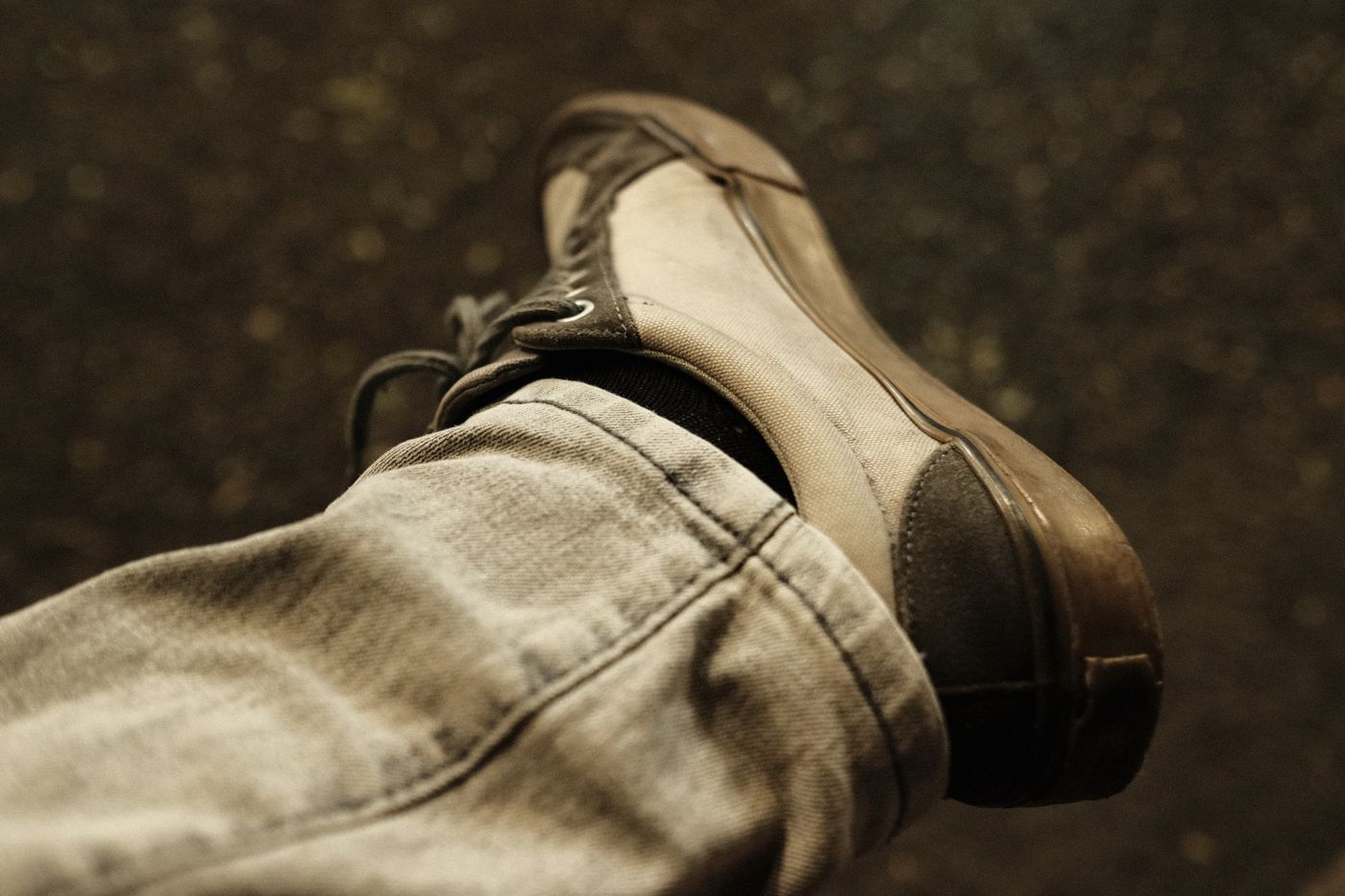
Foto: Nguyễn Minh Thắng · Pexels
The names
The designers behind the look
The minds behind this story — each with a piece currently on the market.
Adidas
Germany · 1940s
The three stripes & the Samba
The three stripes & the Samba
New Balance
USA · 1900s
The 550 & dad-shoe comfort
The 550 & dad-shoe comfort
Top piece
View →
Nike
USA · 1960s
Air Max & the Swoosh
Air Max & the Swoosh
Dior
France · 1940s
The New Look & the Lady Dior
The New Look & the Lady Dior
Top piece
View →
Continue the edit
Further stories from the same world
Three more walks through the same vintage universe.
Why Vintage Sneakers Matter Now
A field guide to wearing the old Nikes and Adidas that still turn up: how to style them without looking like a costume, what era tells to check at the till, and the 1972 origin story most sellers get wrong.
Read the story →The Sneaker That Earned Its Scuffs
An editor's guide to wearing vintage Nike and Adidas without looking like you raided a display case: what to pair them with, which era details actually matter, and the court history behind the shapes on the shelf.
Read the story →The Sneaker You Actually Wear: A Field Guide to Vintage Nike and Adidas
A practical, opinionated guide to buying and wearing old Nikes and Adidas: which eras to hunt, how to spot a pair worth keeping, and how to make a 1982 runner look like it belongs in a 2025 wardrobe.
Read the story →