
 Sign in
🔥 Fashion · Amsterdam
Why Vintage Denim Matters Now
A guide to wearing old Levi's well: the era tells worth knowing, the proportions that work today, and the blue jeans that got Marlon Brando and Bruce Springsteen in trouble.
 By Louis Trash·
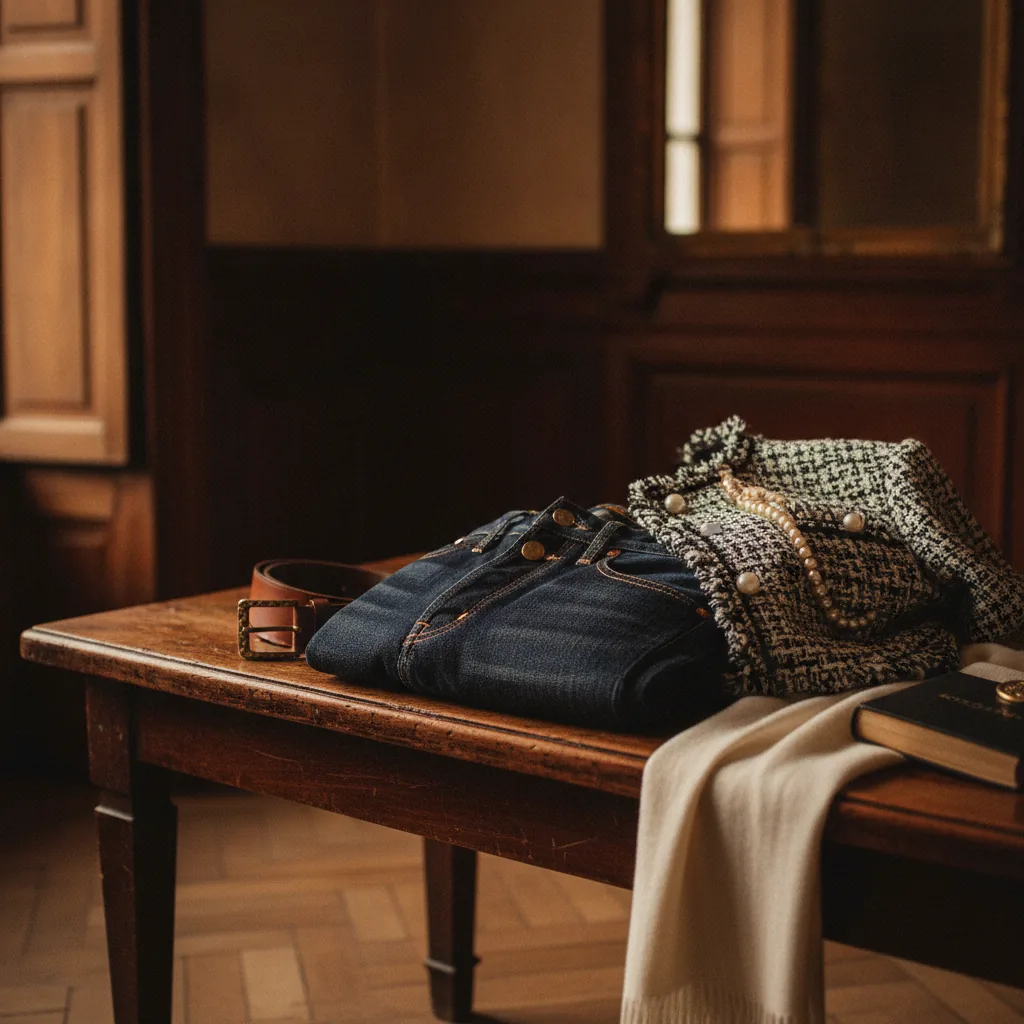
The Pair That Started This
A student in my evening class wore a pair of 501s last week with a cashmere crewneck and horsebit loafers. The jeans were faded to the color of weak tea and mended at the left knee with sashiko thread. She is twenty-three. I asked where she found them. Her mother's closet, she said, from 1994.
That is the whole appeal in one outfit. Vintage denim sits at the center of a wardrobe that is otherwise contemporary, and it makes everything around it look more considered. A pair of old Levi's costs about what a new pair costs, and it does something new denim rarely manages: it holds a shape that has already softened into the shape of a body.
What to Look For on the Rail
The red tab is the first thing to check, and it is not a foolproof marker. Levi's introduced it in 1936 to distinguish its jeans from competitors' at a distance. The tab has been red, orange, and white over the decades, and the capital E in LEVI'S on the tab ran until around 1971. A lowercase e dates a pair to 1971 or later. That distinction is useful, not sacred. A 1974 pair is still a very good pair of jeans.
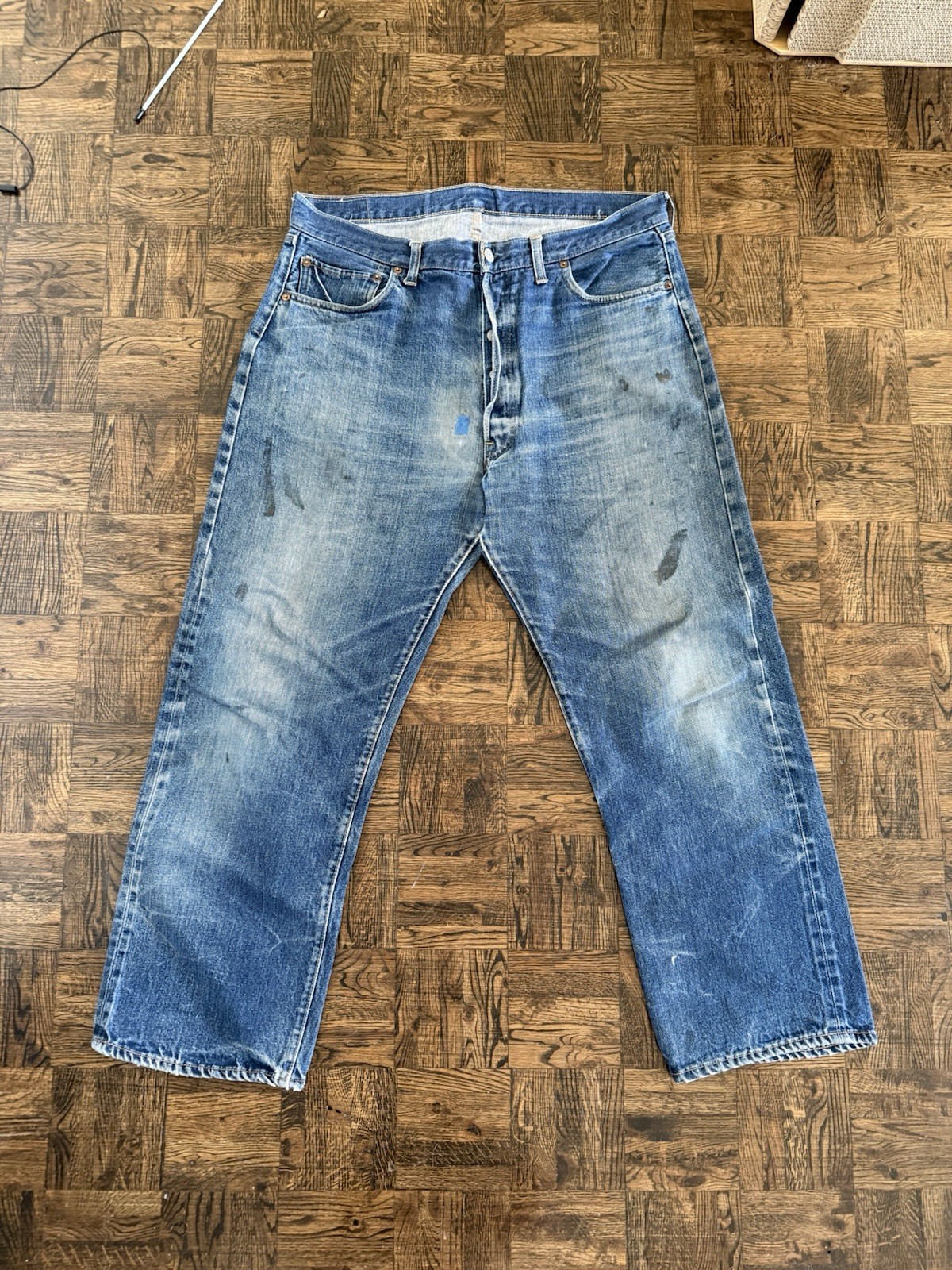
Look at the selvedge edge on the outseam. Redline selvedge, named for the red thread woven into the white edge, was made on shuttle looms in the United States until the early 1980s, when the company moved most production offshore. If you find a pair with a redline selvedge and a care tag that reads 'Made in USA', you are holding something from before 1983. Check the care tag instructions, too. Tags that mention washing in cold water and hanging to dry tend to be earlier. Tags that mention a dryer tend to be later.
Look at the stitching. Chain-stitched hems, where the thread forms a continuous loop along the bottom edge, were standard on American Levi's and produce the roping fade that denim people chase. Lock-stitched hems came later and look flatter. Neither is better for wearing. The chain stitch is simply a marker of age.
Fabric matters more than any label. Old denim from the 1960s and 1970s was woven on narrow looms and dyed with indigo that fades unevenly, which is why those jeans develop character instead of just getting lighter. Modern denim, even good modern denim, is more uniform. Run your hand over the inside of the leg. If it feels like cardboard, it has life left. If it feels like a bedsheet, it has been washed to death.
The fit names are worth knowing because sellers use them constantly. The 501 is the original straight leg, introduced in 1873 as a waist overall and renamed 501 in 1890. The 505, from 1967, has a zipper fly instead of buttons. The 517, from 1969, is the bootcut. The 550, from 1985, is the relaxed tapered fit that defined the late 1980s and early 1990s. Each has a different rise and a different leg. Try three before you buy one.
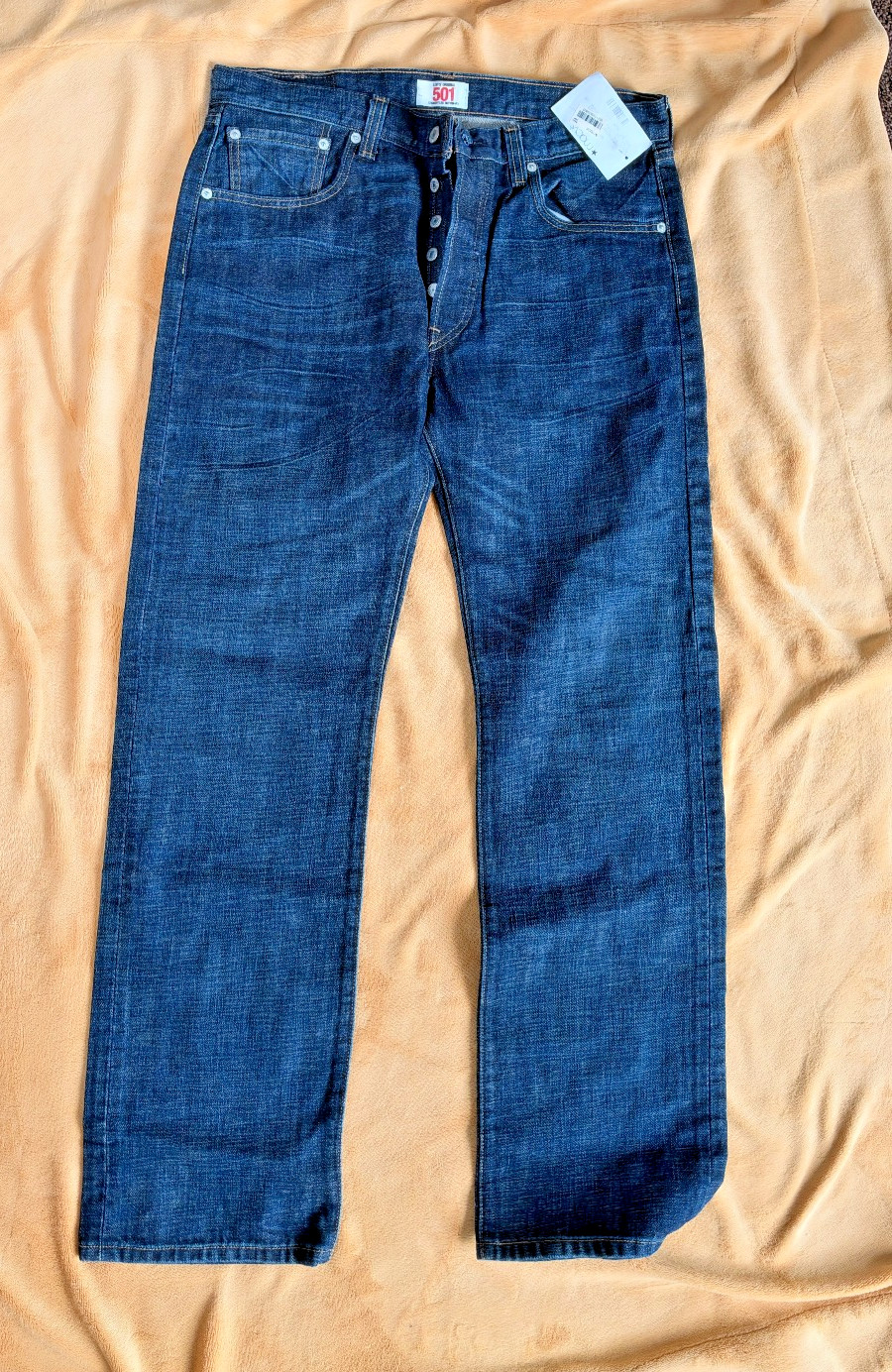
How to Wear It Without Looking Like a Costume
The mistake is treating vintage denim as a period piece. It is not a costume. It is a pair of pants.
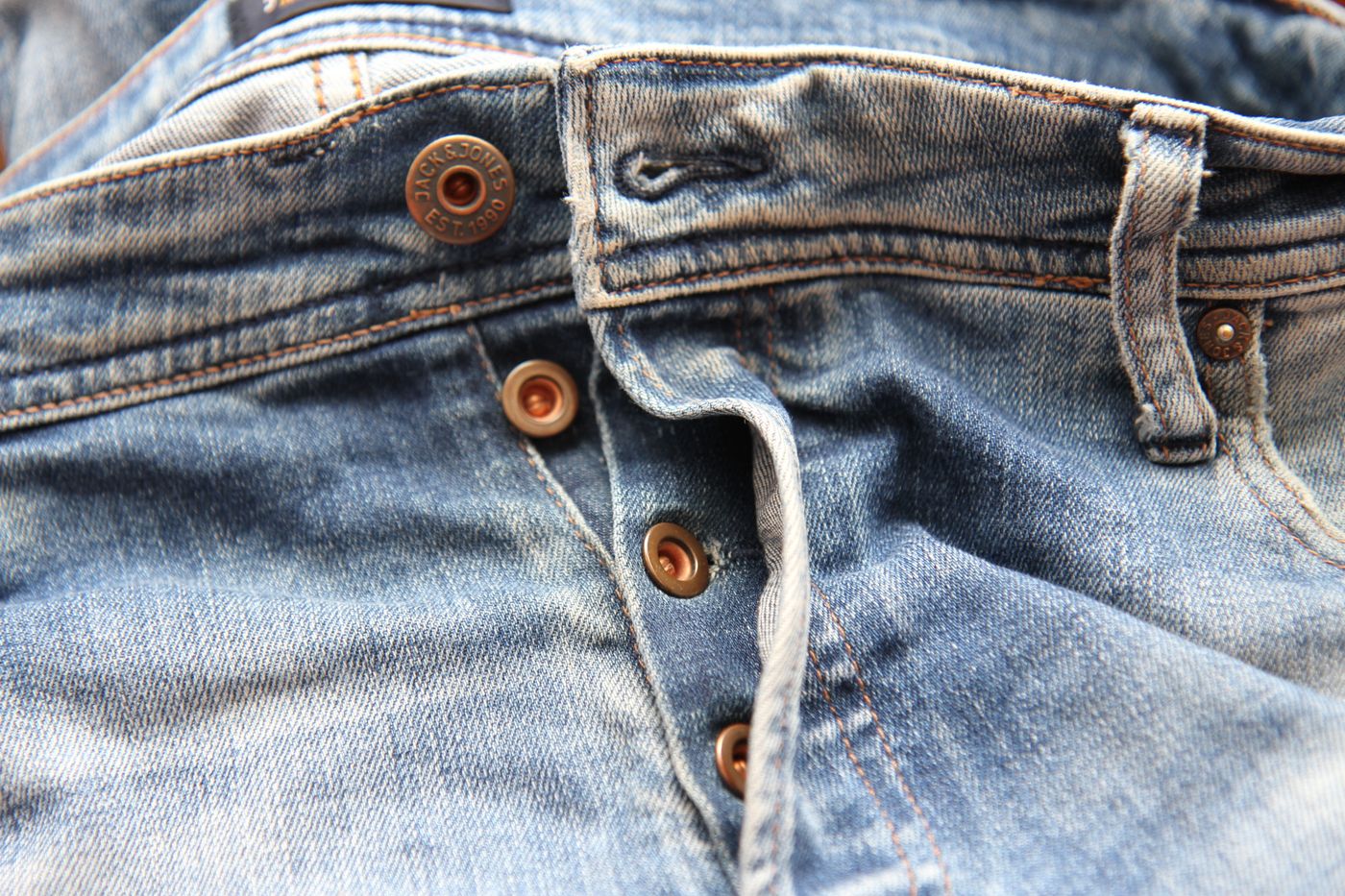
Foto: Dragan Tomić · Pexels
With a 501, keep the top half sharp. A white oxford shirt tucked in with a slim belt and a navy blazer works for almost any occasion short of a wedding. The straight leg balances the structured shoulder of the jacket. Add a loafer or a derby, not a sneaker. The sneaker turns the outfit into a throwback. The leather shoe keeps it in the present.
With a 517 bootcut, lean into the flare. A fitted knit top, a short jacket that ends at the hip, and a heeled boot. The proportion rule is simple: if the leg widens, the top should be narrow. If the leg is straight, the top can be boxy. A cropped sweater over a high-waisted 505 with a low heel is one of the most reliable outfits in my closet, and it has been for fifteen years.
With a 550, which has a looser, more relaxed leg, go softer on top. A linen shirt left untucked, a plain tee, a cardigan. This is the pair for a Saturday, not a meeting. Wear it with a canvas tote and flat sandals and you will look like you have somewhere pleasant to be.
A word on length. Vintage jeans are often hemmed short because the original owner was shorter than you. Do not be afraid to have them re-hemmed, but ask the tailor to keep the original hem if possible. If the hem is chain-stitched and you want to preserve the roping, a good denim specialist can reattach the original hem with a chain-stitch machine. It costs more than a standard hem. It is worth it on a pair you love.
The History That Made the Look
Levi Strauss and Jacob Davis patented the riveted pocket in 1873. The rivets were the innovation. They held the pockets on. Before that, miners and cowboys split their trousers at the corners. The patent changed workwear, and the 501 became the uniform of the American West.

Foto: Cherry’s POV · Pexels
In the 1930s, the company started selling jeans to women, mostly for ranch work. The fit was not designed for women's bodies. Women wore them anyway, often with the waist taken in.
The cultural shift came in 1953, when Marlon Brando wore a pair of 501s in The Wild One. The film was banned in some British towns for fear of juvenile delinquency. The jeans became a symbol of rebellion, and the company leaned into it. By the mid-1950s, Levi's was advertising in magazines aimed at teenagers.
In 1969, Bruce Springsteen was photographed in a pair of 501s for the cover of his first album, Greetings from Asbury Park, N.J. The jeans were not the point of the photo, but they became part of the image. By the 1970s, denim was everywhere, and the 501 was the default.
The 1980s brought the 550 and the rise of designer denim. Calvin Klein put Brooke Shields in a pair of jeans in 1980 and told the world that nothing came between her and her Calvins. The advertising worked. Denim became a fashion item, and the workwear origins faded.
The 1990s brought the backlash. Baggy jeans, then low-rise jeans, then the slow disappearance of the straight leg. By the 2000s, the 501 was something your father wore. The revival started around 2008, when a handful of Japanese brands and a few American workwear shops started selling deadstock and reproductions. The prices were high, and the audience was small. Then the internet found it.
What Makes a Pair Worth Keeping
A good pair of vintage jeans will have a few things in common. The denim will be heavy enough to hold a crease. The stitching will be tight and even. The hardware, the buttons and rivets, will be solid metal, not hollow. The pockets will be deep enough to hold a phone without sagging. The waistband will sit where it was designed to sit, not where you want it to sit.
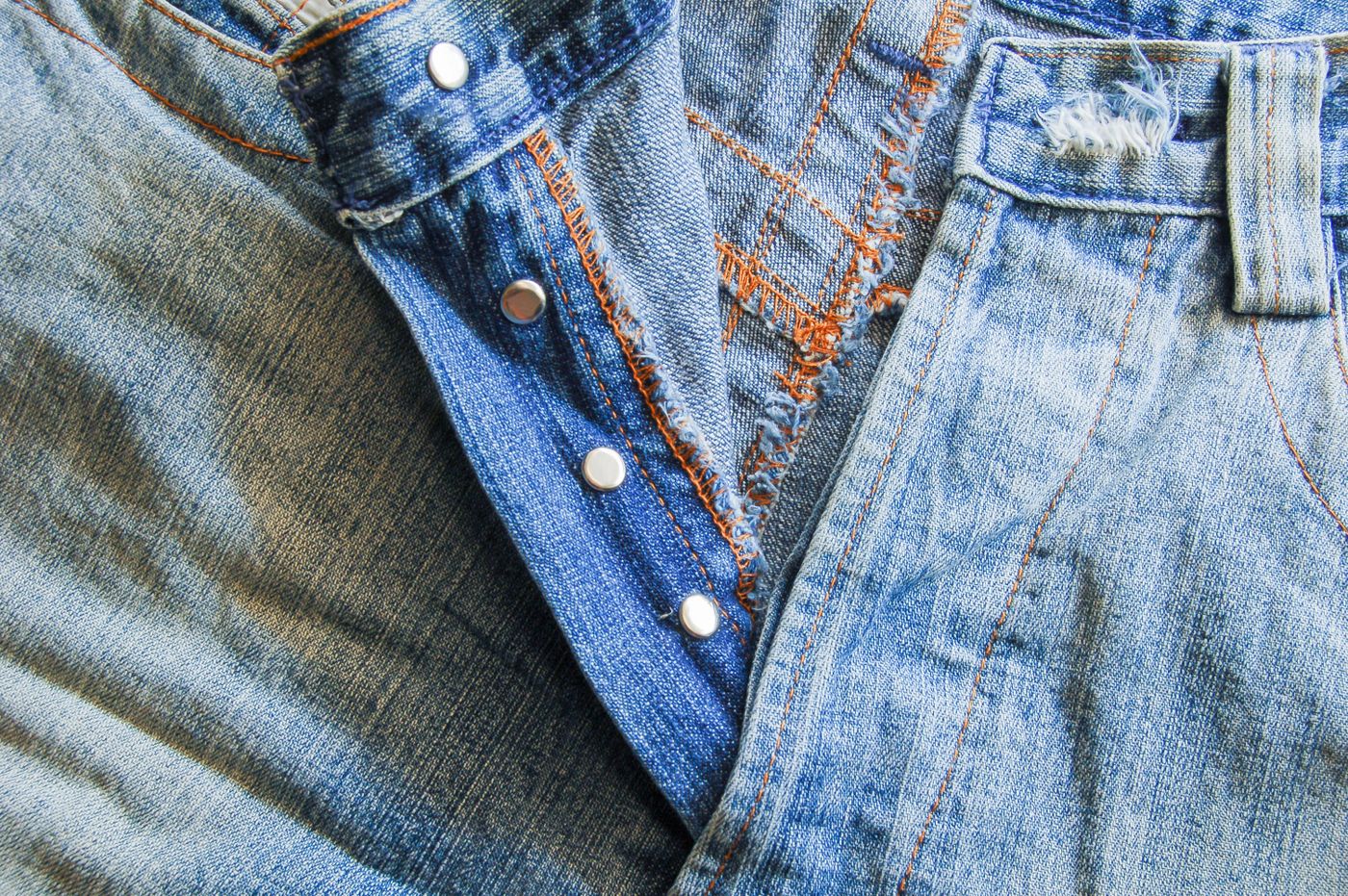
Foto: Srattha Nualsate · Pexels
If you find a pair that fits all of that, buy it. Wear it. Wash it rarely, in cold water, and hang it to dry. Mend it when it tears. The mending is part of the story.
The Long Wear
A pair of 501s from 1972 will outlast most of what is on the high street now. Not because the denim is magic, but because it was made to be worn by someone who could not afford to replace it. That is the real inheritance. You are not buying a trend. You are buying a pair of pants that was built to last, and wearing it until it does not. The fade at the back pocket is not a design feature. It is a record of where you sat and how you moved. That is the point. The jeans remember.

City
Amsterdam
Category
vintage denim
Published
25 October 2026
The names
Meet the designers
The minds behind this story — each with a piece currently on the market.
Levi's
USA · 1850s
The 501 & Americana denim
The 501 & Americana denim
Calvin Klein
USA · 1960s
Minimalism & the 90s slip
Minimalism & the 90s slip
New Balance
USA · 1900s
The 550 & dad-shoe comfort
The 550 & dad-shoe comfort
Top piece
View →
Børge Mogensen
Denmark · 1940s
The Spanish chair — honest, functional furniture for everyday life.
The Spanish chair — honest, functional furniture for everyday life.
Continue the edit
Further stories from the same world
Three more walks through the same vintage universe.
How to Wear Vintage Denim Without Looking Like a Costume
A wearer's guide to the Levi's that have already lived a life: how to style them now, what to check before you buy, and the true stories behind the fades.
Read the story →The Real Deal: How to Wear Vintage Denim Without Looking Like a Costume
A 1972 Levi's 501 is a pair of pants that will outlive your car. It deserves to be worn like it.
Read the story →How to Wear Vintage Denim Without Looking Like You Tried
A field guide to wearing old Levi's well: the cuts worth hunting, the tells that separate a 1972 pair from a 1994 pair, and the outfits that make them look like yours.
Read the story →