
 Sign in
✦ The Icon Story · London
The Dress That Was Made for Walking Away
A working guide to vintage dresses: how to wear them without looking costumed, what the seams and labels tell you, and the real history behind the shapes still hanging on the rail.
 By Louis Trash·
Start With the Waist, Not the Print
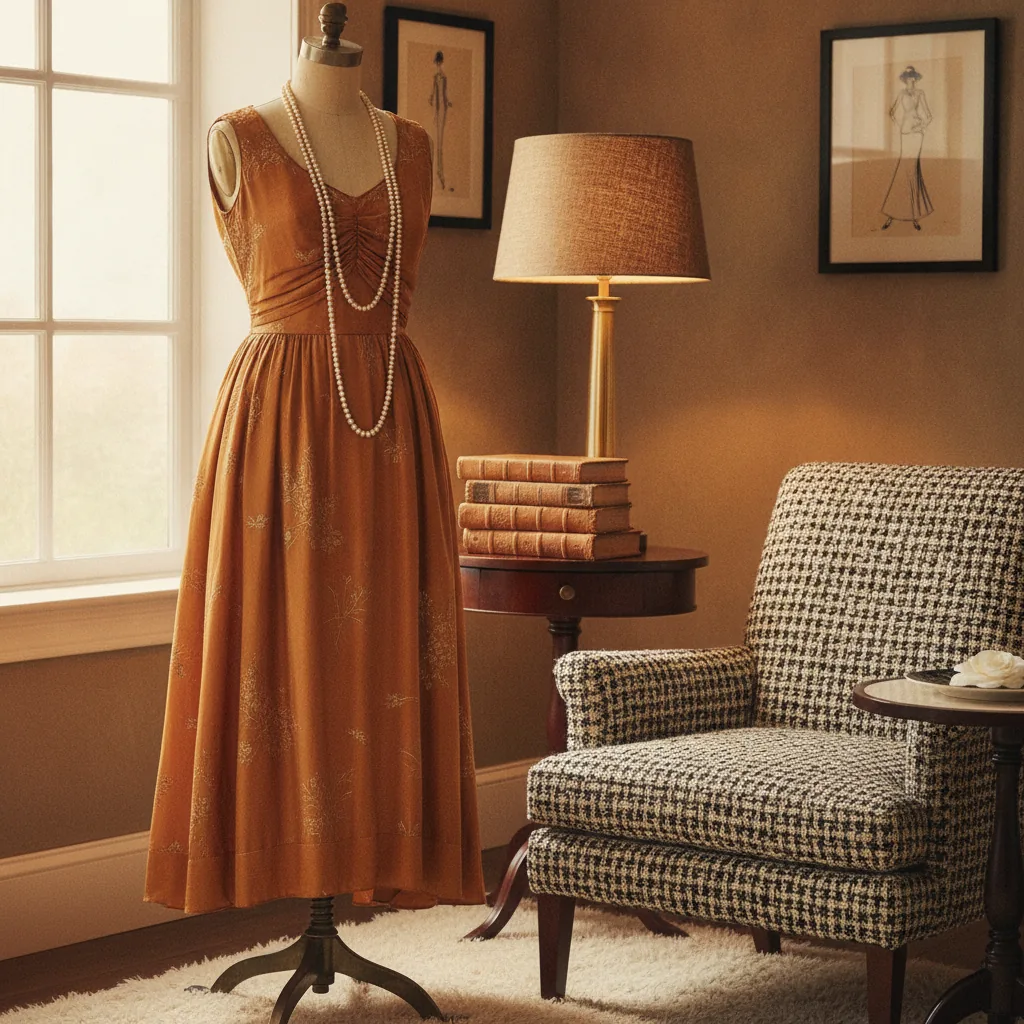
Most women I know buy a vintage dress because of the fabric. They fall for a 1968 Pucci print or a 1954 Horrockses cotton and then wonder, three weeks later, why it sits in the wardrobe. The print was never the problem. The waist was.
A dress from 1955 is drafted for a body wearing a girdle and a longline bra. The waist seam sits high and the skirt is built to flare from a point that no longer exists on you. A dress from 1972 is drafted for a body with no girdle at all, waist seam dropped two inches, sleeves set wide. Same size on the label, wildly different fit. When you try a piece on, ignore the shoulders first and find the waist seam. Put your finger on it. If it lands above your natural waist, you are looking at an older dress and you will need to think about a belt, a cardigan, or a tailor. If it lands at or below your natural waist, it will probably work with what you already own.
This is the single most useful thing I can tell you about buying vintage dresses. Everything else follows from it.
What the Seams Say Before the Label Does
Labels lie. They get swapped, they get cut out, they get sewn back in by people who know what a Biba label is worth. Seams are harder to fake.
Look at the inside of the side seam. A dress made before about 1963 will usually have a pinked seam allowance, cut with pinking shears into a zigzag edge, no overlocking. From the mid-sixties you start to see overlocked edges on mass-market pieces and French seams on anything decent. A French seam, where the raw edge is enclosed inside a second stitch line, is the mark of a maker who expected the garment to be worn for years. I have a 1967 Jean Muir shift with French seams throughout and it has outlasted four of my modern dresses.
Check the zip. A metal zip with a branded pull, Talon or Lightning, points to the fifties or early sixties. A nylon zip with a plastic pull points to the seventies onward. Check the hem. A deep hem, two inches or more, means the dress was made to be let down and altered. A skimpy hem means it was made to a price.
Then look at the fibre. Wool crepe from 1960 drapes like nothing made today. Courtege, the French fabric house, supplied the stiff, sculptural stuff that gave 1960s shifts their architecture. If a seller cannot tell you the fibre content, ask them to photograph the care label. If there is no care label at all, it is pre-1972, when washing instructions became compulsory in the UK.
How to Wear It Without Looking Like a Costume
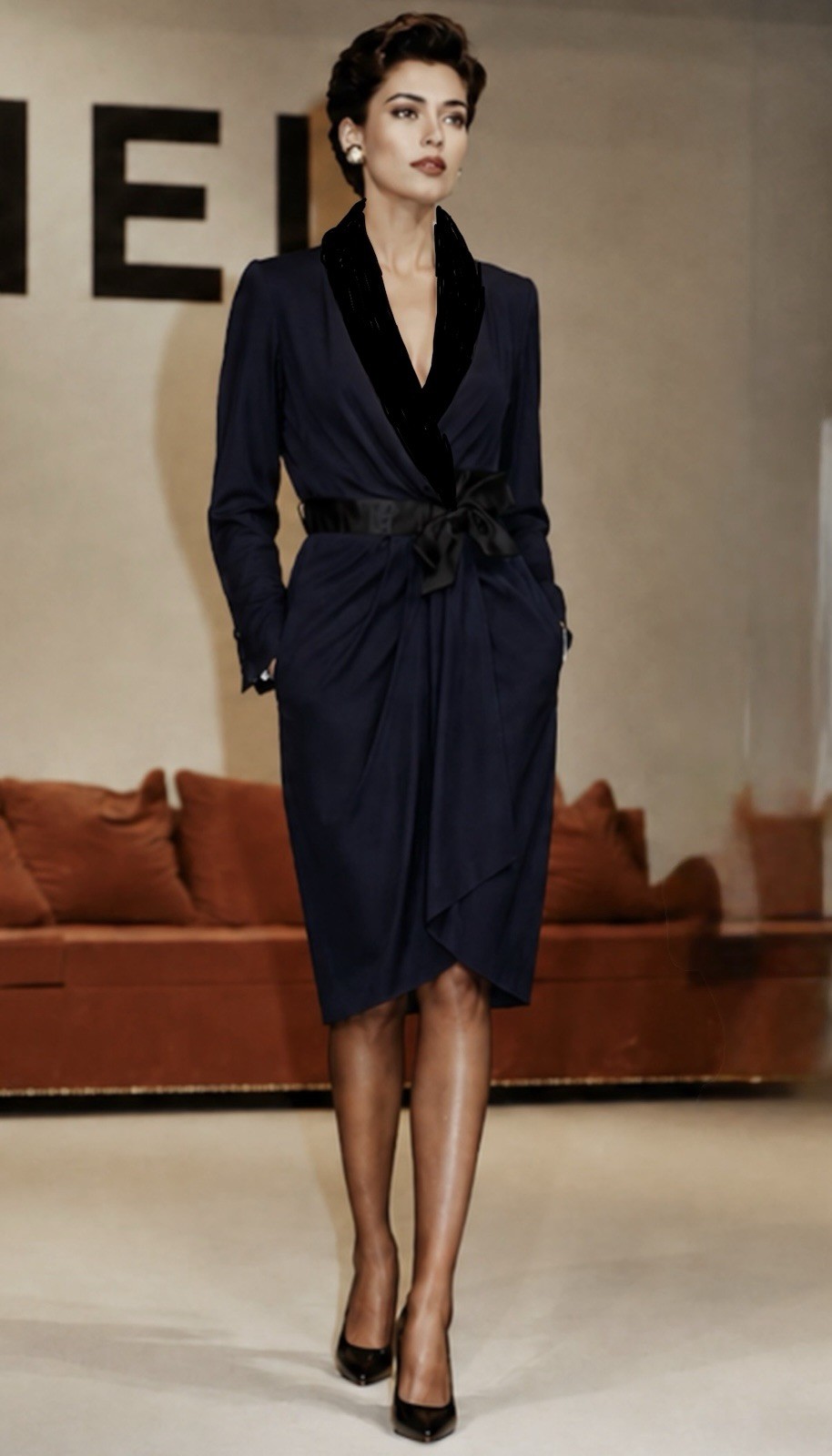
The mistake is head-to-toe period. A 1966 Mary Quant minidress worn with white boots, a Vidal Sassoon bob and kohl eyes reads as fancy dress. Worn with a plain navy cashmere crew neck, opaque tights and a pair of men's brogues, it reads as a woman with a good eye.
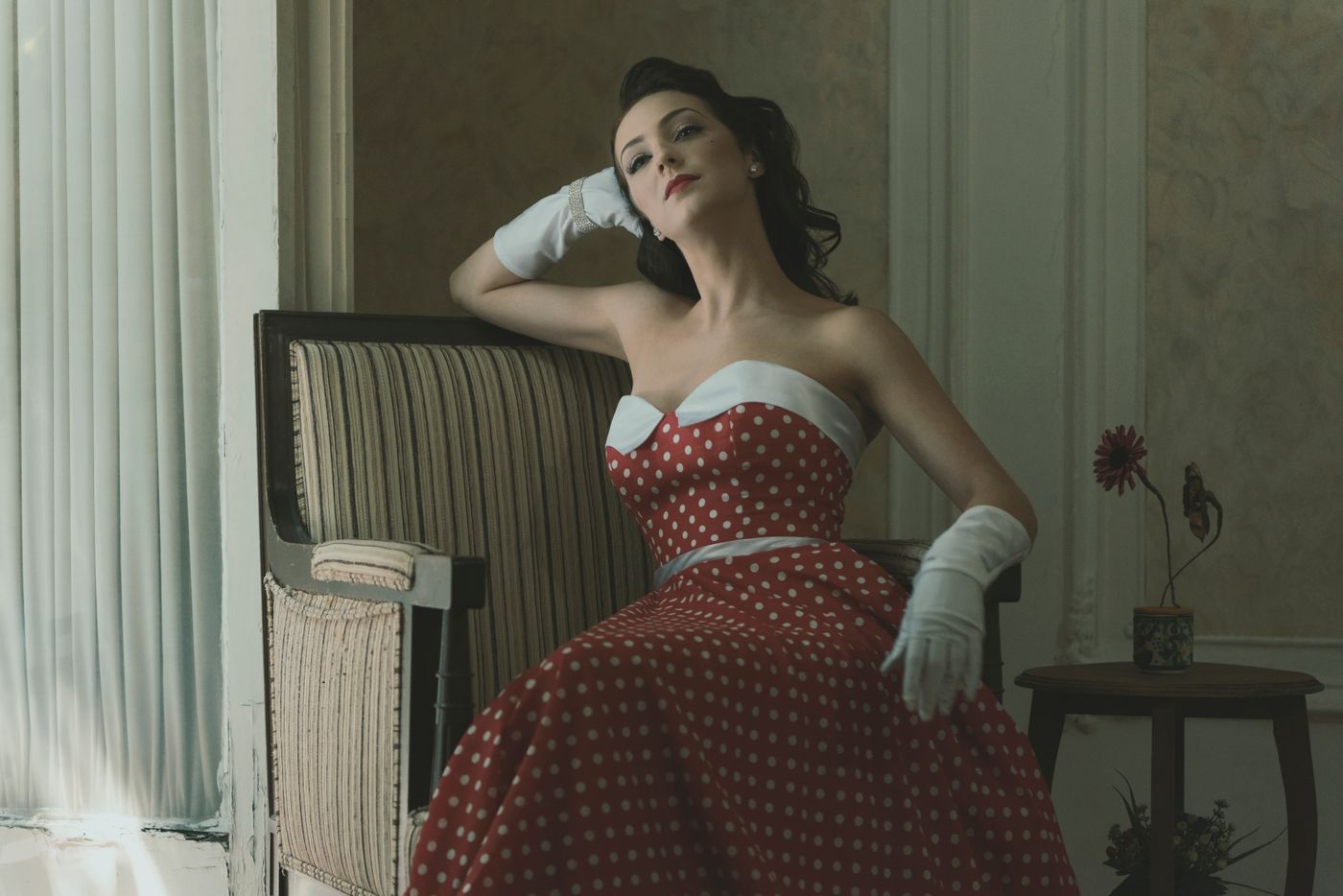
Foto: Odin Reyna · Pexels
Rule one: one vintage piece per outfit, maximum two. Let the dress be the loudest thing in the room. Everything else should be quiet and modern.
Rule two: break the silhouette. A 1954 full-skirted dress wants a cropped denim jacket, not a petticoat. A 1974 Ossie Clark wrap dress wants flat leather sandals and no jewellery. A 1940s utility dress, all narrow shoulders and short sleeves, wants a man's overcoat thrown over it in winter and nothing else.
Rule three: length is negotiable, proportion is not. A midi dress from 1978 will swamp you unless you show ankle. A mini from 1968 needs a covered top half. If you are short-waisted, look for Empire lines from the early 1960s. If you are long-waisted, the dropped-waist shapes of 1926 to 1929 will suit you better than anything cut in the last forty years.
Rule four: buy the dress that fits your shoulders and your bust. Everything below can be taken in. Shoulders cannot be added.
The Real History, Briefly and Accurately
The dress that changed everything was not made in Paris. In 1926, Coco Chanel put a black crepe de Chine day dress in American Vogue and the magazine called it the frock that all the world will wear. It was simple, sleeveless, knee-length and unornamented. Before that, a woman's dress was a construction of boning and hooks. After it, a dress could be a tube of fabric with a seam down each side.
Then the war. In 1942, the British government introduced the Utility scheme, limiting cloth, buttons and pleats by law. A Utility dress had no more than two pockets, no turn-up cuffs, and a fixed number of seams. Women queued for them with coupons. When Christian Dior showed the New Look in February 1947, with its 19-inch waist and 12 yards of skirt, he was selling the opposite of everything rationing had enforced. The skirts were so full that women in some cities were photographed being pushed into trams sideways.
By 1965, Mary Quant had cut the hem to mid-thigh and named the look after her favourite car, the Mini. By 1972, Diane von Furstenberg had wrapped a jersey dress around the body and tied it at the waist, and women wore it to the office, to dinner, and on a plane. That dress is still the most useful vintage garment you can own.
Where to Look and What to Pay
Specialist vintage shops price on condition and label, which is fair. A good 1960s wool shift from a known house will run you somewhere near eighty dollars, which is less than a new dress of half the quality. Charity shops in wealthy towns still turn up Horrockses and Berketex, because the families who bought them in 1958 kept them in tissue paper.

Foto: Eduard Perez · Pexels
Ask three questions before you buy. Has it been washed? Is the lining intact? Are the buttons original? Original buttons, especially self-covered ones, are the difference between a dress and a costume. If the seller cannot answer, walk.
The Dress You Will Actually Wear
The best vintage dress is not the rarest one. It is the one you reach for on a Tuesday, when you have nothing to wear and no time to think. Buy for the waist, check the seams, wear it with one modern thing, and let it do the work. A dress made in 1967 and worn in 2026 has already outlived its maker. Give it another thirty years.

 ✦ The Edit
One to watch
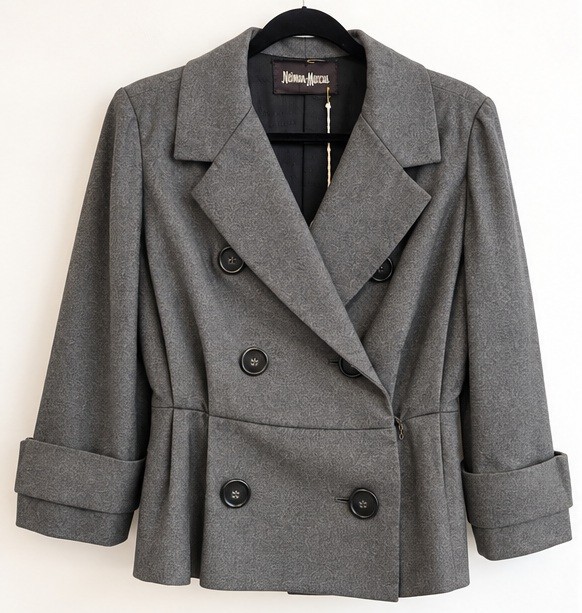
Vintage 1950s Christian Dior Jacket Neiman Marcus Gray New Look Style Blazer
The New Look that rebuilt fashion. This honestly worn blazer from the 1950s carries exactly the quality that made Dior worth collecting in the first place. This is the kind of thing that only improves the longer you live with it.
On the market now
The names
The names in this story
The minds behind this story — each with a piece currently on the market.
Dior
France · 1940s
The New Look & the Lady Dior
The New Look & the Lady Dior
Top piece
View →
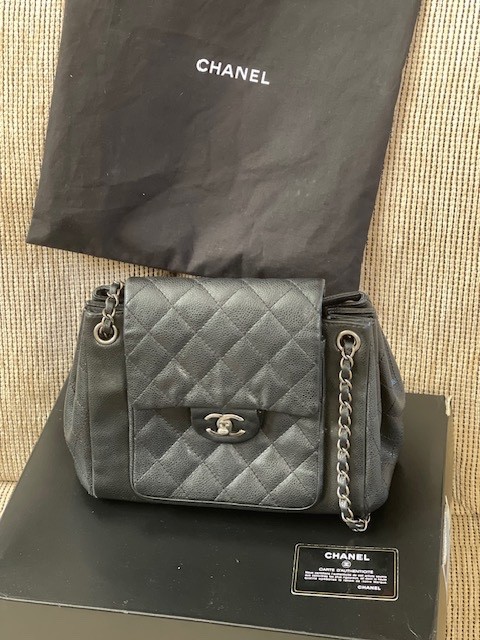
Chanel
France · 1910s
The little black dress & the 2.55
The little black dress & the 2.55
Top piece
View →
Issey Miyake
Japan · 1970s
Pleats Please & techno-fabric
Pleats Please & techno-fabric
Børge Mogensen
Denmark · 1940s
The Spanish chair — honest, functional furniture for everyday life.
The Spanish chair — honest, functional furniture for everyday life.
Continue the edit
Further stories from the same world
Three more walks through the same vintage universe.
The Dress That Does the Work: Wearing Vintage Dresses Without Looking Like a Costume
A practical guide to wearing vintage dresses well: the proportions that flatter a 2024 wardrobe, the era tells worth paying for, and the Hollywood history behind the shapes you are drawn to.
Read the story →The Dress That Does the Work: Wearing Vintage Dresses Now
A working guide to the vintage dress: how to wear one without looking costumed, what the seams and labels tell you, and the real history behind the shapes turning up in circulation.
Read the story →The Vintage Dress That Wears You Back
A good vintage dress is a piece of clothing that has already lived a life, and it expects you to live yours in it. Here is how to find one, wear it, and make it yours.
Read the story →