
 Sign in
✦ The Icon Story · London
The Dress That Does the Work: Wearing Vintage Dresses Now
A working guide to the vintage dress: how to wear one without looking costumed, what the seams and labels tell you, and the real history behind the shapes turning up in circulation.
 By Louis Trash·
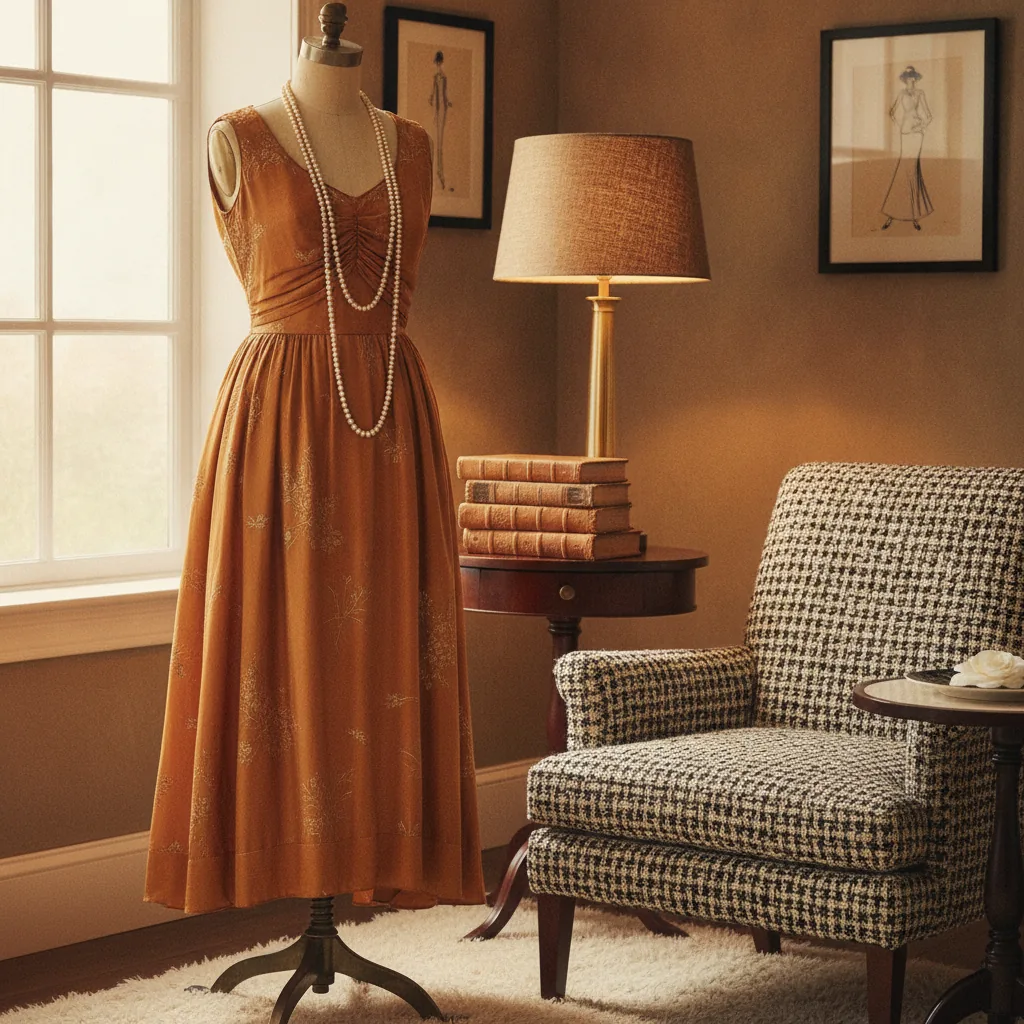
A good vintage dress solves a problem most modern wardrobes create: it gives you one decision in the morning instead of five. You put it on, you add shoes, you leave. That is the whole appeal, and it is why the racks keep turning over at around $78.59 a piece. But a dress that solved someone else's problem in 1974 does not automatically solve yours in 2025. The work is in the wearing.
Start With the Shoulder and the Waist
Fit is not about size on a vintage dress. It is about two points: where the shoulder seam lands and where the waist sits. Get those right and almost everything else can be adjusted by a tailor for the price of a nice lunch. Get them wrong and no amount of styling saves it.
A 1940s rayon day dress has a natural shoulder and a nipped waist, often with a seam running under the bust. On a modern body it reads sharp and slightly severe, which is the point. Wear it with flat leather loafers and a cropped cardigan, and resist the urge to belt it again. A 1970s prairie dress with a high yoke and a loose body wants the opposite treatment: a structured jacket over the top, something with a shoulder to balance all that softness. I like a cropped denim jacket or a boxy wool blazer, sleeves pushed up.
The proportion rule I keep coming back to: one voluminous element, one clean line. A full skirt gets a fitted knit and a flat shoe. A slim shift gets a chunky cardigan and a boot. Two soft shapes together look like a dressing gown. Two hard shapes look like a uniform.
What the Seams Tell You
Turn the dress inside out before you commit. This is the single most useful habit in vintage buying. Look at the seam allowance. Wide, pinked edges suggest a home sewist or a small maker working before the 1960s, when commercial overlocking became standard. A clean serged edge with a woven label points to factory production from the mid-1960s onward.
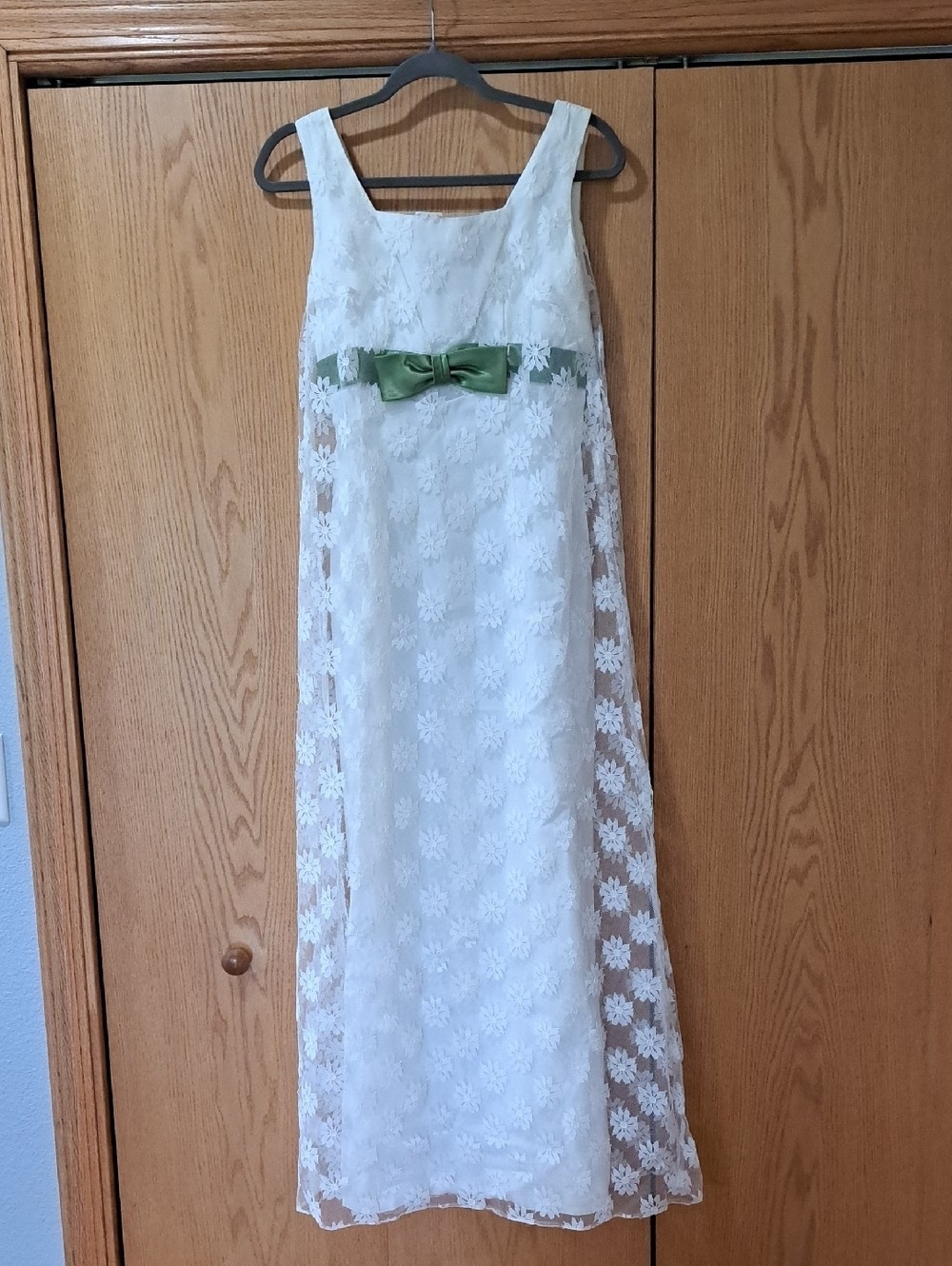
Check the zip. A metal zip with a stamped pull, often marked Talon, dates a piece to before about 1965. A nylon coil zip, usually unseen, is later. A plastic zip is very late or a replacement.
Fabric matters more than label. Look for wool crepe, which hangs beautifully and rarely pills, and cotton poplin with a bit of body. Rayon from the 1940s and 1950s is worth handling: it drapes like silk but takes dye deeply, and good pieces survive. Avoid anything with a stiff, shiny polyester lining unless the outer fabric is exceptional. Feel the underarm seams for rot, especially on silk. Smell the fabric. Mustiness rarely leaves.
Labels worth knowing: a Biba label from 1971 to 1975 means a particular London silhouette, long and fluid with a print that looks like it was drawn by hand. An Ossie Clark for Radley dress from the same years is a different proposition entirely, cut on the bias with a plunging neckline. Both are collectible. Both are wearable if the fit is right.
A Short History of the Shape You Are Wearing
Claire McCardell put the American dress on the map in the 1940s by cutting it for movement. Her popover dress from 1942 was a wrap that could go from kitchen to cocktails, and it set the template for the easy day dress that dominated the next two decades. If you find a 1950s cotton dress with a matching bolero, you are looking at her descendants.
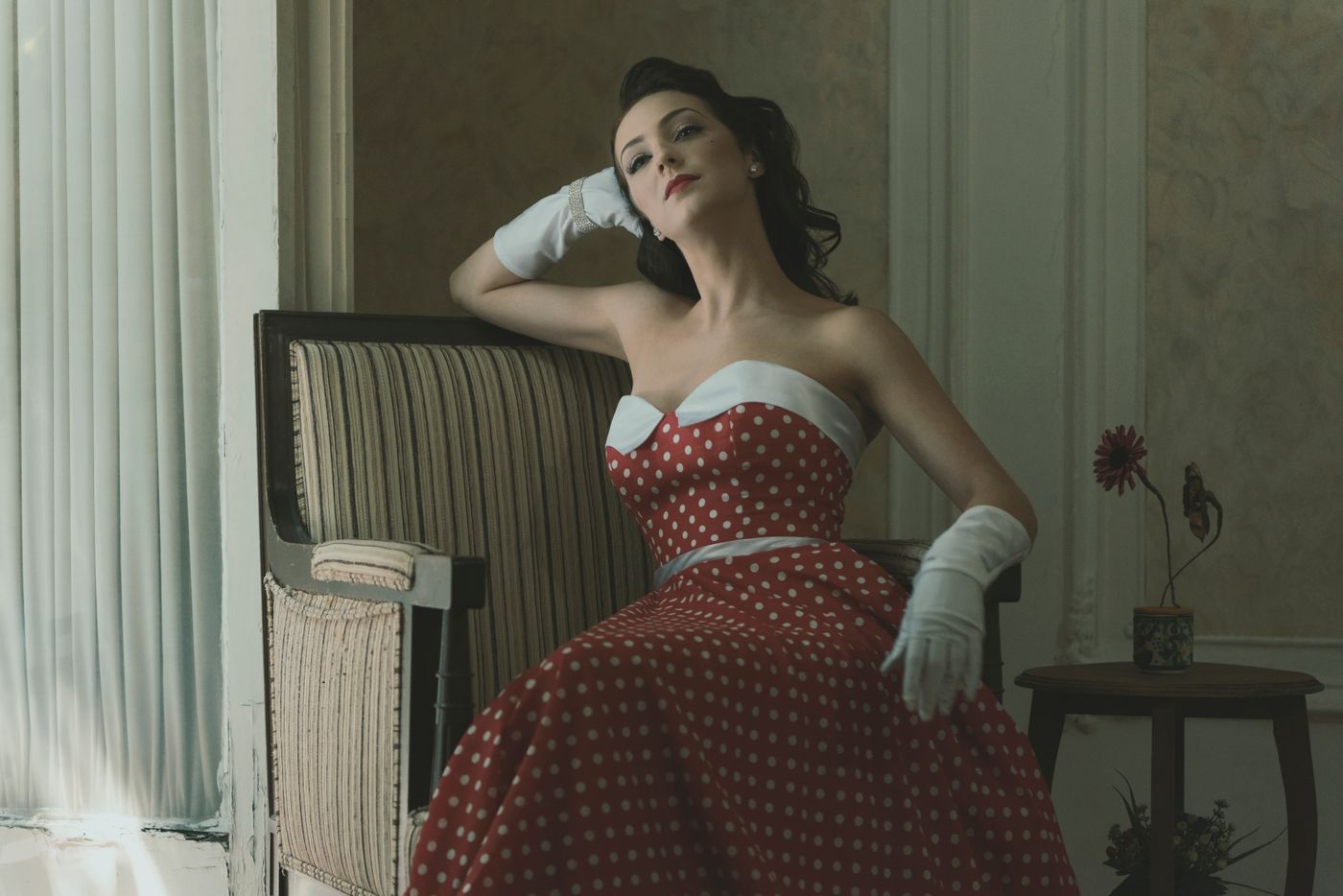
Foto: Odin Reyna · Pexels
The 1970s gave us the dress as a statement of ease, and the films did the selling. Diane Keaton's waistcoats and ties in Annie Hall, 1977, sent women into menswear tailoring, but the softer side of the decade is in the Laura Ashley prints and the Gunne Sax prairie dresses that teenagers wore to proms and weddings from about 1969 onward. Those pieces were made in enormous numbers. Good ones still turn up.
The 1980s brought the power shoulder and the drop waist, and the 1990s brought the slip dress, which is the most forgiving vintage dress to wear now. A bias-cut satin slip from 1994 looks modern because it is modern. It never really left.
The Modern Wardrobe Test
A vintage dress earns its place when it works with the things you already own. Try it with your everyday coat before you buy. Try it with your most-worn boots. If it needs a whole new cast of accessories, it is a costume, not a wardrobe piece.

Foto: Eduard Perez · Pexels
My own rule: a vintage dress should look slightly wrong with one element. A floral 1970s dress with heavy black boots. A prim 1950s shirtwaist with a leather jacket. That small friction is what keeps it from reading as a period piece. The dress should look like you found it, not like you are wearing a decade.
The Closing Thought
A vintage dress is a record of how someone else moved through a day. The wear at the elbow, the shortened hem, the replaced button: those are evidence. Wear it, wash it gently, and let it collect a little more. The piece is not finished being useful. It is waiting for you to add to the file.

 ✦ The Edit
One to watch
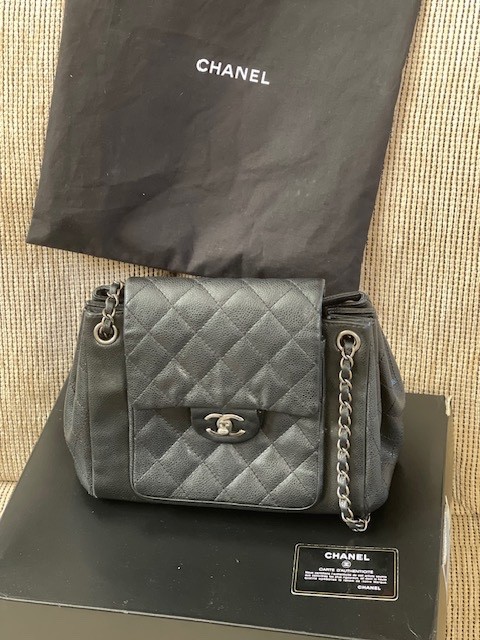
Vintage Chanel Black Quilted Leather Accordion Flap Shoulder Bag Purse w/ Box
The woman who changed how women dress. This honestly worn bag in leather and black carries exactly the quality that made Chanel worth collecting in the first place. This is the kind of thing that only improves the longer you live with it.
On the market now
The names
The names in this story
The minds behind this story — each with a piece currently on the market.
Chanel
France · 1910s
The little black dress & the 2.55
The little black dress & the 2.55
Top piece
View →
New Balance
USA · 1900s
The 550 & dad-shoe comfort
The 550 & dad-shoe comfort
Top piece
View →
Armani
Italy · 1970s
The power suit & soft tailoring
The power suit & soft tailoring
Børge Mogensen
Denmark · 1940s
The Spanish chair — honest, functional furniture for everyday life.
The Spanish chair — honest, functional furniture for everyday life.
Continue the edit
Further stories from the same world
Three more walks through the same vintage universe.
The Dress That Does the Work: Wearing Vintage Dresses Without Looking Like a Costume
A practical guide to wearing vintage dresses well: the proportions that flatter a 2024 wardrobe, the era tells worth paying for, and the Hollywood history behind the shapes you are drawn to.
Read the story →The Dress That Was Made for Walking Away
A working guide to vintage dresses: how to wear them without looking costumed, what the seams and labels tell you, and the real history behind the shapes still hanging on the rail.
Read the story →The Vintage Dress That Wears You Back
A good vintage dress is a piece of clothing that has already lived a life, and it expects you to live yours in it. Here is how to find one, wear it, and make it yours.
Read the story →