
 Sign in
✦ Culture · London
The Band Tee, Worn Well: A Field Guide to Vintage Tour Shirts
How to wear a vintage band tee without looking like you raided a storage unit: the eras that matter, the tells that separate a real 1975 shirt from a 2003 reprint, and the proportions that make it feel modern.
 By Louis Trash·

Start With the Shoulders
A good vintage band tee is a lesson in fit. The shirt should sit on the shoulder bone, not hang past it. Sleeves end mid-bicep. If the hem hits your hip bone, you can wear it out. If it hits lower, tuck it. That is the whole trick.

I bought a 1979 Rolling Stones shirt at a stall on Portobello Road in 2011 for £40. It was paper-thin, the black had gone charcoal, and the print had cracked into a map of tiny rivers. I wore it under a charcoal wool blazer with dark Levi's 501s and loafers to a dinner and nobody asked if I was going to a gig. That is the test. A band tee works when it reads as a shirt, not as a costume.
The modern wardrobe pairing is simple: high-waisted, wide-leg trousers in a heavy cotton or wool, the tee tucked in, a belt with a solid buckle. Or a midi skirt in satin, the tee knotted at the waist, sandals. The contrast between the soft, worn jersey and a crisp tailored piece is the whole point. Keep the rest quiet. One graphic, one texture, one good shoe.
The Eras That Tell You Something
Band tees have a timeline, and it is legible in the fabric. The earliest tour shirts, from the late 1960s into 1972, were often printed on plain white cotton undershirts, thin and slightly rough. By the mid-1970s, the standard was a 50/50 cotton-polyester blend, which is why so many survive with the print intact but the body soft and slightly shiny. Pure cotton shirts from that period are rarer and feel drier to the hand.
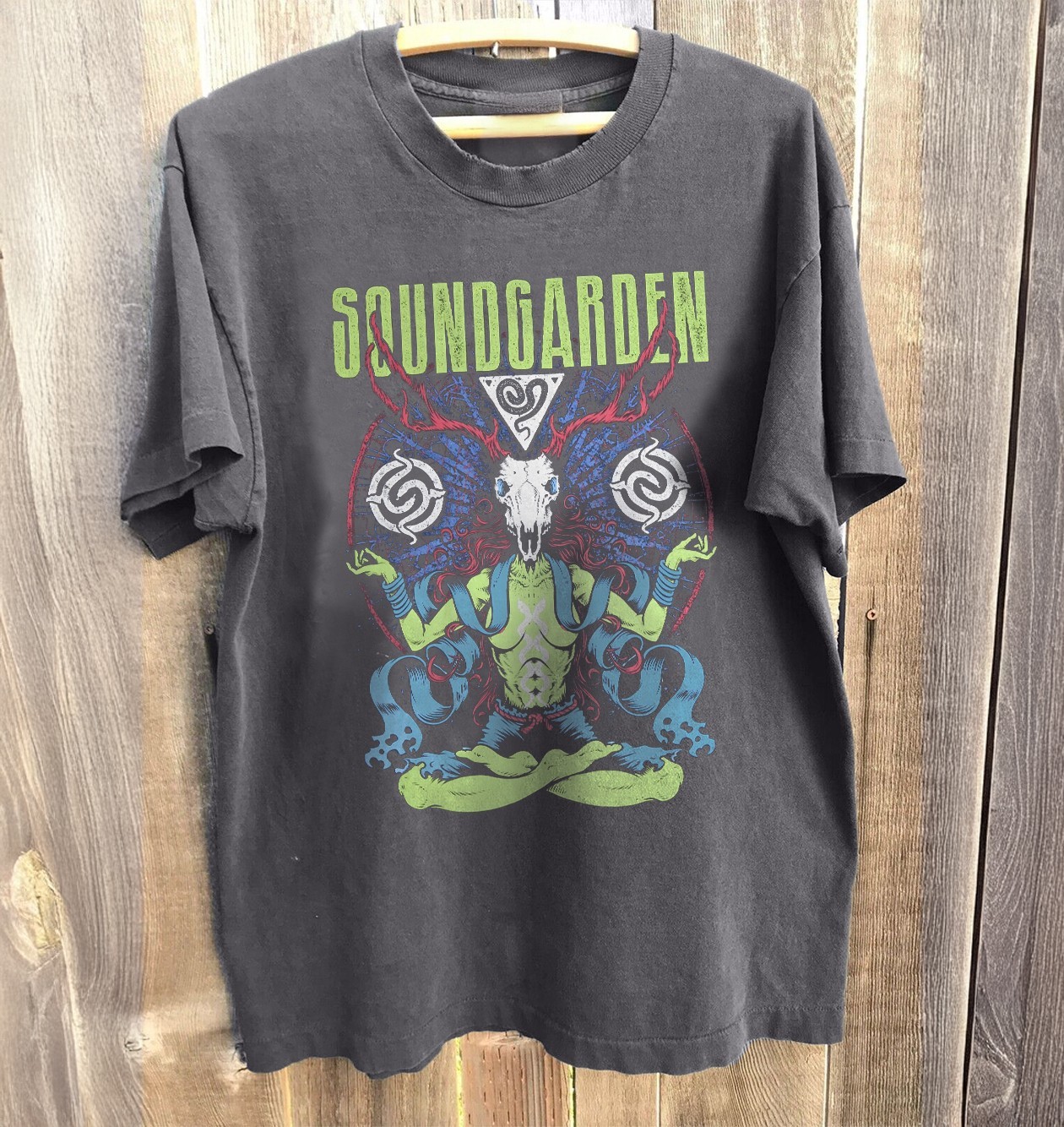
The 1980s brought heavier cotton and bolder, blockier graphics. The 1990s brought the boxy, oversized cut and the single-stitch sleeve hem. A single-stitch hem is a good sign. So is a tag that names a real blank manufacturer: Screen Stars, Hanes, Fruit of the Loom, Anvil. A shirt printed on a blank from a company that stopped making blanks in 1994 is almost certainly older than 1994.
Check the print. Cracked ink is fine. Flaking ink that comes off on your fingers is not. Look at the collar: a ribbed collar that has stretched into a wave is a sign of hard wear, and it will not recover. A small hole at the hem is character. A hole at the shoulder seam is a repair job.
The Real History, Briefly
The band tee as we know it came out of the merchandising boom of the early 1970s. The Rolling Stones' 1972 tour of North America, with its lotus-flower logo designed by John Pasche, put a graphic on a shirt that people wore off-stage. Before that, the shirt was a souvenir. After that, it was a statement.
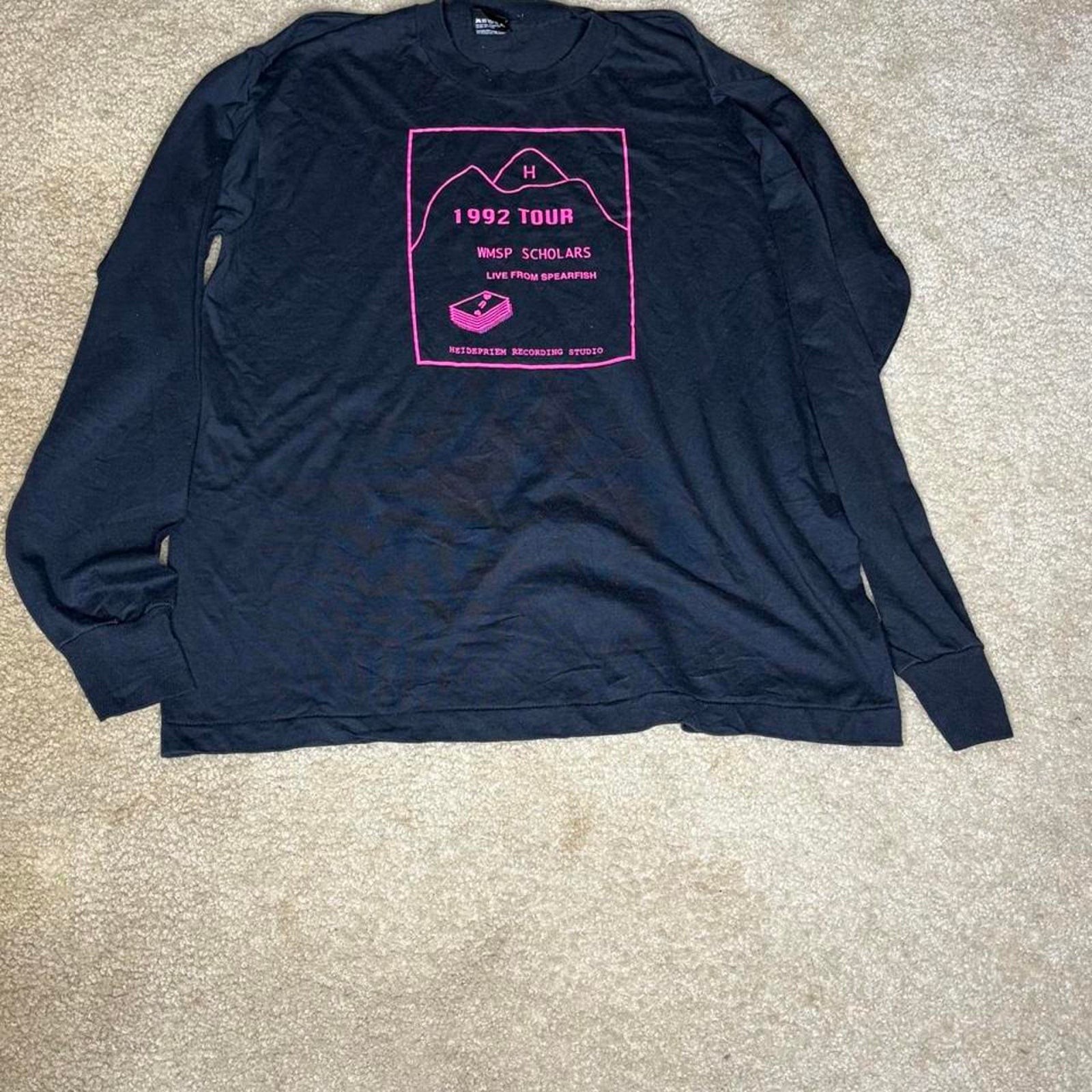
The Ramones wore their own shirts on stage in 1976, which made the tee a piece of the uniform rather than a memento. The Clash printed shirts with slogans that were meant to be read in the street. By the time Madonna wore a Keith Haring-designed shirt in 1984, the band tee had crossed into fashion proper.
There is a lovely detail from the 1975 Led Zeppelin tour: the shirts were printed on blanks that ran small, so the crew often sized up. If you find a 1975 Zeppelin shirt marked large that fits like a medium, that is not a fault. That is the era talking.
What to Pay and What to Walk Away From
The price for a good, wearable piece sits around $190, and that is fair for a shirt with a clean print and a sound collar. Below that, you are usually looking at a reprint or a shirt with a flaw that will annoy you within a month. Above that, you are paying for a name on the front, not the cloth.
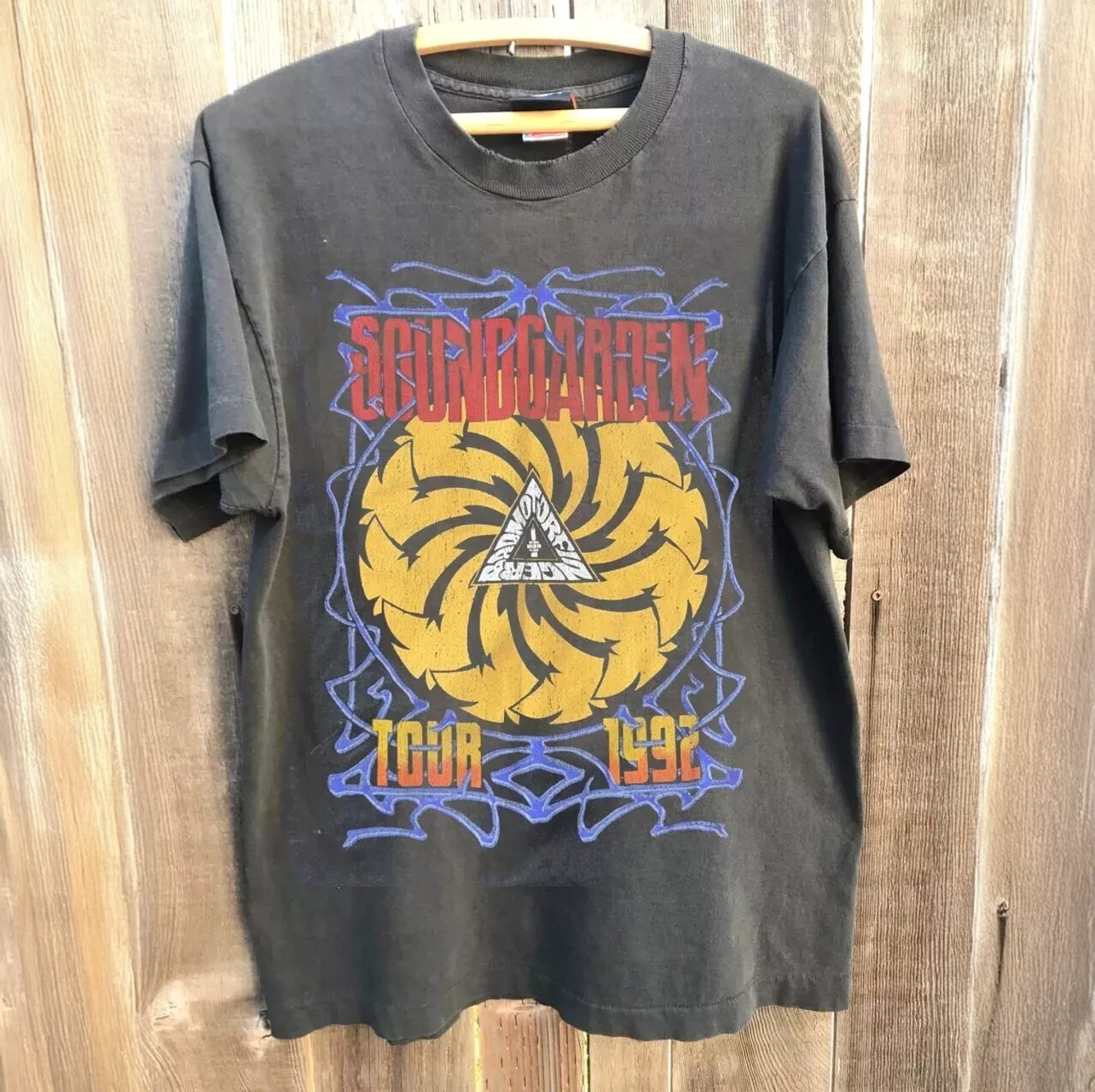
Walk away from anything with a print that feels plasticky and thick to the touch. That is a heat transfer from the 2000s, not a screen print from 1978. Walk away from shirts that smell of storage. Walk away from a collar that has been re-ribbed. A good shirt should feel like it has been washed a hundred times and still has life in it.
The Closing Thought
A band tee is the one piece of vintage that gets better the less you baby it. Wear it to the shop. Wear it under a jacket. Wash it cold, dry it flat, and let the print crack. The shirt is not an investment. It is a shirt. The point is to wear it until it knows your shape.

Foto: Atlantic Ambience · Pexels
City
London
Category
vintage band tee
Published
2 November 2026
The names
Meet the designers
The minds behind this story — each with a piece currently on the market.
George Nelson
USA · 1940s
The Marshmallow sofa & platform bench — Herman Miller's design director.
The Marshmallow sofa & platform bench — Herman Miller's design director.
Jean Prouvé
France · 1930s
Structural steel & the Standard chair — an engineer of furniture.
Structural steel & the Standard chair — an engineer of furniture.
Top piece
View →
Levi's
USA · 1850s
The 501 & Americana denim
The 501 & Americana denim
Yohji Yamamoto
Japan · 1970s
Black, drape & poetic deconstruction
Black, drape & poetic deconstruction
Continue the edit
Further stories from the same world
Three more walks through the same vintage universe.
The Band Tee, Worn Well: A Field Guide to the Real Thing
A guide to wearing vintage band t-shirts with intent: how to style a 1978 tour shirt without looking like a costume, the era tells and print details worth checking, and the stories behind the shirts that outlived the tours.
Read the story →The Band Tee, Worn Well: A Field Guide
A 1979 Pink Floyd shirt with cracked lettering is not a collectible to be sealed in plastic. It is a piece of cotton with a history, and it belongs on your back. Here is how to wear it without looking like you are in costume, and what to check before you buy.
Read the story →The Vintage Band Tee: A License to Wear Your Taste Loud
A vintage band T-shirt is the rare piece that lets you wear your musical education on your chest. Here is how to find one that is actually old, style it without looking like you are in costume, and know the stories behind the shirts that mattered.
Read the story →