Reading Savile Row: The Anatomy of a Vintage English Suit
Why a 1970s Anderson & Sheppard jacket still drapes better than almost anything new — and how to recognise it.
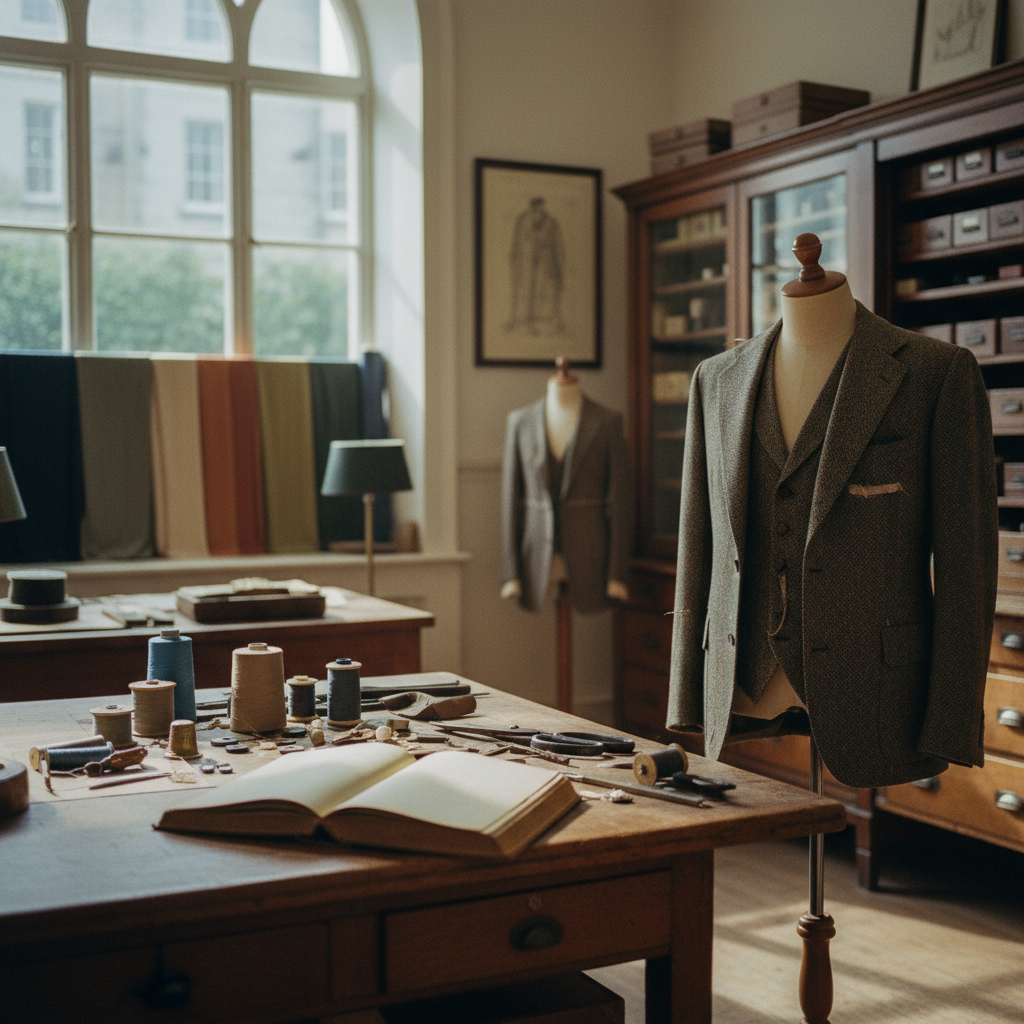
Vintage Savile Row tailoring is the closest thing fashion has to architecture. A 1960s or 1970s jacket from Anderson & Sheppard, Huntsman, or Henry Poole carries a hand-construction that takes a master cutter and a coat maker something like 60 hours to build. None of that disappears with age; if anything, the canvas softens and the cloth moves more sympathetically.
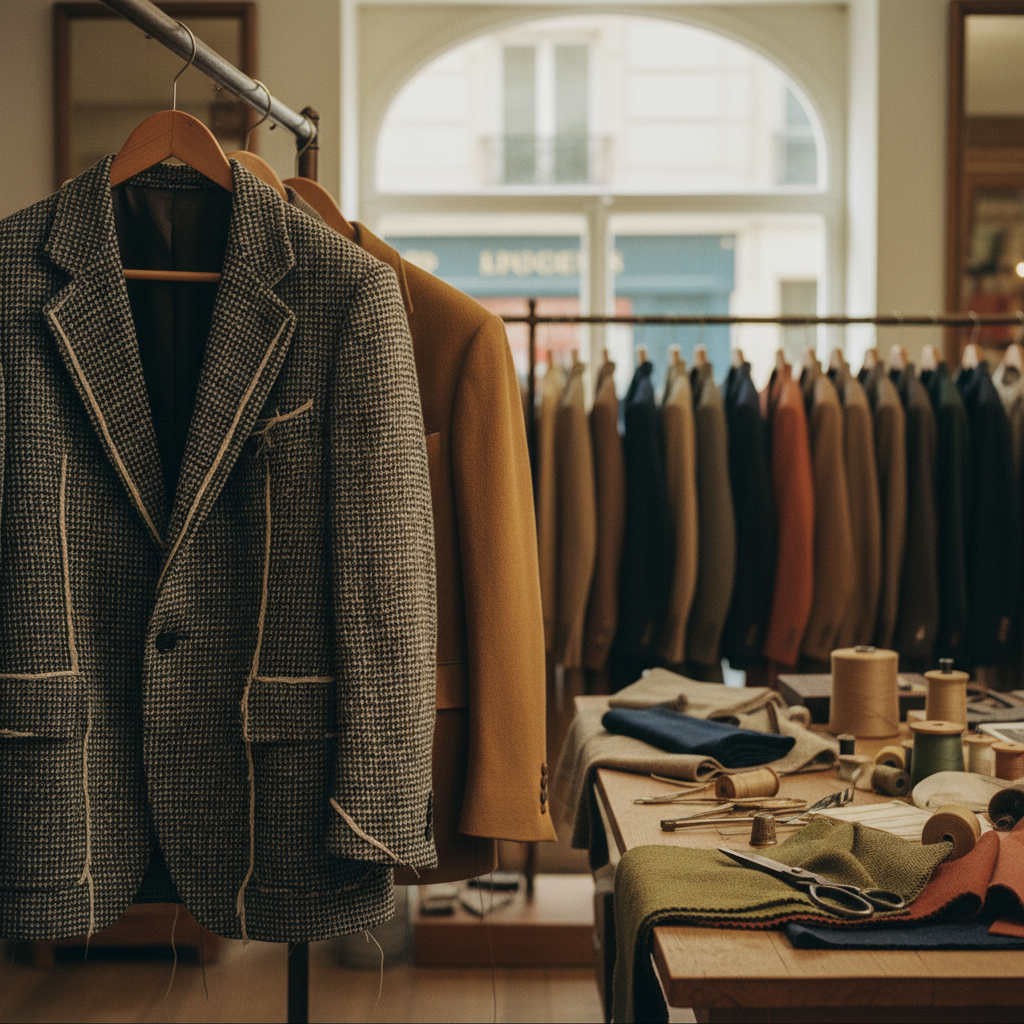
The English drape cut, pioneered by Frederick Scholte and perfected on the Row, is the signature. Look for a slightly fuller chest with subtle ripples through the lapel, a high armhole that lets the arm move without lifting the body of the jacket, and a sleeve head set with a small swelling roll — the so-called English shirring. The lapel itself is hand-pad-stitched to the canvas in a way that creates a soft, almost imperceptible curve.
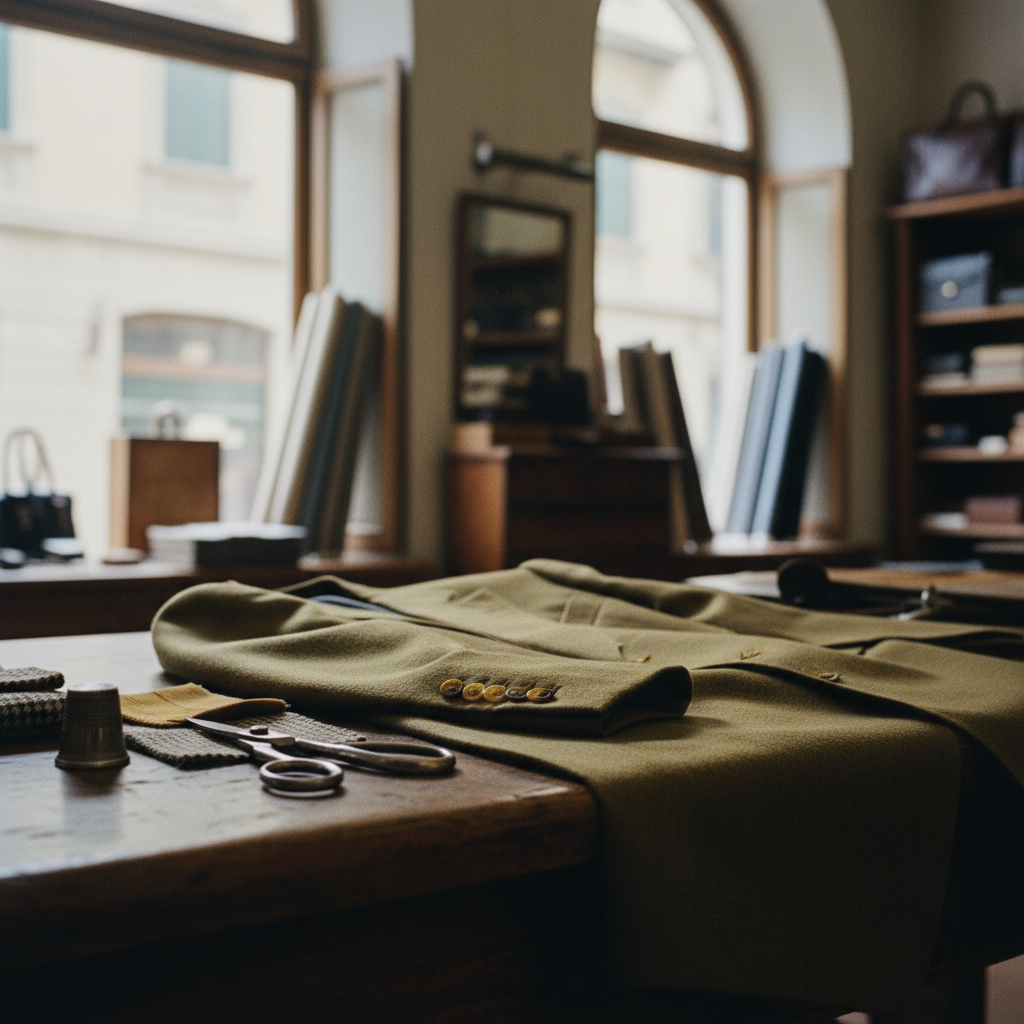
Cloth and construction details. West of England flannels, lovat tweeds, and Fox Brothers worsteds dominate the period. The selvedge of the cloth is often used as a finishing detail inside the jacket. Buttons are real horn or stag, almost never plastic, and they are attached with a wrapped shank covered in matching silk thread. The buttonholes are hand-worked, slightly asymmetrical, with a gimp running inside the stitch that gives the hole a faint three-dimensional ridge.
The lining is bemberg, never acetate, and the seams are felled by hand at the armhole. Even battered, these jackets are worth their weight; the cloth alone is now nearly impossible to find new.
Keep reading