Parisian Wool Tailoring: A Close Reading of Hand-Finished Seams
The pad-stitched lapel, the floating canvas, and the small confidences of a mid-century Parisian jacket.
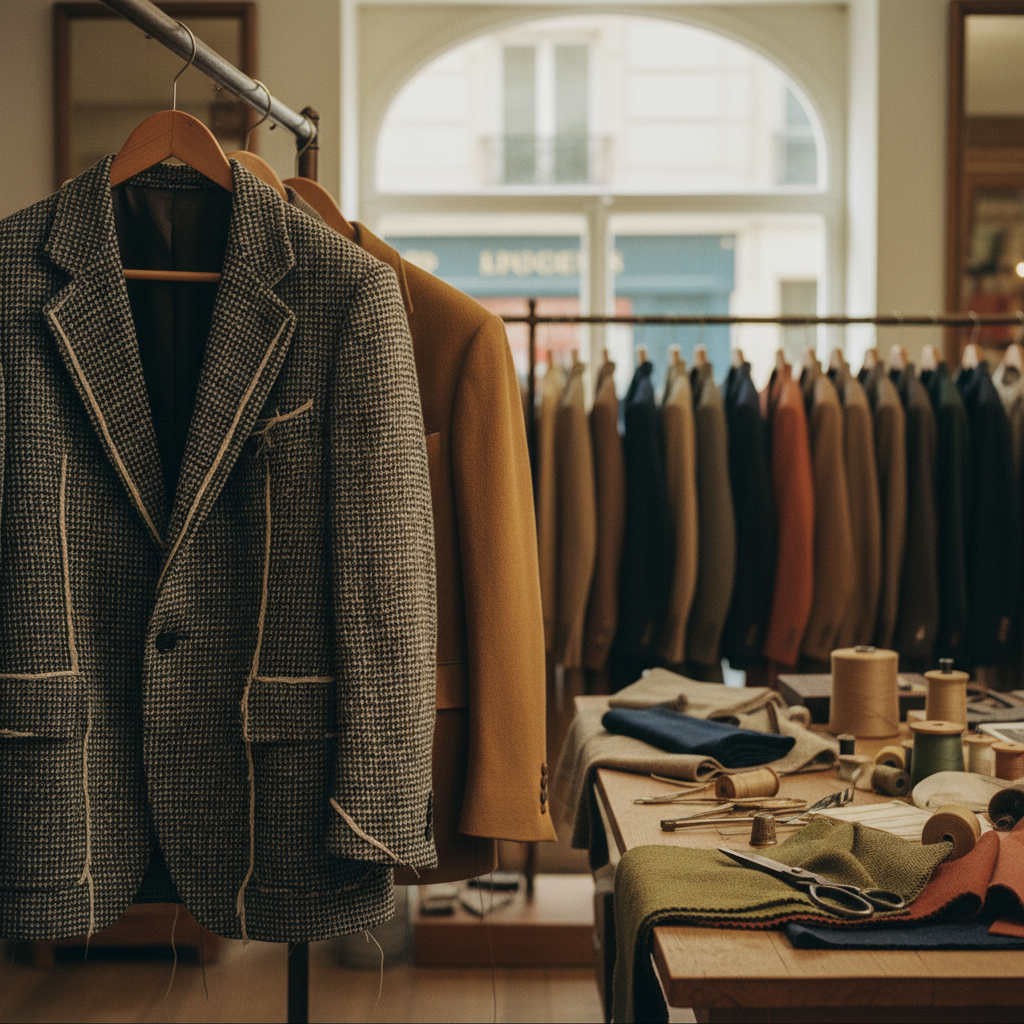
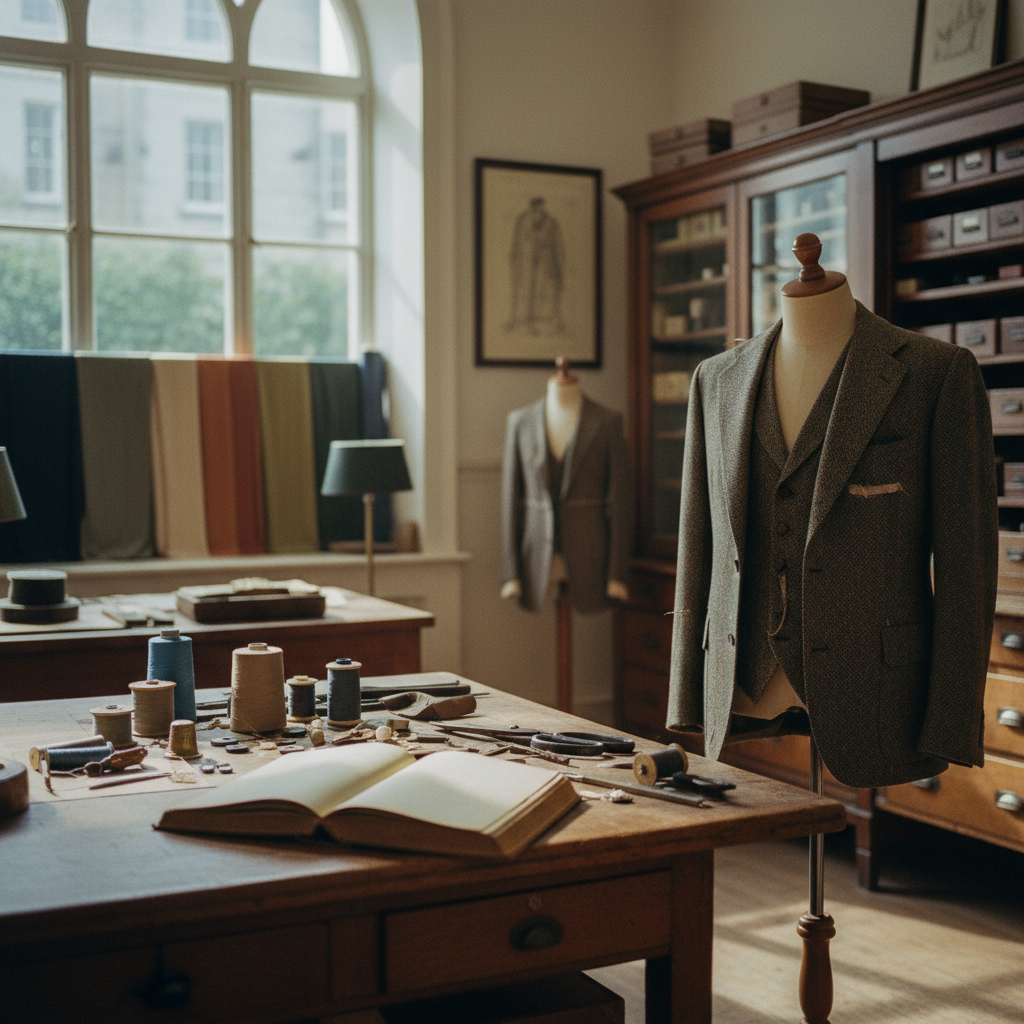
A genuinely good Parisian wool jacket from the 1960s or 1970s reveals itself in the lapel. Roll one between thumb and forefinger and you should feel three distinct layers move independently — the wool shell, a horsehair canvas, and a hair-canvas chest piece, all held together by hundreds of tiny pad stitches done by hand at a 45-degree angle. A fused jacket, by contrast, feels like a single board.
The great Parisian houses — early Saint Laurent Rive Gauche, Cardin's tailoring atelier, the lesser-known but exquisite Renoma — used a floating canvas construction that lets the jacket mould to the wearer over decades. The buttonholes are worked by hand, the silhouette sometimes drawing a half millimetre of thread on close inspection. The lining is bemberg or cupro, never polyester, and it is attached with a slip-stitch that allows the lining to ease independently of the shell — the reason these jackets don't pucker after dry-cleaning.
Buttons are the era's signature. Real horn from the late 1960s onward shows fine vertical striations under light; mid-century plastic imitations are uniform and slightly waxy. The buttons are sewn through with a shank, a small wrap of thread that leaves room for the buttonhole to sit without crushing the cloth.
A properly tailored Parisian jacket of this generation is not vintage in the costume sense — it is, in the most literal way, still working.
Keep reading