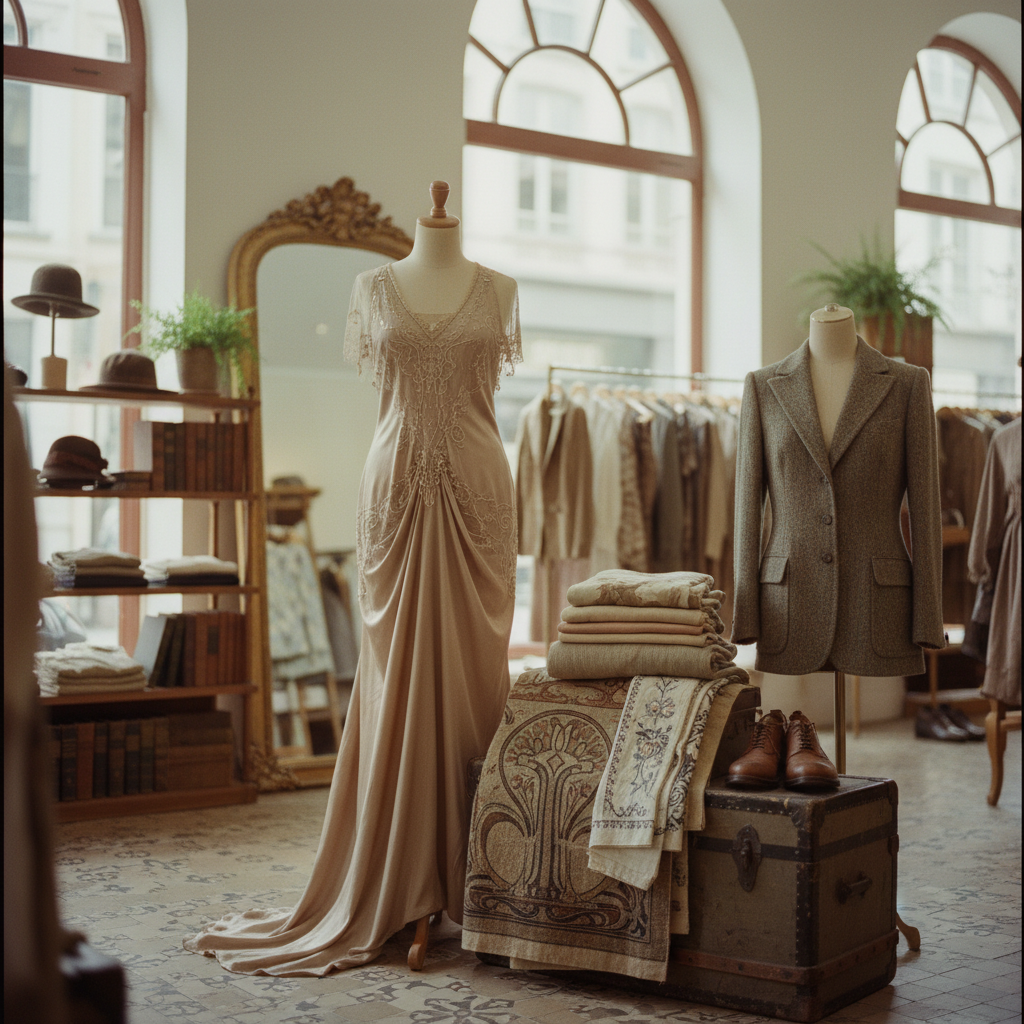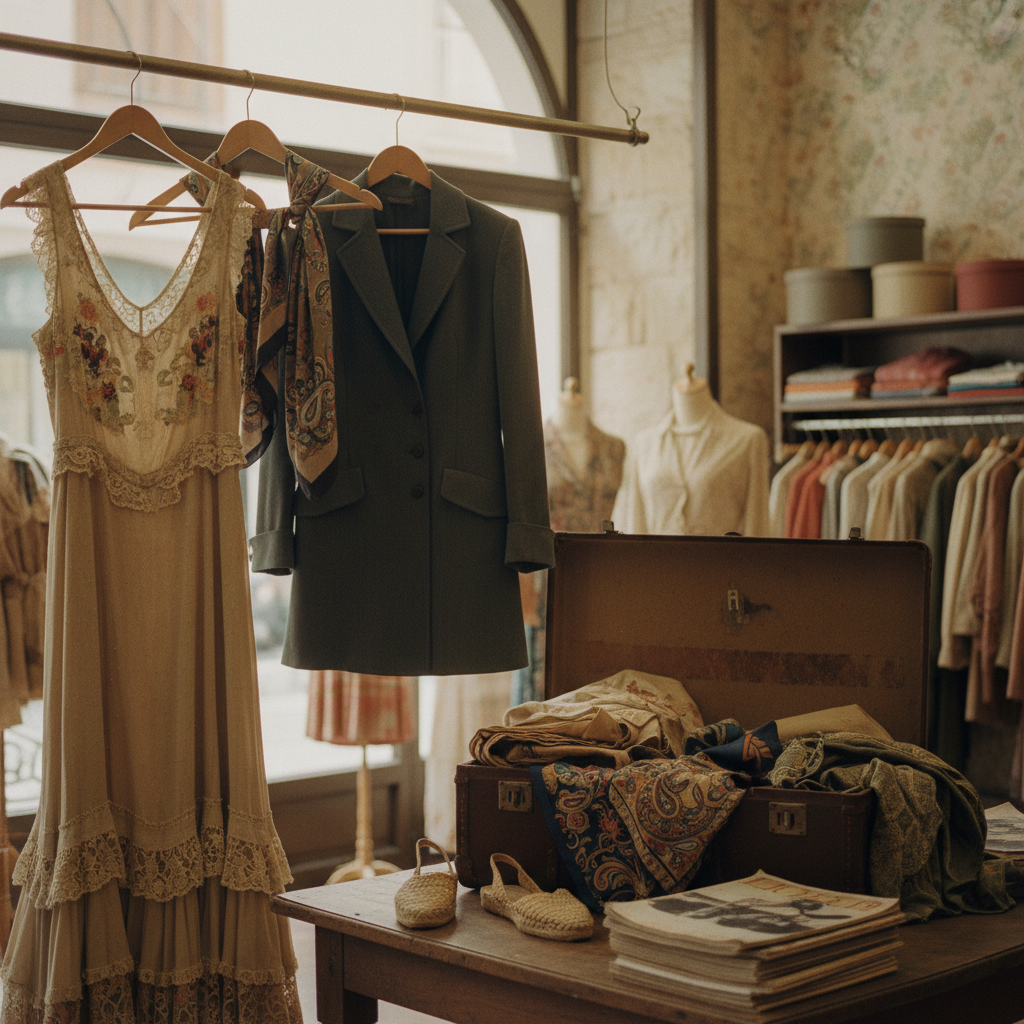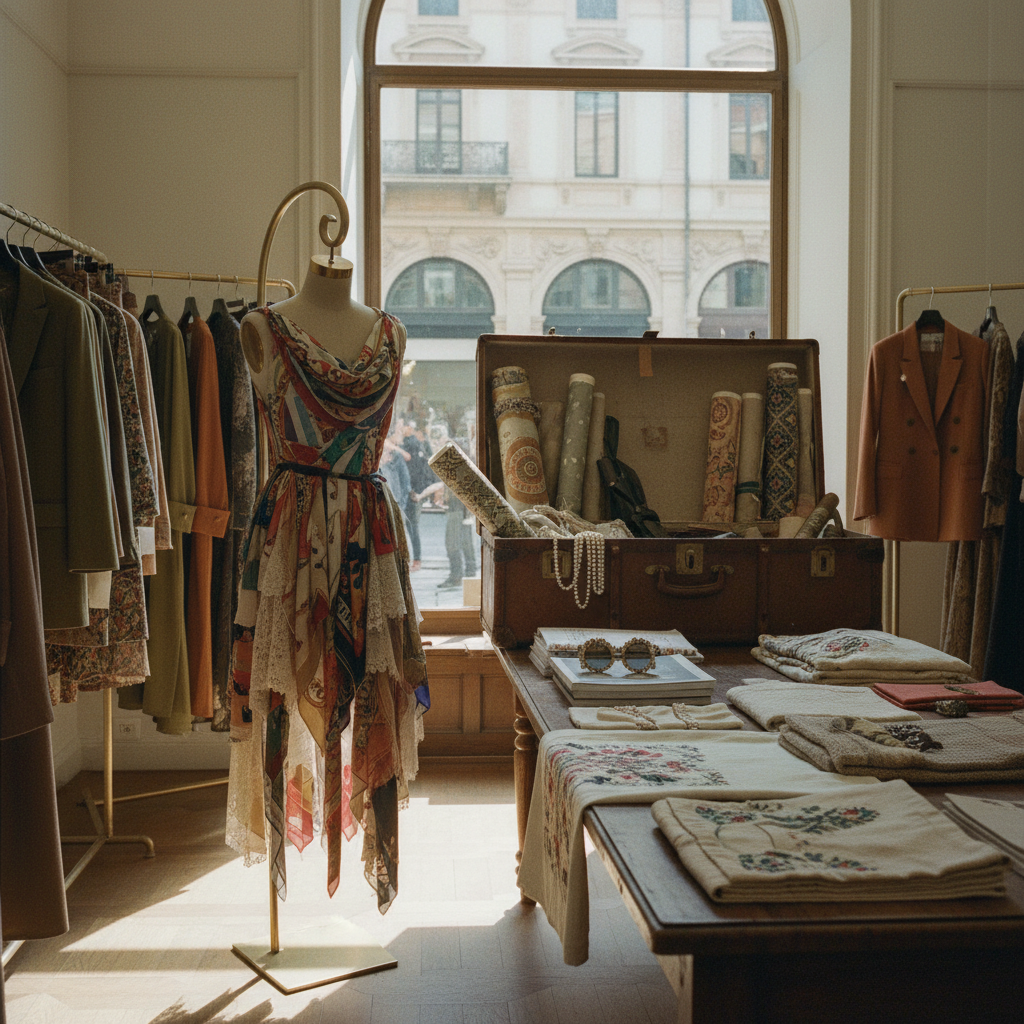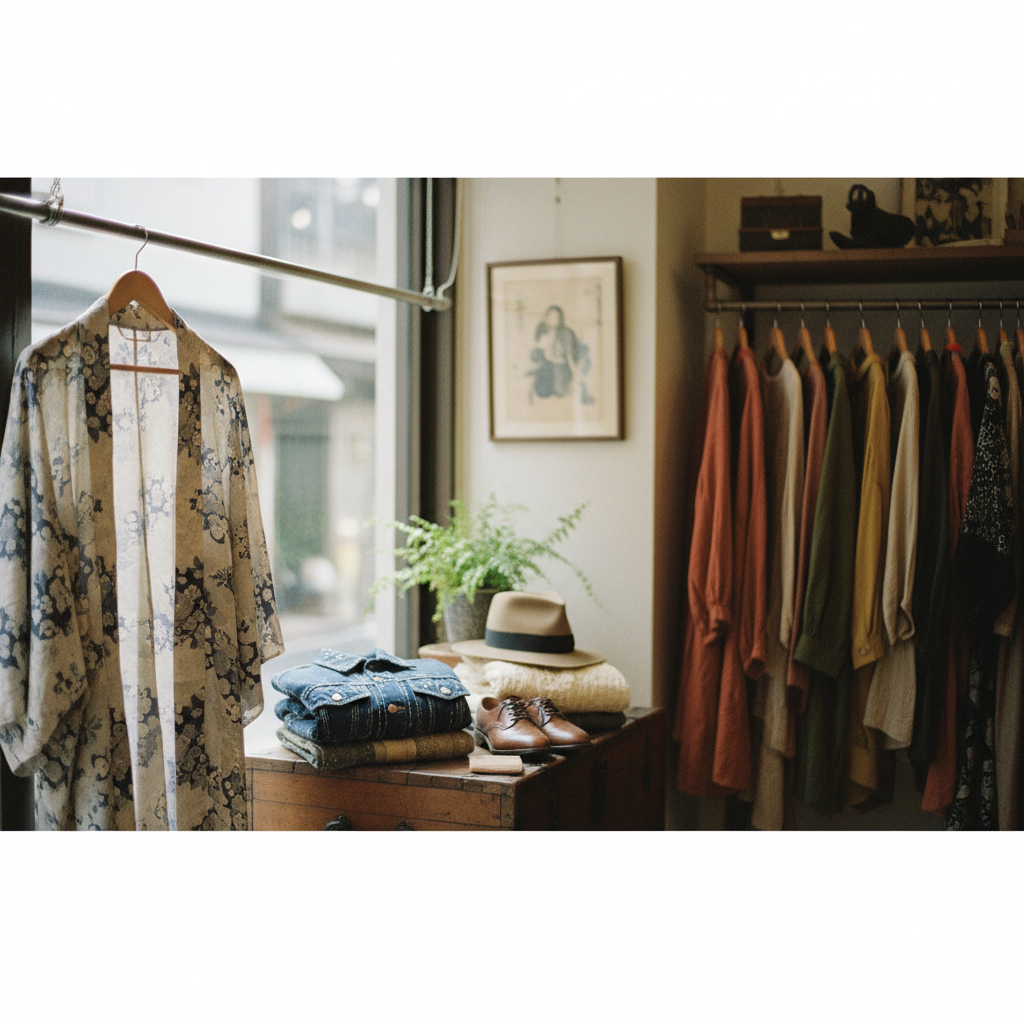
Parisian Vintage Chic: Resurrecting Timeless Styles in the Fashion Capital
Paris continues to be a global beacon of style, where the art of vintage dressing is not merely a trend but a deeply ingrained cultural practice.
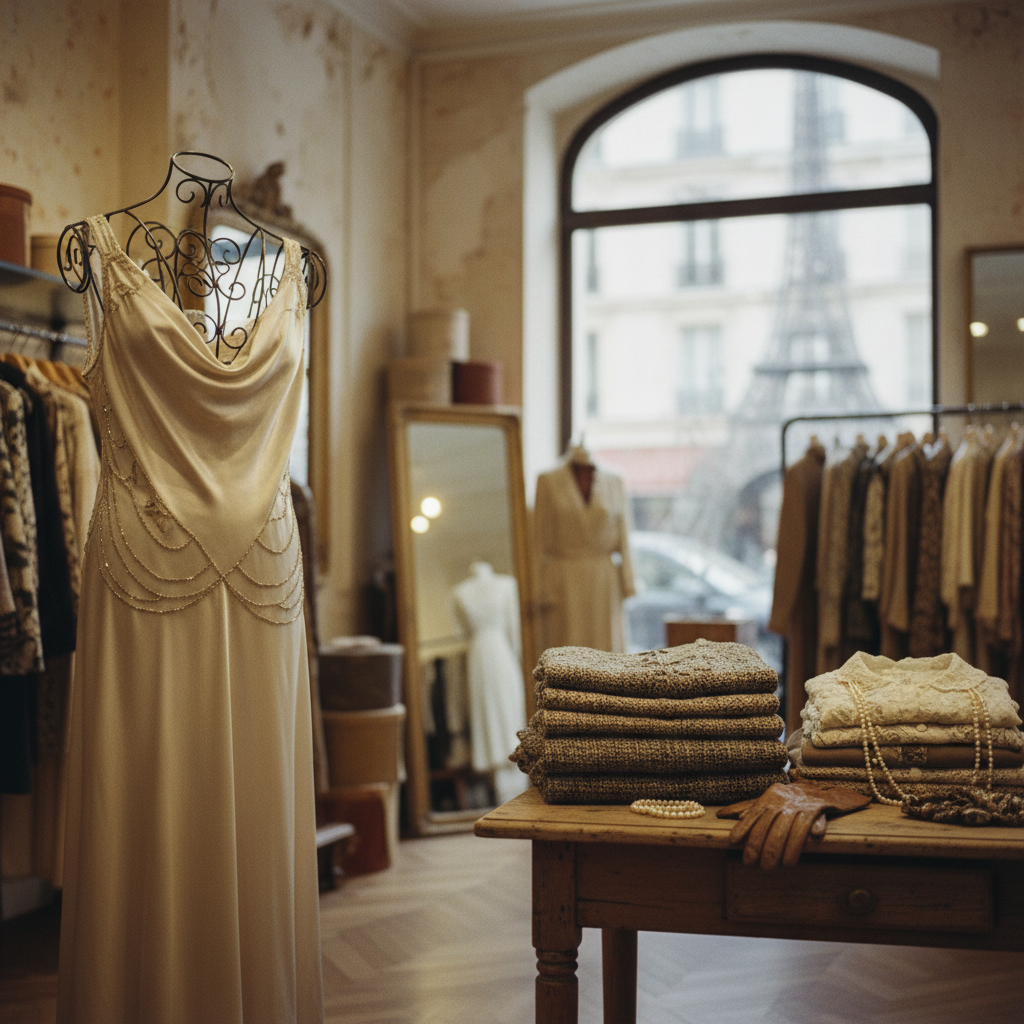
## Parisian Vintage Chic: Resurrecting Timeless Styles in the Fashion Capital
The air in the Marais smells of rain on cobblestones and the ghost of Gauloises cigarettes. It’s a Thursday afternoon, and the city’s style pulse is not beating on the Saint-Germain-des-Prés runways, but in the dusty, crepuscular light of a dépôt-vente on Rue de Turenne. Here, a woman in a perfectly worn-in Carhartt jacket and raw-hemmed Levis is negotiating the price of a 1990s Thierry Mugler blazer, her fingers tracing the sharp, architectural shoulders as if reading Braille. This is not merely shopping; it’s archaeology. It’s a resurrection.
To buy vintage in Paris is to participate in a quiet, sophisticated rebellion against the algorithmic tyranny of fast fashion. The French, masters of the je ne sais quoi, have long understood that true style is not bought, but found. It’s excavated from a pile of deadstock silk shirts in a hidden brocante or pulled from a rack of mothball-scented cashmere in the 10th arrondissement. This is the city where Coco Chanel herself popularised borrowing from the past—the masculine wardrobe, the sailor stripes—and where the ghosts of Yves Saint Laurent, Azzedine Alaïa, and a thousand anonymous seamstresses still haunt the fabric. We are here to resurrect them.
---
The Sacred Geography: Where to Dig in the City of Light
Paris’s vintage scene is a matter of cartographic precision. You don’t just stumble upon it; you hunt it. The Marais (3rd & 4th arrondissements) remains the epicentre of curated, high-end vintage. Here, Didier Ludot (23-24 Galerie Montpensier) is a temple of haute couture ghosts, a museum of Galliano-era Dior and Madame Grès pleating. It’s pricey, yes, but walking in is like stepping into a crystal-clear photograph of 1970s Paris. For a more democratic, yet still deeply chic, experience, Free’P’Star (8 Rue Sainte-Croix de la Bretonnerie) is a chaotic, glorious rabbit warren of leather jackets, band tees, and 80s power suits. The trick? Go early, before the tourists. The staff have a savoir-faire that borders on the telepathic; just a glance at a silk scarf will elicit a murmured history of its provenance.
Cross the Seine to the Left Bank (6th & 7th), and the air changes. Chercheminippes (102 Rue du Cherche-Midi) is a sprawling, multi-storey institution, a labyrinth of pristine Chanel tweed jackets and Hermès scarves. But the real gold lies in the dépôts-vente of Rue de Rennes and Rue de Sèvres. These are consignment shops, often run by elegant, elderly women who remember the original owners. The stock is meticulously curated, the prices are firm, and the atmosphere is that of a private library. This is where you’ll find a 1950s Dior bar jacket, its silhouette as sharp as a razor, or a 1960s Saint Laurent “Le Smoking” tuxedo, the lapels whispering of midnight at Le Sept.
For the true brocanteur spirit, you must mark your calendar. The Puces de Saint-Ouen (Porte de Clignancourt) is the mothership, the world’s largest antiques market, but its sprawling alleys are for the initiated. Skip the tourist-trap stalls selling fake Rolexes. Instead, head to Marché Dauphine or Marché Paul Bert, where dealers sell 1920s beaded flapper dresses, Art Deco jewelry, and trunks of military surplus that the Parisian creative class transforms into streetwear. The best day is Saturday morning, before the crowds, when the light is silver and the vendors are still pouring their first espresso. Bring cash, speak French, and don’t be afraid to haggle—but do it with a smile, as if you’re sharing a joke.
---
The Cultural Why: The Art of the *Récupération*
Why does Paris, the city of the grand maisons and the luxury conglomerates, also harbor such a ferocious, intimate vintage culture? It is not mere thrift. It is a philosophy, a practice of *récupération*—the art of reclaiming, reimagining, and re-wearing. The French have a deep, almost religious respect for the patina of age. A worn leather elbow patch is not a flaw; it is a story. A faded floral print from the 1970s is not dated; it is a memory.
This is a direct counterpoint to the relentless churn of the fashion calendar. In Paris, the 20-something editorial assistant at Vogue France does not wear the new season’s logo T-shirt. She wears a 1980s Comme des Garçons shredded cardigan over a 1990s Helmut Lang tank. The investment banker on Rue du Faubourg Saint-Honoré does not buy a new Hermès Kelly; she inherits her grandmother’s, its leather now soft as butter, its hardware slightly tarnished. This is the ultimate status symbol: time itself. It signals that you are not a victim of trend, but a student of style. It is an act of defiance against the disposable, a quiet assertion that the past is not dead—it is merely waiting to be worn again.
The cultural critic Roland Barthes once wrote of the “fashion system” as a language of signs. Vintage in Paris is the dialect of the insider. It’s the 1940s trench coat that looks like it survived the Liberation, the 1970s YSL le smoking that fits like it was made for you (because it was, by a tailor in the 2nd arrondissement). To wear vintage in Paris is to participate in a conversation with history, a whispered dialogue with the women and men who wore these clothes before you. It is, in the most profound sense, an act of love.
---
The Curated Edit: What to Actually Buy (and Where to Find It)
You have the map. You have the cultural context. Now, the edit. Do not waste time on mediocre polyester. Paris is a city of exceptional materials—silk, cashmere, wool, linen, leather. The following is a non-negotiable pilgrimage.
The 1950s New Look Skirt – Find it at Didier Ludot (Galerie Montpensier) or the dépôts-vente of Rue de Sèvres. Look for a full, tea-length skirt in wool crepe, ideally in charcoal, navy, or black. The waist should be nipped, the hips generous. It is the silhouette of the post-war dream, and it is devastatingly chic when paired with a simple cashmere sweater and flat ballet flats. Price: €200–€600.
The 1980s Japanese Avant-Garde Piece – Head to Free’P’Star or the Marais vintage spots. A Yohji Yamamoto or Comme des Garçons jacket from the 80s or 90s is the holy grail. Look for oversized, asymmetric cuts, raw edges, and a sense of architectural drama. This is not for the faint of heart. It is for the woman who wants to look like a poet who just stepped out of a rainstorm. Price: €150–€400.
The Hermès Silk Scarf – The ultimate Parisian talisman. You can find them everywhere, but the best are at Chercheminippes or the Puces de Saint-Ouen. Look for the Ex-Libris or Brides de Gala patterns, in a condition that is pristine—no pulls, no fading. Wear it as a headband, tied around your handbag handle, or knotted at the neck of a crisp white shirt. Price: €100–€300.
The 1970s Leather Jacket – The perfect Parisian leather jacket is not the biker jacket of the American rebel. It is a soft, unlined, slightly oversized blouson in a shade of deep chocolate, oxblood, or black. Find it at Réciproque (88 Rue d’Alésia, 14th arrondissement), a legendary consignment store that feels like a well-kept secret. The leather should be supple, the zippers smooth. It will last you a lifetime. Price: €150–€350.
The 1990s Jean-Paul Gaultier Cone Bra Top – A collector’s item. For the truly bold, this is the ultimate trophy. Look for it at Vintage Desir (32 Rue des Rosiers) or the high-end stalls at Puces de Saint-Ouen. It is not for everyday, but it is a piece of fashion history. Wear it under a blazer, or as a statement at the opening of an exhibition at the Palais de Tokyo. Price: €300–€800.
---
The Resurrection Ritual: How to Wear It Now
The final act is not purchase. It is integration. The cardinal sin of Parisian vintage is to look like you are wearing a costume. You must own the piece, not be owned by it. The rule is simple: one vintage piece per outfit. A 1950s skirt with a modern white T-shirt and minimal sneakers. A 1980s Comme des Garçons blazer over a simple silk slip dress. A 1970s Hermès scarf tied to the handle of a contemporary Celine bag.
The patina of age is your ally. Do not try to clean a vintage silk dress to a sterile perfection. A slight discoloration, a faint perfume of cedar and time, is the mark of authenticity. The French call it *l’esprit du temps*—the spirit of the age. And in Paris, the age is always now, because the past is always present.
So, stand on the Pont des Arts at dusk, the Seine a ribbon of silver below you, wearing a jacket that once belonged to a woman who danced at Le Bal Nègre in the 1930s, or a scarf that was tied around the neck of a student in the Latin Quarter in 1968. You are not just dressed. You are a living archive. You are the resurrection. And in the fashion capital of the world, that is the only thing that matters.
Keep reading