
 Sign in
✦ Culture · Tokyo
Why Worn-In Beats Deadstock in Tokyo
Retro sneakers have a shape that modern performance shoes lost. Lower, narrower, with a sole that does not look like engineering.
 By Louis Trash·
Why Worn-In Beats Deadstock in Tokyo
Retro sneakers have a shape that modern performance shoes lost. Lower, narrower, with a sole that does not look like engineering. Worn ones look right immediately, which is the whole appeal. Here is how to wear a pair of retro sneakers in Tokyo, where to find one worth keeping, and what to check before you hand over the cash.
Foto: Jonathan Cooper · Pexels
Why Sneakers Matter Now
The 1980s and 1990s gave us sneakers that were built for actual sports, not for lifestyle marketing. The Nike Terminator, the Adidas Gazelle, the New Balance 574. They had a slim profile, a low toe box, and a sole that was simply rubber with a pattern. No air units, no gel pods, no carbon plates. They were shoes, not suspension systems.
Foto: Frans van Heerden · Pexels
In Tokyo, that era is still alive. Shops like RAGTAG and Kindal treat a pair of worn sneakers with the reverence you would expect for a vintage watch or a denim jacket. Each pair is inspected, cleaned, and graded. The staff can tell you the year, the colourway, and the original retail price. They will point out a scuff and explain why it is a feature, not a flaw.
I remember walking into RAGTAG Harajuku in 2019 and finding a pair of 1994 Nike Air Max 95s in the original box. The seller had worn them twice, then stored them in a cupboard for 25 years. The midsole was still springy, but the glue at the toe was starting to lift. The staff member, a woman in her fifties, told me that they had a specialist who could re-glue them for a fee. She recommended I buy a pair that had been worn a few times instead. 'The glue is settled,' she said. 'It will last longer.'
How to Wear It
Go with a cropped or cuffed trouser so the whole shoe is visible. A pair of pleated trousers in a heavy wool or cotton, hemmed two inches above the ankle, works perfectly. The shoe becomes the focal point, so make sure it is worth looking at.
Foto: Dương Nhân · Pexels
Old sneakers with tailoring is still the best trick in menswear. A single-breasted jacket, a plain white shirt, and a pair of scuffed New Balance 574s. It looks effortless because it is. The contrast between the formal and the casual is what makes it work. The sneakers ground the outfit, make it human.
Leave the scuffs. Cleaning them to perfection kills the effect. A pair of sneakers that looks like it has never been worn is a museum piece. A pair that has been worn, but cared for, tells a story. The scuffs are not damage; they are history. You can brush off dirt with a soft brush, but do not scrub the leather. Do not use soap. Do not try to make them look new.
Where to Find Yours in Tokyo
- RAGTAG Harajuku (6-14-2 Jingumae, Shibuya) — authenticated designer resale over several floors, from around 20 euros. The ground floor has the best selection. The vintage section is in the basement.
- Kindal Harajuku (4-26-27 Jingumae, Shibuya) — stock turns weekly, come back often, from around 45 euros. They have a wall of vintage Adidas and Nike that is worth a look every time.
- Chicago Jingumae (6-31-21 Jingumae, Shibuya) — the basement is where it gets interesting, from around 60 euros. They have a mix of deadstock and worn pairs. Ask to see the back room if you are serious.
- Pass The Baton Omotesando (5-13-13 Jingumae, Shibuya) — consignment with the previous owner's story attached, from around 90 euros. Each pair comes with a card that tells you who owned it and why they sold it. One pair I saw had belonged to a marathon runner who had worn them for a single race in 2001.
Go on a weekday morning if you can. The rails are fullest before the weekend crowd arrives, and staff have time to show you what came in overnight. Tuesday is the best day, because Monday is the usual delivery day. I have found my best pairs on Tuesday mornings, just after opening.
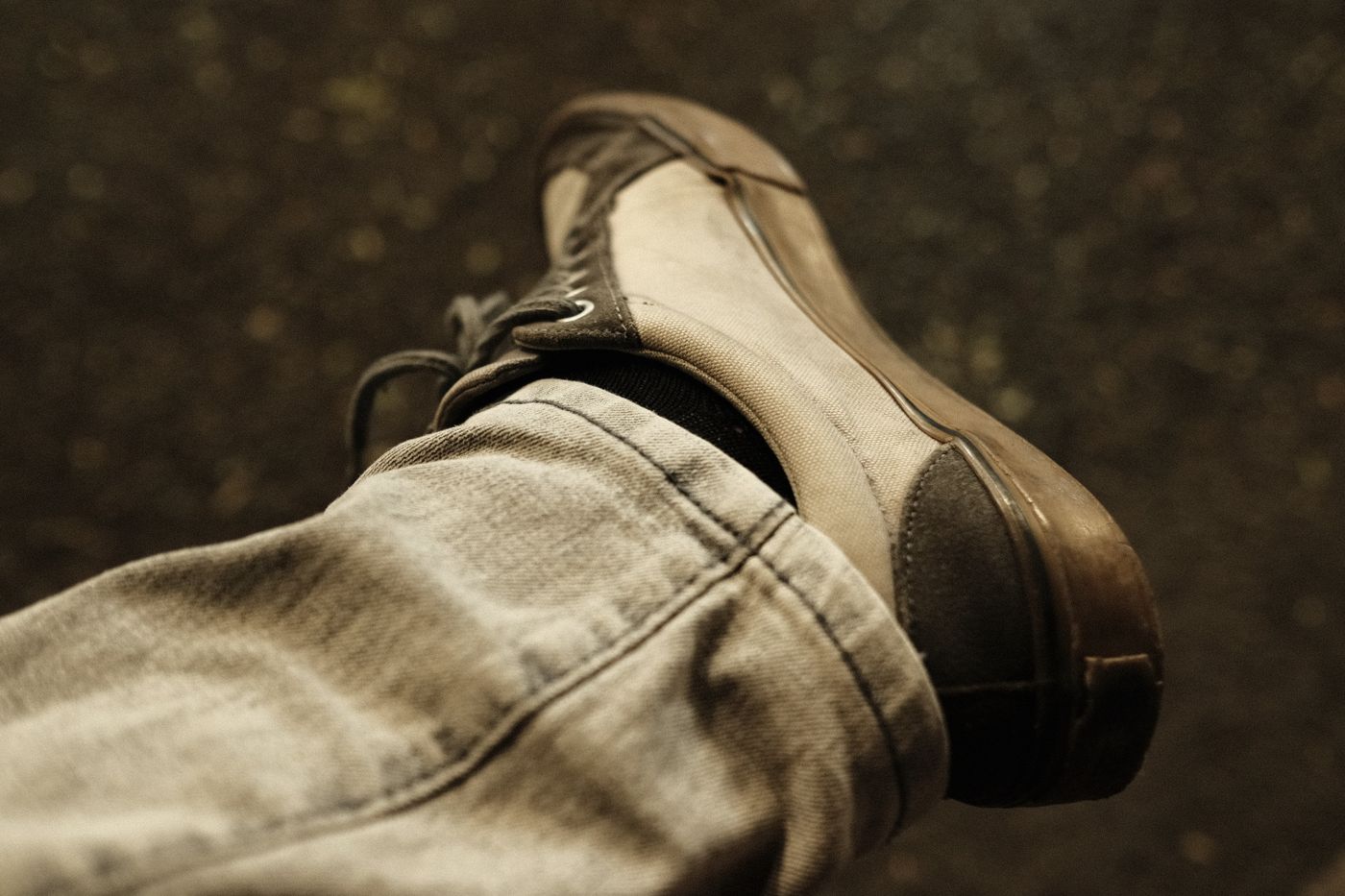
Foto: Nguyễn Minh Thắng · Pexels
What to Look For
Press the midsole with a thumb. If it crumbles or feels chalky, the foam has gone and no amount of style will save it. The midsole is the part that absorbs impact. When it hardens, it loses its cushioning and can crack. This happens with age, not just wear. A pair of deadstock sneakers from the 1980s may look perfect, but the midsole will be as hard as a rock.
Check the glue line at the toe for lifting. The toe is where the upper meets the sole. Over time, the glue dries out and the sole separates. A small gap is fine; a large one is a problem. You can re-glue it yourself with a product called Shoe Goo, but it is not a perfect fix.
Look inside at the heel for a date stamp. Most vintage sneakers have a production date printed on the insole or the heel tab. It will be a number like '94/08' for August 1994. This tells you the exact age and helps you verify the authenticity. If it is missing, it could be a reproduction.
Deadstock is lovely but old glue fails, so shoes that have been worn a little often last longer. The wear keeps the materials supple. The glue has had time to set. A pair that has been worn ten times is ideal. It is broken in, but not worn out.
One last thing: try it on properly, walk around in it, and sit down. A pair of retro sneakers that only works standing still is not going to survive your actual life. The toe box should be comfortable, the heel should not slip, and the sole should flex with your foot. If it feels stiff or pinches, put it back. There will be another pair tomorrow.
Tokyo is the best city in the world for this. The attention to detail, the respect for the object, the willingness to see value in what others would discard. A worn-in pair of retro sneakers is not a compromise. It is a choice. And in Tokyo, it is a choice that is made with care.
City
Tokyo
Category
vintage sneakers
Published
8 August 2026
The names
Meet the designers
The minds behind this story — each with a piece currently on the market.
New Balance
USA · 1900s
The 550 & dad-shoe comfort
The 550 & dad-shoe comfort
Top piece
View →
Nike
USA · 1960s
Air Max & the Swoosh
Air Max & the Swoosh
Adidas
Germany · 1940s
The three stripes & the Samba
The three stripes & the Samba
Diesel
Italy · 1970s
Washed denim & streetwear
Washed denim & streetwear
Continue the edit
Further stories from the same world
Three more walks through the same vintage universe.

How to Wear a Faded Tour Tee in Tokyo
A band tee is a souvenir somebody else brought home. The faded print, the softened cotton, the fact that it survived thirty years of washing.
Read the story →
Why Old Jeans Beat New Ones in Tokyo
In Tokyo, vintage denim is not a trend. It is a category of craftsmanship. The jeans that survive from the 1970s and 1980s were cut on machines that no longer exist, with cotton that was woven slowly and dyed with indigo that fades in layers, not all at once.
Read →
The Small Bag Guide for Tokyo
It is 2025, and the small shoulder bag is everywhere. But the ones in the windows of Ginza department stores are not the ones I want.
Read →