Milan's Vintage Style Revival: A Nod to the Past, a Look to the Future
Milan, a global fashion capital, is embracing a vibrant resurgence of vintage style, subtly intertwining its rich sartorial history with contemporary trends.
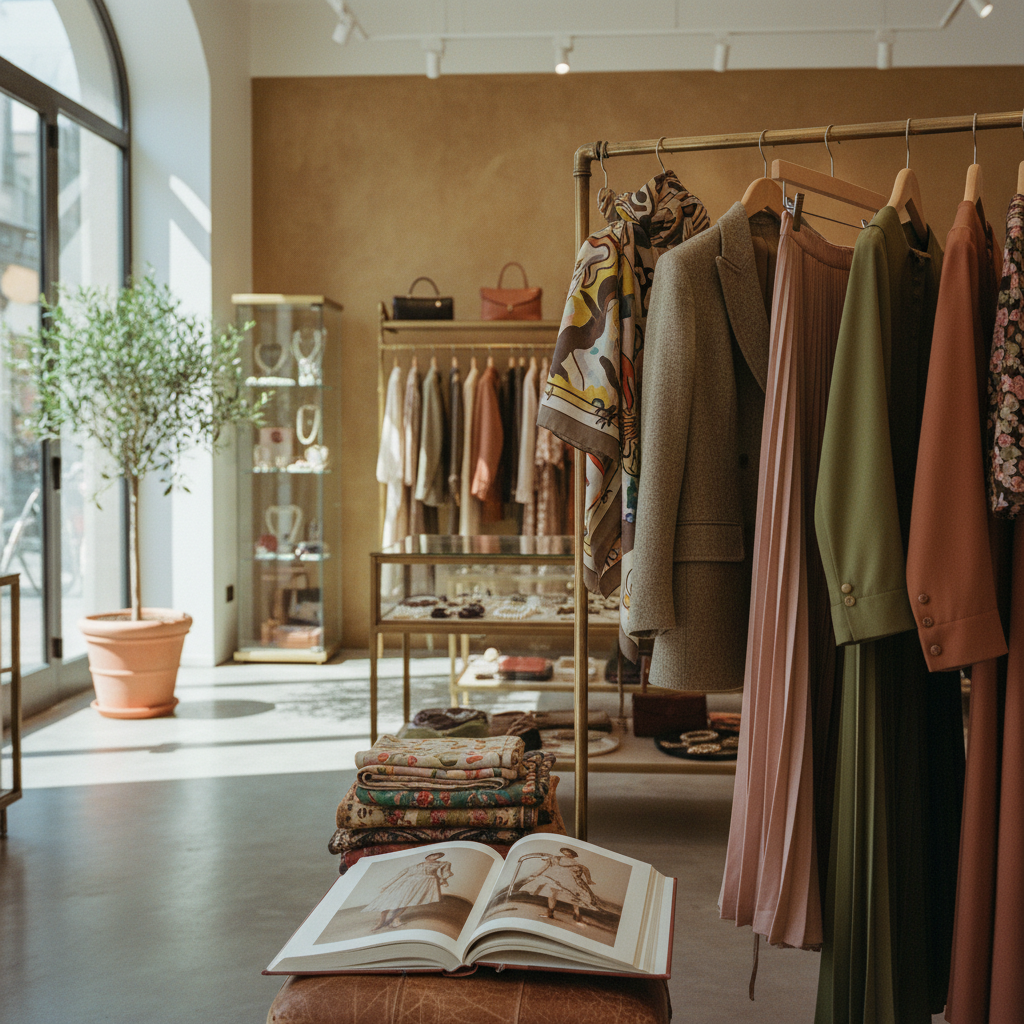
Milan's golden hour hits differently. It's not the hazy, romantic glow of Rome or the cinematic floodlight of Paris. In Milan, the late-afternoon sun is an architectural element, a sharp, clean accomplice that cuts across the facades of rationalist palazzi and catches the metallic sheen of a tram gliding down Via Torino. For decades, this light has been used to illuminate the new, the next, the now—the crisp collections hanging in the windows of the Quadrilatero della Moda, the city's hallowed "golden quadrilateral" of luxury retail. But watch closely, in the quieter cobblestoned corners of Brera or along the bustling canals of the Navigli, and you'll see that same light catching something else: the softened shoulder of a vintage Armani blazer, the distinctive patina of a well-loved Gucci Jackie bag from another era, the subtle weave of a 1970s Missoni knit. Milan, the global epicentre of forward-momentum fashion, is looking back. Not in a fit of passive nostalgia, but with the discerning eye of a curator, actively weaving its storied past into the fabric of its future.
The Heirloom and the Hoodie
The traditional Milanese aesthetic has long been codified by the figure of the sciura. She is the city's elegant matriarch, a woman of a certain age and unspoken influence, for whom style is not a trend but a birthright. Her uniform is one of quiet investment: the perfectly cut Max Mara coat, the Tod's Gommino loafers, the string of pearls, the imperceptible scent of a classic perfume. It's a look built on tailoring, quality, and a kind of sartorial discipline. For a new generation of Milanese, this archetype is not a relic to be dismissed but a foundation to be remixed. They are raiding their grandmothers' closets—or the city's burgeoning vintage shops—for these very pieces, decontextualizing them with a modern, almost irreverent flair.
This is where the city's inherent sense of sprezzatura—that art of studied nonchalance—finds its 21st-century expression. The aforementioned Max Mara coat is thrown over a streetwear hoodie and baggy denim. A pristinely preserved Fendi Baguette, the ultimate accessory of the late 90s, is paired not with a slinky slip dress but with utilitarian cargo pants and Salomon sneakers. The power-shouldered blazers of the 1980s, once symbols of corporate dominance in Italy's economic boom, are now worn oversized, their formidable silhouette softened by the casual uniform of Gen Z.
This dialogue between generations is visible on the streets. Young creatives in the burgeoning Isola district, a hub of contemporary art and design, are pioneering this look. It's a testament to the enduring quality of Italian craftsmanship. A vintage piece from a Milanese powerhouse wasn't just made for a season; it was made for a lifetime, and now, it's being granted a second or third. It signifies a shift in the definition of luxury, away from the logo-stamped and brand-new towards something with a story, a soul. It's a quiet rebellion, a nuanced understanding that true style isn't about what you buy, but how you wear what you find.
The Thrill of the Hunt
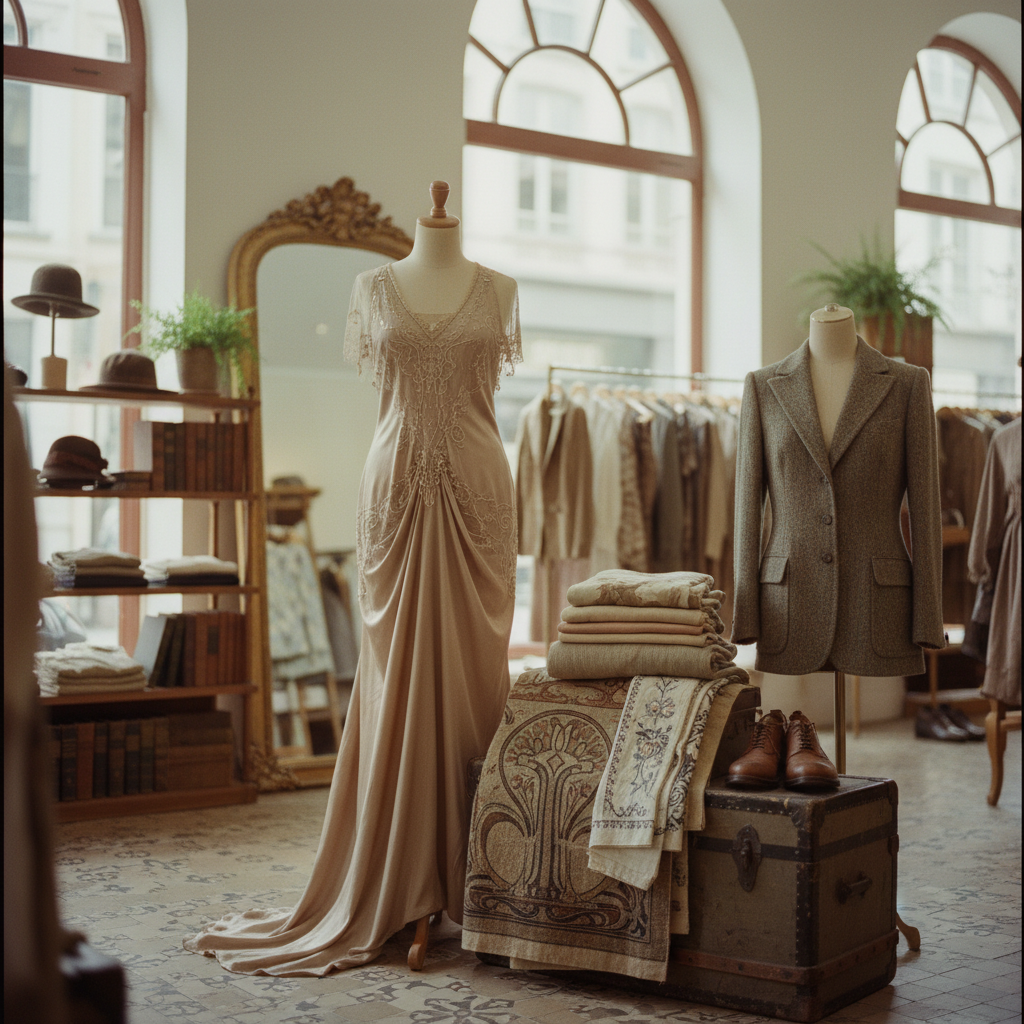
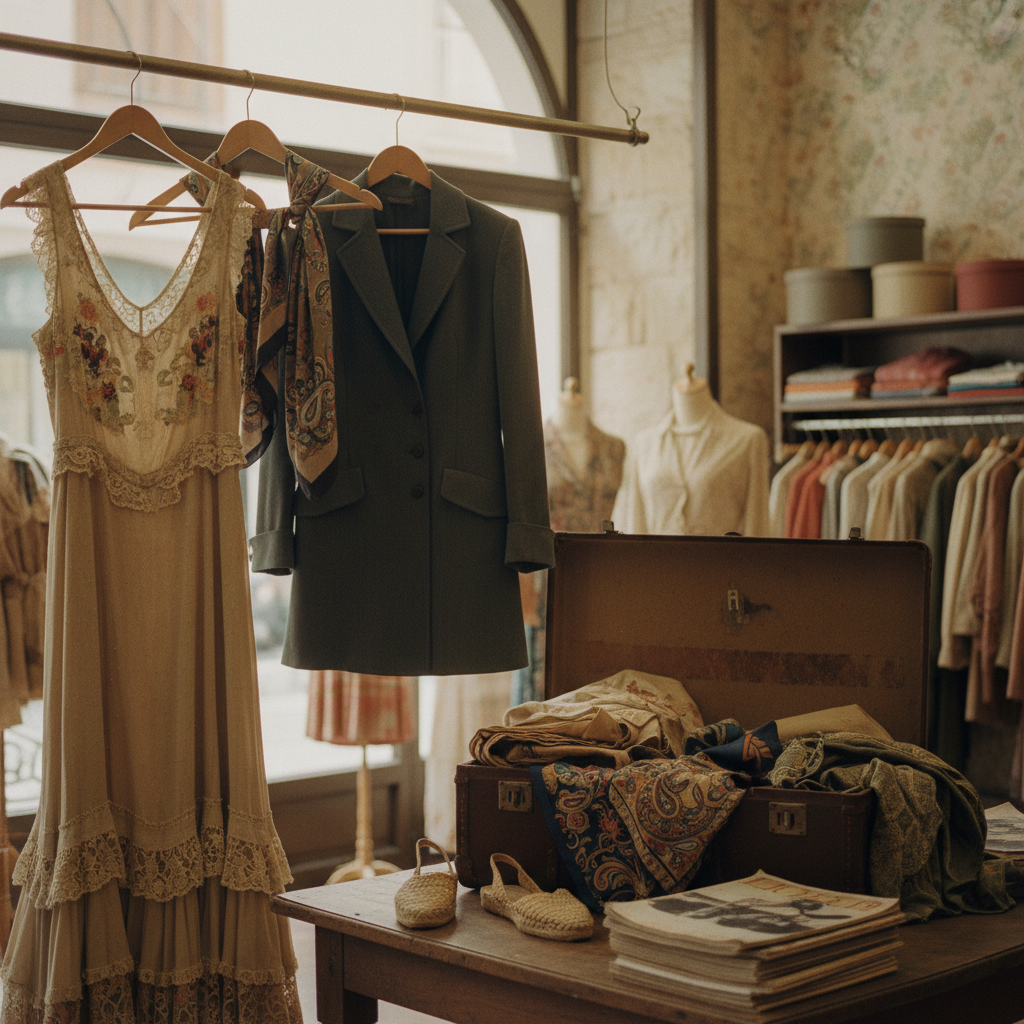
The epicentre of this vintage renaissance is not found in a single, polished boutique but in the sprawling, chaotic, and utterly magical ecosystem of Milan's second-hand markets. The most famous is the Mercato dell'Antiquariato, which sprawls along the Naviglio Grande on the last Sunday of each month. Here, the Milanese past is laid bare. Racks groan under the weight of decades of fashion: supple 1970s leather jackets sit beside the vibrant, graphic prints of 1980s Fiorucci, and the minimalist black nylon of 1990s Prada. It is a treasure hunt in its purest form, a sensory overload of textures, colours, and the faint, sweet smell of time.
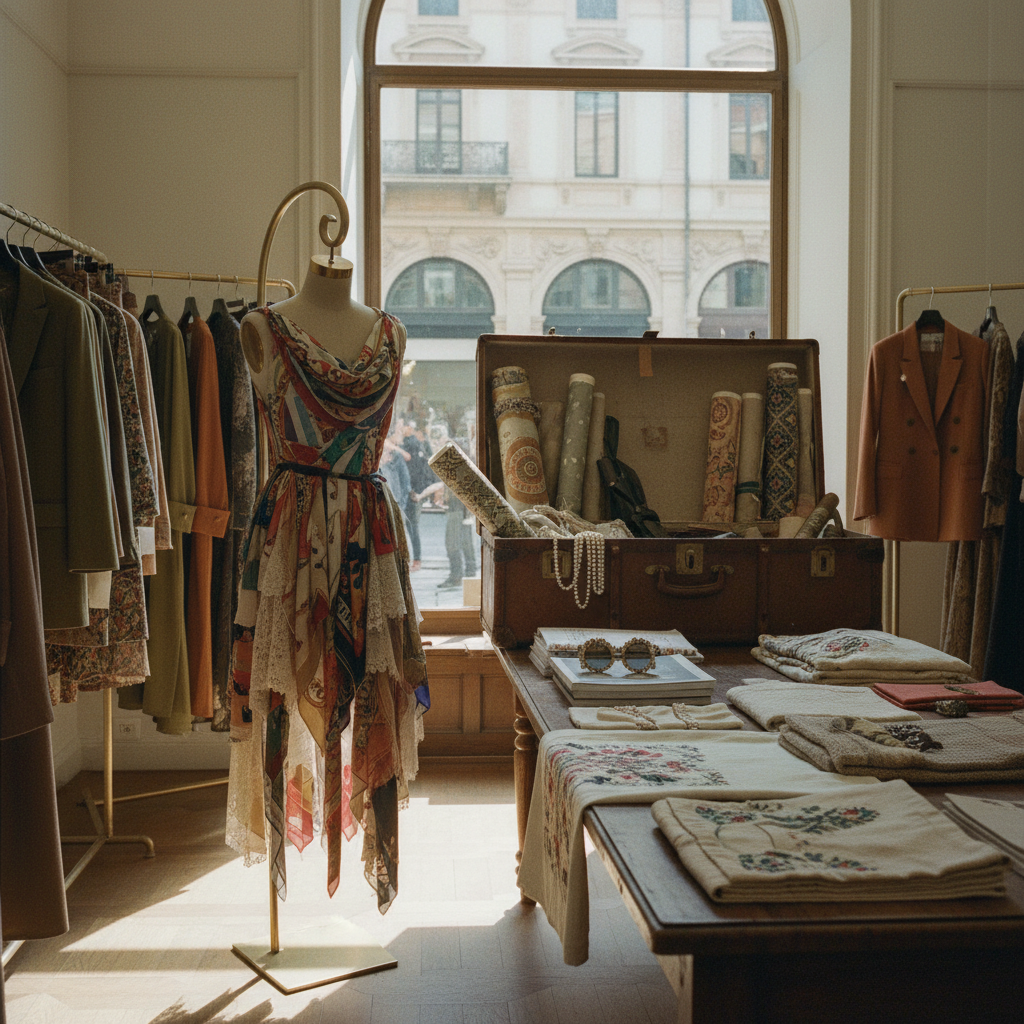
Beyond the canals, a more curated experience awaits. In the chic, artistic neighbourhood of Brera, discreetly signed doorways lead to archival boutiques that feel more like galleries than shops. These are temples for the true aficionado, where museum-quality pieces from the archives of Romeo Gigli, early Gianni Versace, and the most coveted collections of Miuccia Prada are preserved in climate-controlled conditions. Here, the transaction is less a purchase and more an acquisition. The proprietors are scholars of their craft, ready to recount the history of a specific fabric or the cultural significance of a particular silhouette. These stores cater to a global clientele, from design students seeking primary source material to collectors looking for a holy grail piece.
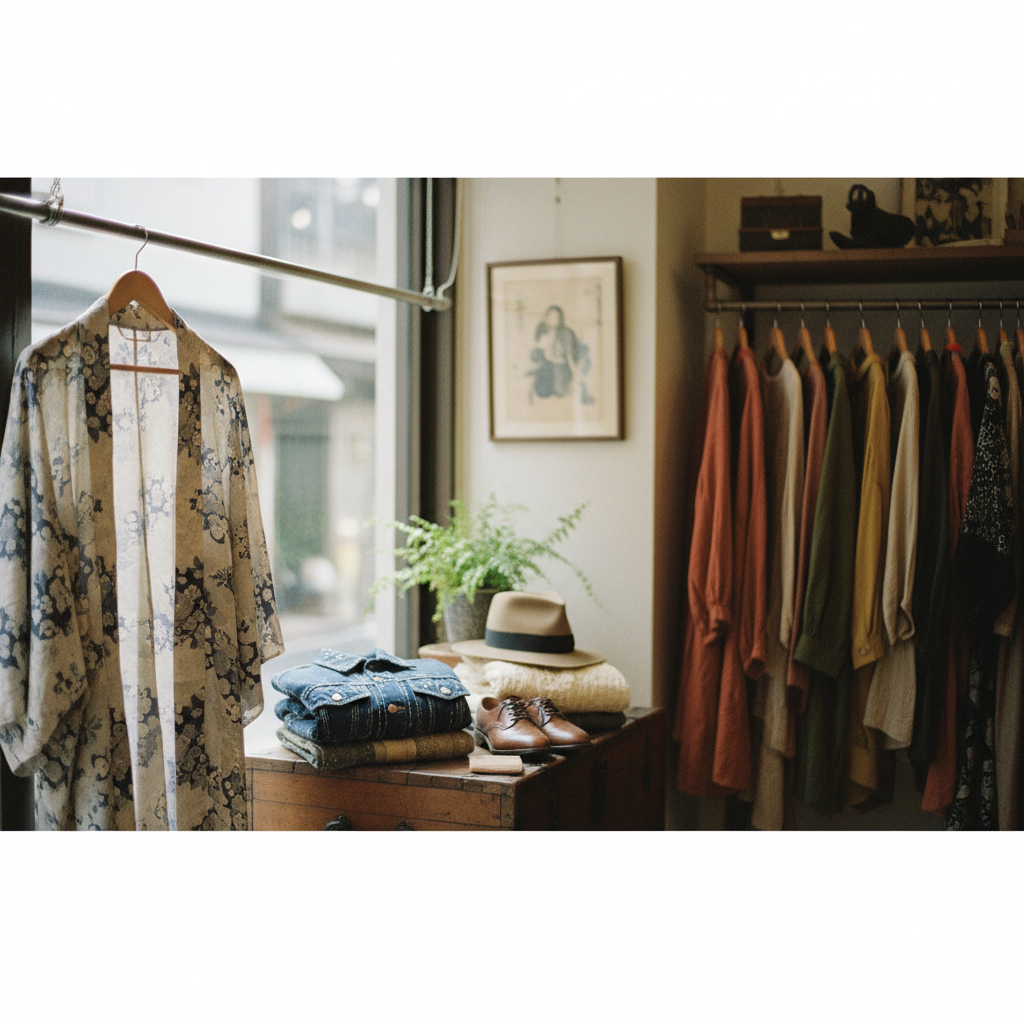
This growing infrastructure—from the accessible flea market to the high-end archive—is indicative of a profound cultural shift. In a city that serves as a headquarters for the global fashion industry, the embrace of the pre-owned is a powerful statement. It is a move towards circularity and sustainability, a conscious rejection of the relentless churn of seasonal trends. The thrill is no longer just in acquiring the "it-bag" of the moment, but in unearthing a forgotten gem that no one else will have, a piece that connects the wearer to the city's rich design lineage. It's a more personal and, ultimately, more sustainable form of luxury.
Decoding the Decades, Remastering the Look
To understand the vintage clothes on Milan's streets today is to understand the city's subcultural and sartorial history. The references run deep, and each decade offers a distinct flavour now being reinterpreted. The 1980s, for instance, were the era of the Paninaro. This youth subculture, born in the shadow of the Duomo at the Al Panino sandwich bar, was Italy's answer to preppy style, but amplified with a bold, consumerist bravado. They sported Moncler puffer jackets, brightly coloured Best Company sweatshirts, Timberland boots, and Levi's 501s. Today, you see the ghost of the Paninaro in the city's renewed love for heritage sportswear, the chunky "dad" sneaker, and the unabashed return of archival logos worn with a knowing irony.
Then came the 1990s, a decade that defined the Milanese aesthetic for a generation. As a reaction to the extravagance of the 80s, a wave of minimalism swept through the city, championed by Miuccia Prada. She turned humble black nylon—once used for military parachutes—into the ultimate luxury material. The austere lines, industrial fabrics, and intellectual coolness of 90s Prada, Jil Sander, and Helmut Lang (an Austrian who showed in Paris but whose influence was profoundly felt in Milan) are perhaps the most sought-after vintage finds today. A simple, black, nylon Prada backpack from 1995 is now a more potent status symbol than its contemporary equivalent. It signals an understanding of design history, an appreciation for a time when fashion whispered its intelligence rather than shouting its price tag.
The pendulum swung back with the turn of the millennium. The early 2000s in Milan were a flurry of high-octane glamour. It was the era of Tom Ford's overtly sensual Gucci, of Roberto Cavalli's baroque animal prints, and Donatella Versace's barely-there dresses. This Y2K aesthetic is now being rediscovered by a generation who were children when it first appeared. They are drawn to the unabashed fun and theatricality of it all—the low-slung jeans, the micro-minis, the diamanté details. But their interpretation is filtered through a 2020s lens: less about vamping seduction, more about playful self-expression, often grounded with a pair of chunky sneakers or an oversized blazer, connecting it back to the other eras in their vintage arsenal.
This ability to pull from different decades, to understand and remix the codes of the Paninaro, the minimalist, and the Y2K starlet, is what makes the current Milanese vintage scene so dynamic. It's not about cosplay or faithful reproduction. It's about a fluid, sophisticated form of fashion literacy, where the past is not a foreign country but an endless wardrobe from which to choose.
As the sun finally dips below the horizon, casting long shadows on the polished stone of the Galleria Vittorio Emanuele II, the city's dual identity is thrown into sharp relief. Milan will always be a city obsessed with the future, a place where trends are born and fortunes are made season after season. But it is also a city coming to terms with the richness of its own archive. The resurgence of vintage is more than a fleeting trend; it is a reawakening. It is the recognition that the most sustainable, individual, and truly luxurious garment is one that already exists, imbued with history and waiting for its next chapter. In looking back, Milan is not retreating from the future; it is simply choosing to walk towards it, dressed in the very best of its past.
Keep reading