Brussels Avant-Garde: A Close Reading of Margiela-Era Construction
The deconstruction, the four white stitches, and the quietly radical tailoring that came out of Brussels in the 1990s.
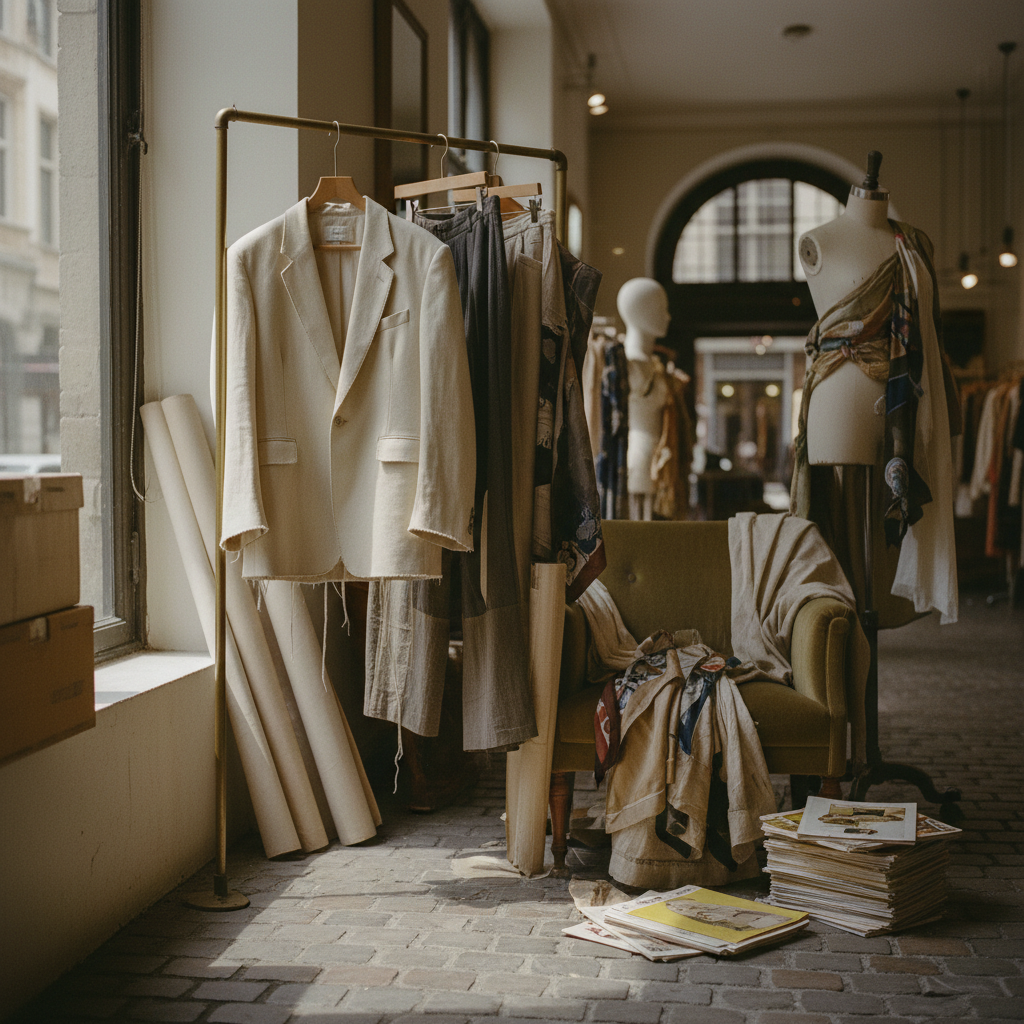
Margiela was Antwerp by training and Paris by address, but the construction language he formalised in the early 1990s was unmistakably Brussels — and the city's small ateliers, then and now, still build to that grammar. The early Maison Martin Margiela pieces are recognisable not by branding (the famous blank white label is a hint, not proof) but by the construction itself.
The four-stitch label is sewn in by hand with a contrasting white cotton thread, deliberately visible from the outside. The numbered tag system (0 to 23) is woven, never printed. The seams on the early ready-to-wear are often deliberately unfinished — exposed hems, raw selvedge edges, lining left visible at the cuff — but the underlying tailoring is rigorous: pad-stitched canvas, set-in sleeves, hand-finished buttonholes. The deconstruction is editorial, not structural.
Recognising the period. Early 1990s Margiela used a specific palette of Belgian-woven cottons and a recognisable cut: the famous tabi boot, the artisanal line's reworked vintage, the oversized shoulders of the line 14 menswear. The fabric labels — line 1 women's, line 10 men's, line 22 shoes — are sewn into the inner seam and dated. A piece without these internal markers is almost certainly a copy or a later reissue.
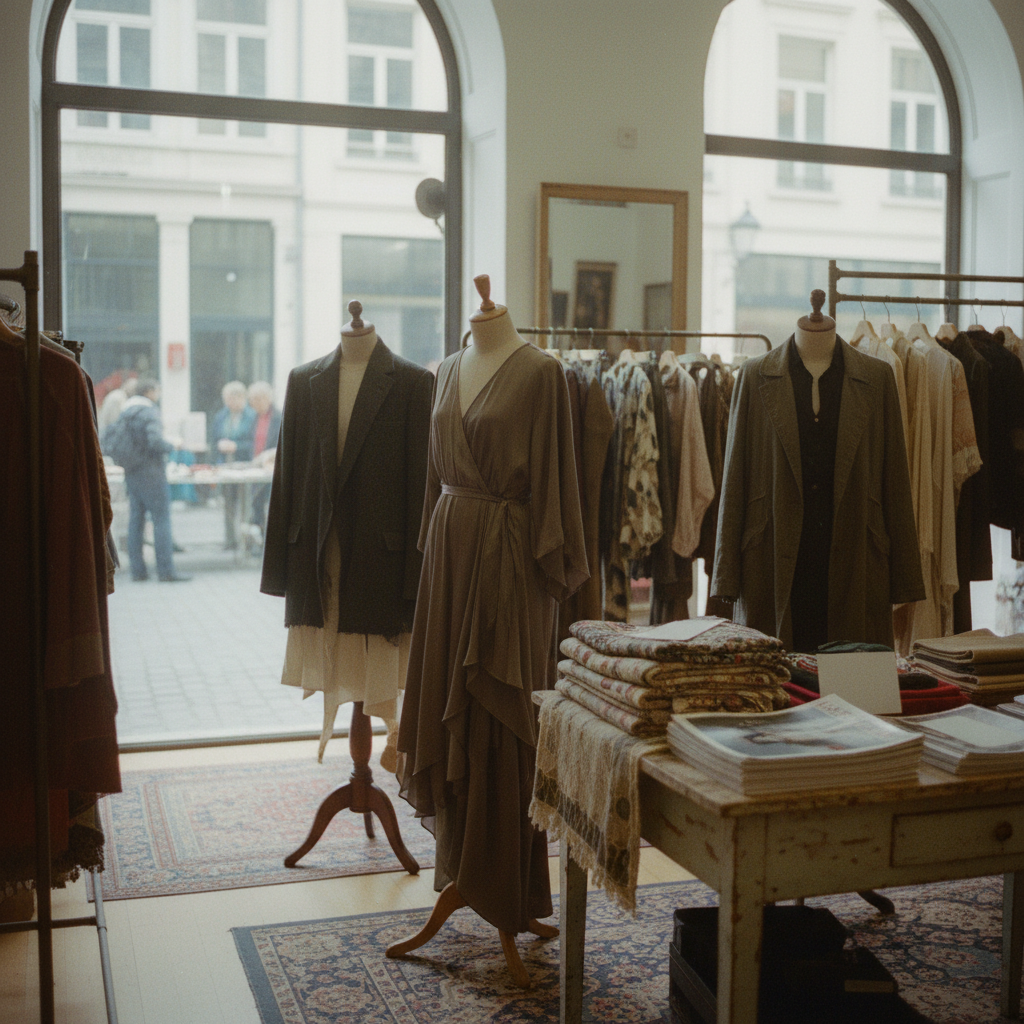
Walk into a small Brussels atelier today — Bernhard Willhelm's old studio space, or the smaller dealers near Sablon — and you can still see this construction logic alive in the work of younger Belgian designers. The avant-garde here was never about shock; it was about a quiet refusal of the usual finishing.
Keep reading