Brussels' Best Vintage Boutiques: A Curated Guide to Timeless Style
Discover Brussels' premier vintage fashion destinations, offering a meticulously curated selection of European timeless pieces for the discerning sartorialist.

Brussels' Best Vintage Boutiques: A Curated Guide to Timeless Style
Brussels does not shout its elegance. Unlike its more conspicuous European siblings, the Belgian capital cultivates a style that unfolds rather than announces itself—a quiet confidence found in the cut of a coat, the drape of a time-softened fabric, the unexpected detail on a classic silhouette. It is a city of connoisseurs, a place where substance and history are valued over ephemeral trends. It stands to reason, then, that its vintage scene is not a chaotic jumble of bygone eras, but a series of discreetly curated archives, each telling a distinct story of European sartorial history. To shop for second-hand fashion in Brussels is to engage in a sophisticated treasure hunt, a sartorial pilgrimage through cobbled streets and past grand Art Nouveau facades, seeking not just clothes, but pieces of a narrative—one that whispers of Belgian intellectualism, French nonchalance, and a uniquely pan-European polish.
This is a city built on layers, both architecturally and culturally, and its vintage offerings reflect this complexity. From the hallowed halls of high-concept designer resale to the romantic dustiness of antique markets, the Brussels sartorialist navigates a landscape where a deconstructed Margiela jacket might hang just a few streets away from a perfectly preserved 1950s Dior blouse. The true prize is not the label, but the integrity of the garment: its make, its material, its enduring form. This is a guide to navigating those layers, to discovering the city's most thoughtful collections where fashion is not a fleeting moment, but a timeless continuum.
The Archive Keepers of Dansaert
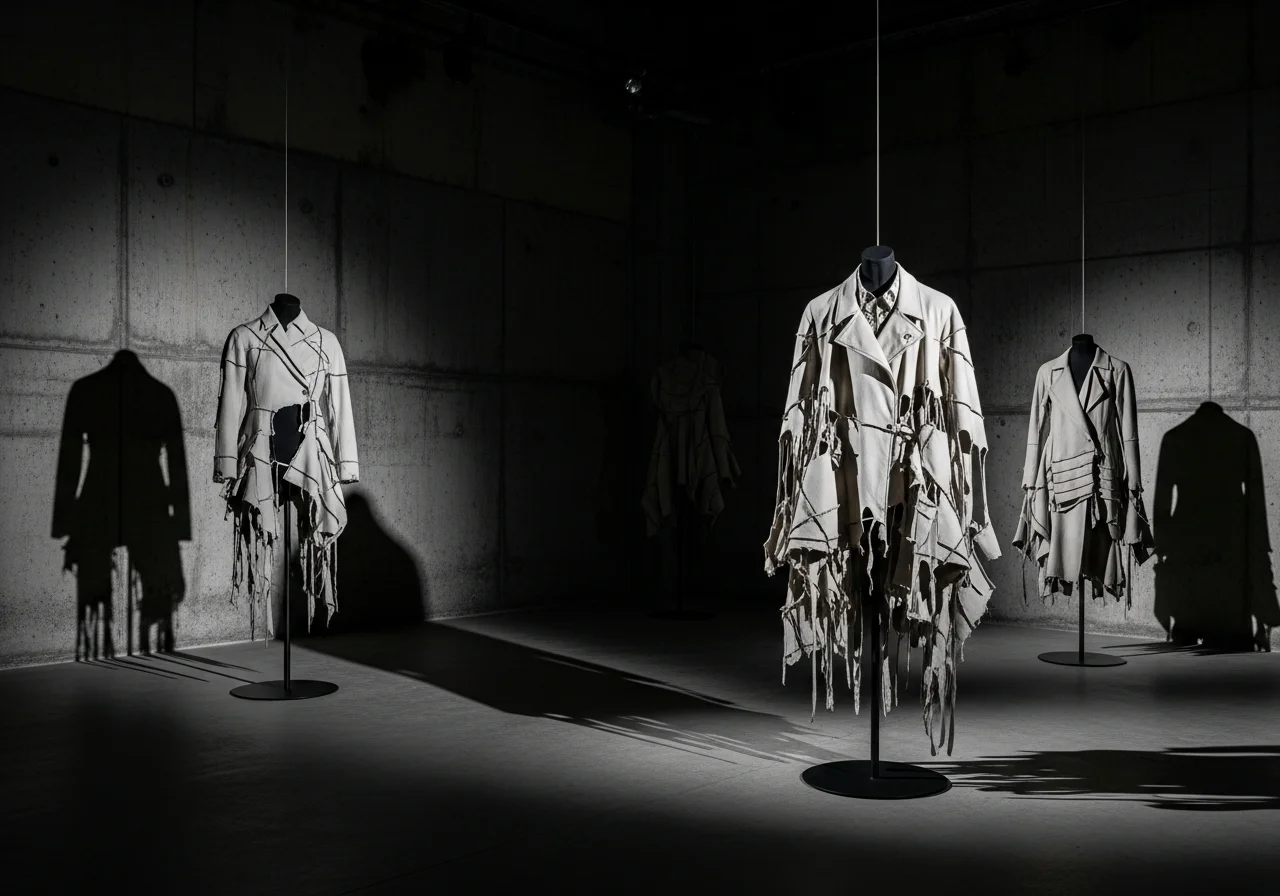
The geography of Brussels fashion begins, for many, in the Dansaert district. This is the city's creative artery, a neighbourhood synonymous with the avant-garde wave of Belgian designers who reshaped global fashion in the late twentieth century. Here, the legacy of the Antwerp Six and the intellectual rigor of Martin Margiela are not just historical footnotes; they are the foundational aesthetic. The vintage boutiques in this quadrant are less like shops and more like galleries, presenting clothing as wearable art. They are spaces of quiet reverence, often characterized by minimalist interiors—white walls, polished concrete floors, and sparse, considered rails—that allow the garments themselves to hold focus.
To step inside one of these establishments is to enter a dialogue with design history. You will not find bargain bins or overflowing racks. Instead, you will find a meticulously edited collection where each piece has been chosen for its provenance and its significance. Expect to encounter a somber, exquisitely tailored Ann Demeulemeester coat from the early nineties, its poetic severity as potent today as it was then. You might discover a Dries Van Noten silk blouse, its signature print a faded testament to the designer's mastery of colour and texture, or perhaps the holy grail for any devoted collector: a piece from an early Maison Martin Margiela collection, its deconstructed form and anonymous white label a quiet rebellion against the very idea of branding.
Shopping here is an education. The proprietors are not mere sales assistants; they are archivists, deeply knowledgeable about the construction, context, and conceptual underpinnings of each garment. They can discourse on the precise season a particular pocket detail was introduced or the philosophical shift a certain silhouette represented. This is where you come not for a fleeting trend, but for an investment piece—a garment that transcends its era and becomes a cornerstone of a personal uniform. It's a testament to the Brussels sensibility: a preference for the cerebral and the enduring over the loud and the new. These are not just clothes; they are artifacts of a particularly Belgian modernism, imbued with a timeless power.
Marolles and the Patina of Time
If Dansaert represents the curated intellect of Brussels fashion, the Marolles district embodies its soulful, storied heart. This is the city's oldest and most stubbornly authentic neighbourhood, a labyrinth of narrow streets that for centuries has been the hub of artisans, merchants, and all manner of trade. The air here feels different—thicker with history, scented with the wood polish of antique shops and the faint, alluring mustiness of things left to age beautifully. The daily flea market at Place du Jeu de Balle is the district's chaotic, beating pulse, but tucked away in the surrounding streets are vintage boutiques that offer a more refined, yet equally romantic, hunting ground.
The curation here is driven by a different sensibility. It is less about designer pedigree and more about the poetry of patina. The emphasis is on classic European archetypes, garments that have lived a life and carry its marks with grace. Think of the perfect French bleu de travail jacket, faded to a soft, cornflower hue from years of sun and labour, or a German fisherman's sweater in heavy, indestructible wool. You are likely to find a trove of 1970s leather, from shearling-lined coats to buttery soft blousons, each bearing the unique creases and scuffs of its previous owner. These shops cherish the story embedded in the fabric.
This is the place to search for timeless outerwear, the kind of pieces that form the bedrock of a European wardrobe. A classic Burberry trench, its gabardine softened with age; a hefty loden coat from Austria, its felted wool a shield against the damp northern European winters; or a beautifully structured wool blazer from the 1980s, its powerful shoulder line now reading as elegantly statuesque. The experience is tactile and deeply sensory. It involves running your hand over the dense weave of old military serge, feeling the substantial weight of a 1960s tweed, and appreciating the way a silk scarf from the 1940s holds its printed colour with an unmatched vibrancy. Shopping in the Marolles is an act of connection with a more grounded, functional, and deeply romantic past. It is about finding beauty in imperfection and acknowledging that the most stylish things are often those that have been loved the longest.
The Bohemian Edit of Saint-Gilles and Ixelles
Venture south of the city centre into the leafy, cosmopolitan boroughs of Saint-Gilles and Ixelles, and the vintage landscape shifts once more. These are the city's bohemian and bourgeois heartlands, where stunning Art Nouveau townhouses stand beside lively artist studios, and the pace of life is set by long afternoons in independent cafés. The vintage boutiques here reflect the neighbourhoods' creative and discerning residents, offering a highly personal and wearable edit of 20th-century style. These are not vast warehouses but intimate spaces, often run by a single passionate owner whose distinct taste is evident in every single piece on the rails.
Browsing here feels less like a museum visit and more like raiding the closet of an exceptionally stylish, well-travelled friend. The curation is a masterful blend of quiet luxury and playful eclecticism. One rail might hold a collection of 1990s minimalism—Calvin Klein slip dresses in liquid charmeuse, Jil Sander cashmere knits, and Helmut Lang denim with a perfect, straight-leg cut. The next might be a riot of 1970s Yves Saint Laurent Rive Gauche, with vibrant peasant blouses and perfectly tailored safari jackets that speak of Parisian confidence and bohemian freedom. This is where you'll find that exquisitely patterned silk blouse from the 80s, the kind that elevates a simple pair of trousers into an outfit of intention.
The focus in these boutiques is on silhouette, texture, and lasting quality. The owners have a hawk's eye for beautiful fabrics—brushed cottons, weighty silks, and fine Italian wools—and for cuts that flatter the body in a way that fast fashion rarely achieves. You may find an Escada power blazer with a bold, structured shoulder, a delicate 1930s tea dress adorned with tiny buttons, or a simple, elegant leather handbag whose quality is evident in its hardware and hand-stitching. It's a vision of sustainable fashion that feels both aspirational and deeply practical, offering a way to build a unique, personal wardrobe piece by piece. These shops celebrate the character and individuality of dressing, reminding us that true style is a personal narrative, not a dictated trend.
Ultimately, to explore the vintage fashion scene in Brussels is to understand the city itself. It is an experience of discovery, a journey through layers of history and taste, from the avant-garde intellectualism of the city centre to the romantic soul of its oldest quarters and the creative polish of its residential arrondissements. The common thread is a deep-seated appreciation for things that last—for quality craftsmanship, for materials that age with grace, and for designs that possess an integrity that time cannot diminish. In a world saturated with the new and the next, the vintage boutiques of Brussels offer a potent and deeply stylish alternative: a chance to dress in stories, to wear history, and to cultivate an elegance that is truly timeless.
Keep reading