
 Sign in
✦ Culture · Milan
The Weight of a Good Tee: Wearing Vintage Band Shirts Now
How to wear a faded 1977 Clash shirt without looking like you raided a costume trunk. Real advice on styling, spotting the real thing, and the stories stitched into the cotton.
 By Louis Trash·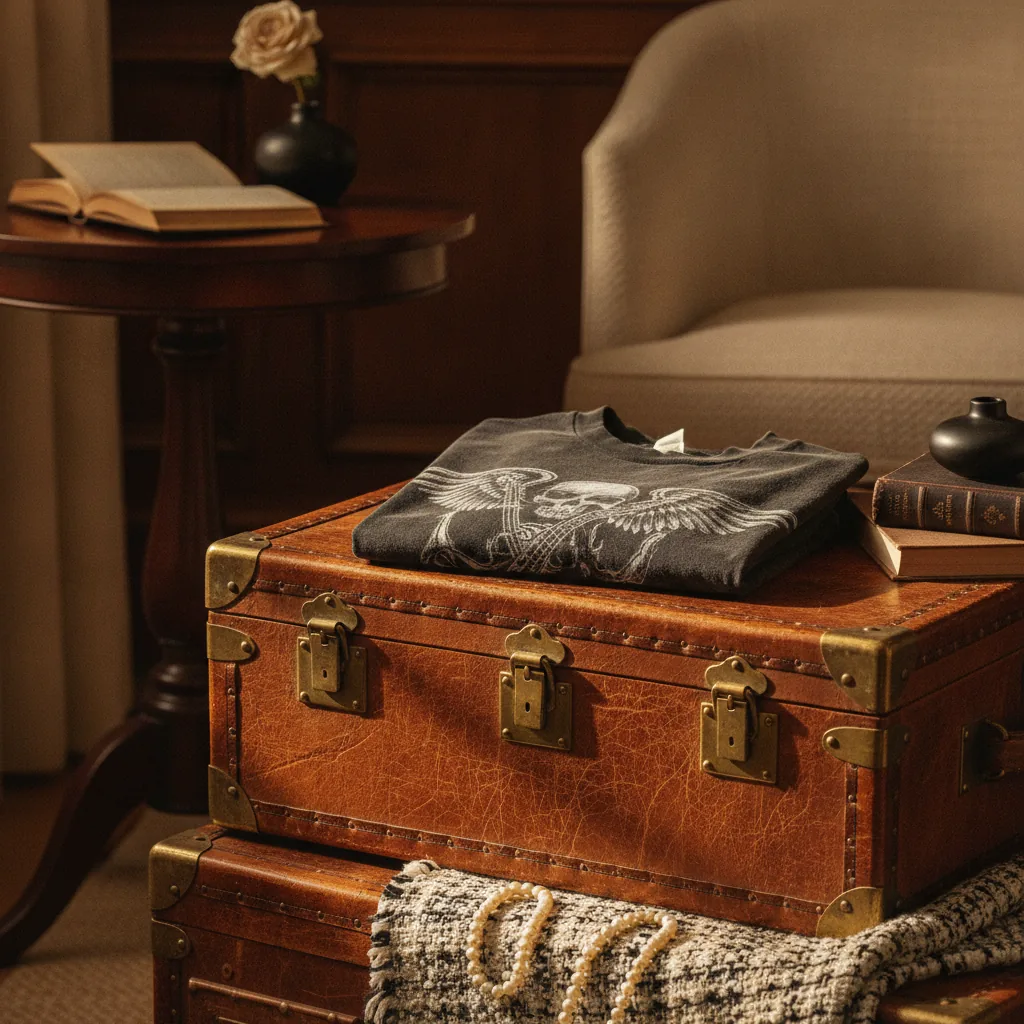
The Shirt That Has Seen Things
A 1972 Rolling Stones tongue tee, washed to a pale grey, the print cracked like a dry riverbed. That is what you want. The crisp reissue from the band's website won't do. The one that has lived carries a history you can feel on your skin, a softness that no new cotton can fake. I wore one last week, a 1978 Springsteen shirt I found in a Paris flea market for twenty euros. The collar was slightly stretched, the hem uneven. My wife said I looked like I had just walked off a film set. She meant it as a compliment.
These shirts are not about nostalgia for a concert you never attended. They are about wearing a piece of cultural memory, a talisman of a time when music was loud, politics was angry, and a band tee was a uniform of belonging, not a fast-fashion afterthought. The ones that move now are mixed labels, mostly from the late 1960s through the early 1980s, priced around two hundred dollars. But you are not buying a price tag. You are buying a story, and you need to know how to tell it.
What to Look For: The Tell of the Cotton
Forget the print for a moment. Look at the fabric. A genuine 1970s band tee is made of heavyweight cotton, often a 100% cotton jersey that feels substantial, almost like a light sweater. It will have a ribbed collar that holds its shape, not a flimsy band that stretches out after one wash. Turn the shirt inside out. Look for the manufacturer's label. Companies like Screen Stars, Brockum, and Winterland produced most of the licensed shirts in the late 1970s and 1980s. A Screen Stars label with a single-stitch hem and a tag that says "Made in USA" is a good sign. But beware: many reissues use the same labels. The real test is the print itself.
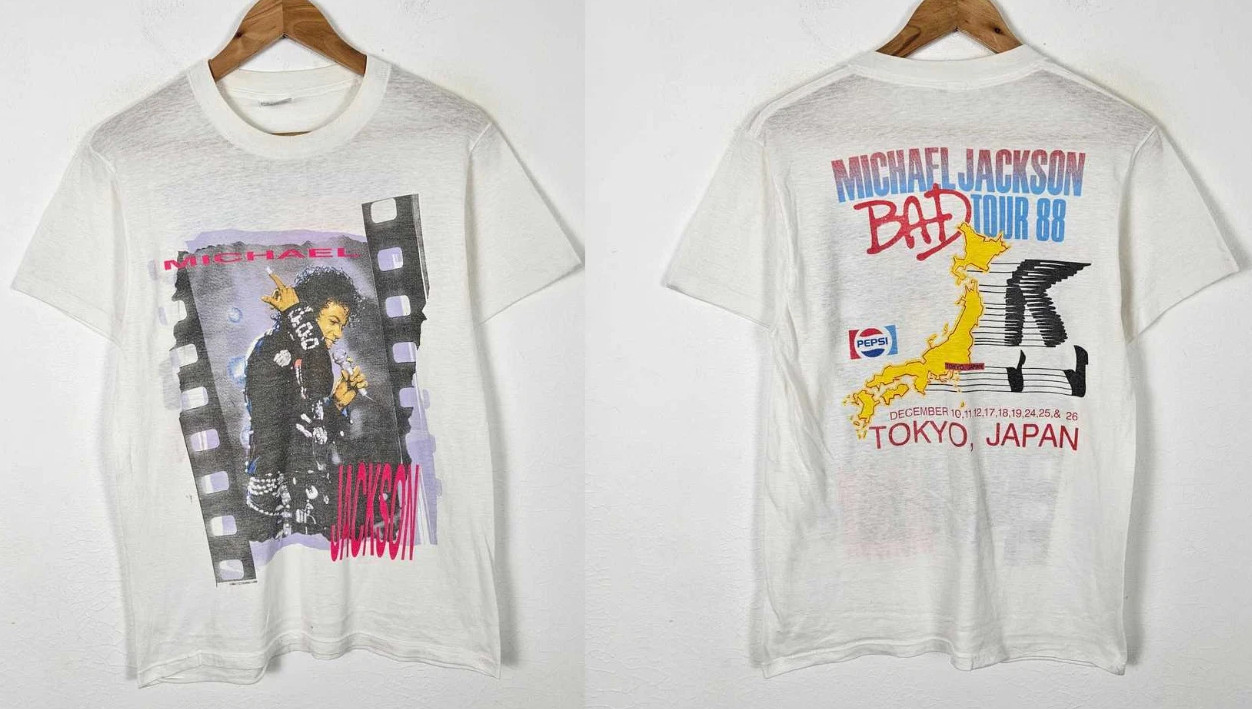
A vintage print is thick, often with a slight rubbery feel, and it has cracked over time in a way that is uniform, not patchy. Hold it up to the light. The cracks should follow the contours of the design, not look like a spiderweb of random lines. Also check the colours. A 1972 Grateful Dead skull shirt will have a specific shade of red, a slightly orange-tinged scarlet, because of the pigments used then. Modern reproductions are often too bright, too saturated. Look at the back print. Many vintage tees have a large back print, and the front is small, often a chest logo. If the front and back are both huge, it is likely a 1990s bootleg. The best era, for wearability, is 1977 to 1982. The shirts are cut boxy but not shapeless, and the cotton has enough body to drape well on a modern frame.
Another tell: the side seams. Many vintage tees are made from a single tube of fabric, so there are no side seams. If you feel a seam running down the side, it is probably from the mid-1980s or later. Also, check the hem. A double-stitched hem is common after 1980, but a single stitch is a mark of earlier manufacture. Do not be fooled by a pre-washed softness. Some sellers artificially distress shirts. The genuine article has a softness that comes only from decades of washing, and it is uneven. The collar might be more worn than the hem, the armpits slightly thinner. That is the beauty of it.
How to Wear It: Not a Costume
The danger with a vintage band tee is that it can look like you are wearing a museum piece. The trick is to treat it as a neutral. A faded black tee, whether it is a 1977 Clash shirt or a 1980 Joy Division one, works best with modern pieces that have a clean line. Pair it with a tailored blazer in a dark wool or a crisp cotton trench. The roughness of the tee against the structure of the jacket creates a tension that is effortless. I wore my Springsteen shirt with a pair of high-waisted, wide-leg cream trousers and black leather loafers. The proportions were key: the tee was slightly oversized, so I tucked it in to define the waist. A belt in a tan leather, nothing flashy, kept the look grounded.
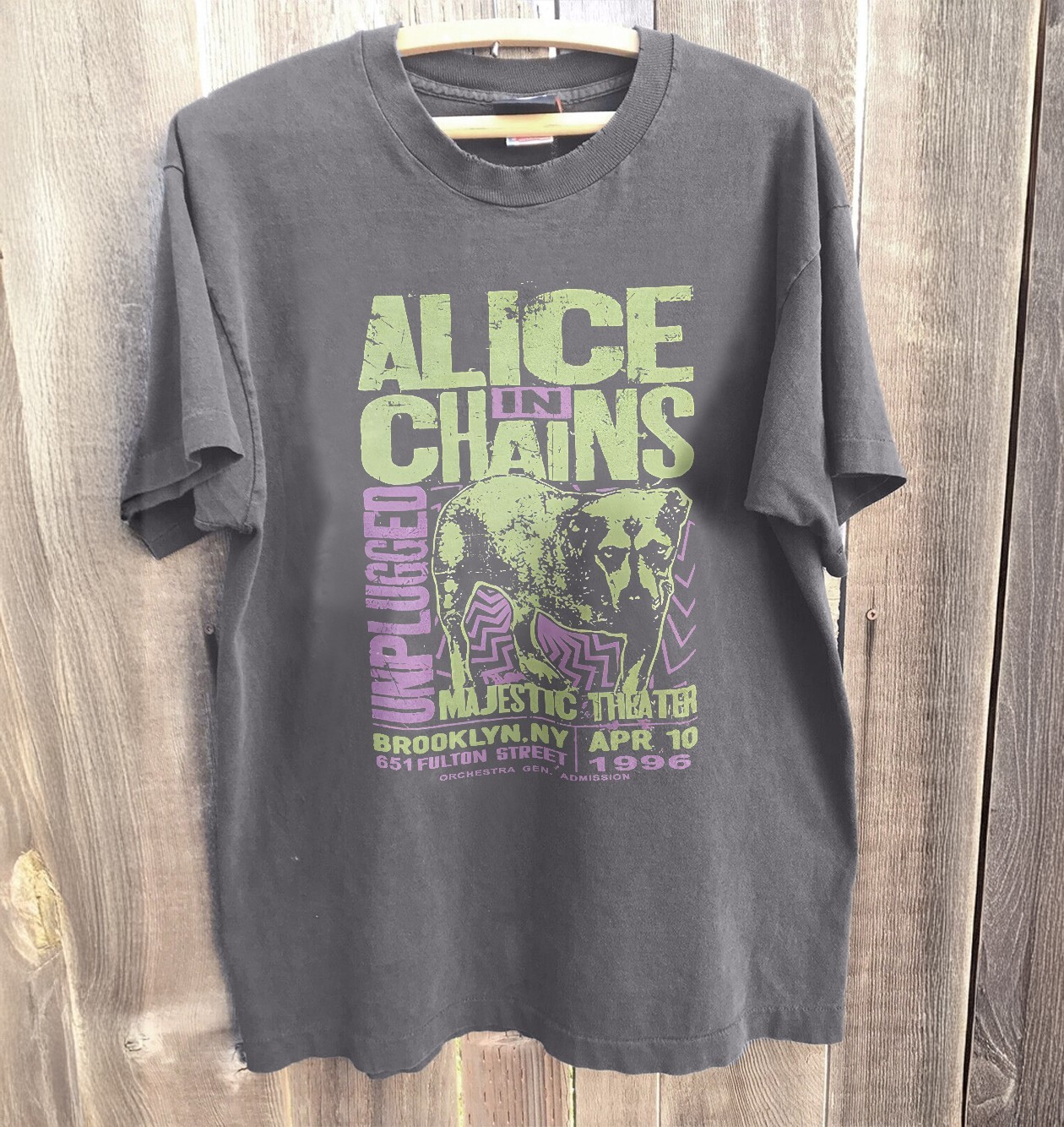
For a more casual day, layer it under a workwear jacket, like a denim chore coat or a canvas overshirt. Keep the bottom half simple: straight-leg jeans in a mid-wash, or a pair of olive cotton chinos. Avoid skinny jeans. They fight with the boxy cut of the vintage tee. Instead, opt for a straight or slightly tapered leg. The tee should not be too tight. It should skim the body, not cling. If it is too large, do not be afraid to have it taken in at the shoulders. A good tailor can adjust the side seams, but be careful: if it is a single-tube shirt, you cannot take it in without ruining the print. So try it on first. The sleeve should hit mid-bicep, not at the elbow.
Accessories: keep them minimal. A simple silver chain, a watch with a leather strap. Do not add a bandana or a leather biker jacket unless you are actually going to a biker rally. The shirt is the statement. Let it speak. For women, the same rules apply, but you can play with proportions more. A vintage tee with a high-waisted A-line skirt, mid-calf length, and sneakers or mules looks fresh, not retro. Tuck the tee in, add a thin belt. The contrast between the faded graphic and a crisp, modern skirt is striking.
A Short History: From Stadium to Street
The band tee as we know it began in the late 1960s, when concert promoters saw a revenue stream beyond ticket sales. In 1968, the Beatles launched their Apple label and sold merchandise at the Fan Club, but it was the 1972 Rolling Stones tour that set the template. The tongue logo, designed by John Pasche, a young art student, was printed on a shirt that sold for four dollars at the shows. It was a simple white tee with a small chest print. That shirt, in good condition, now fetches thousands. But the ones you see on the market at accessible prices are from later tours, like the 1978 US Tour, which used a similar design but on a black tee.
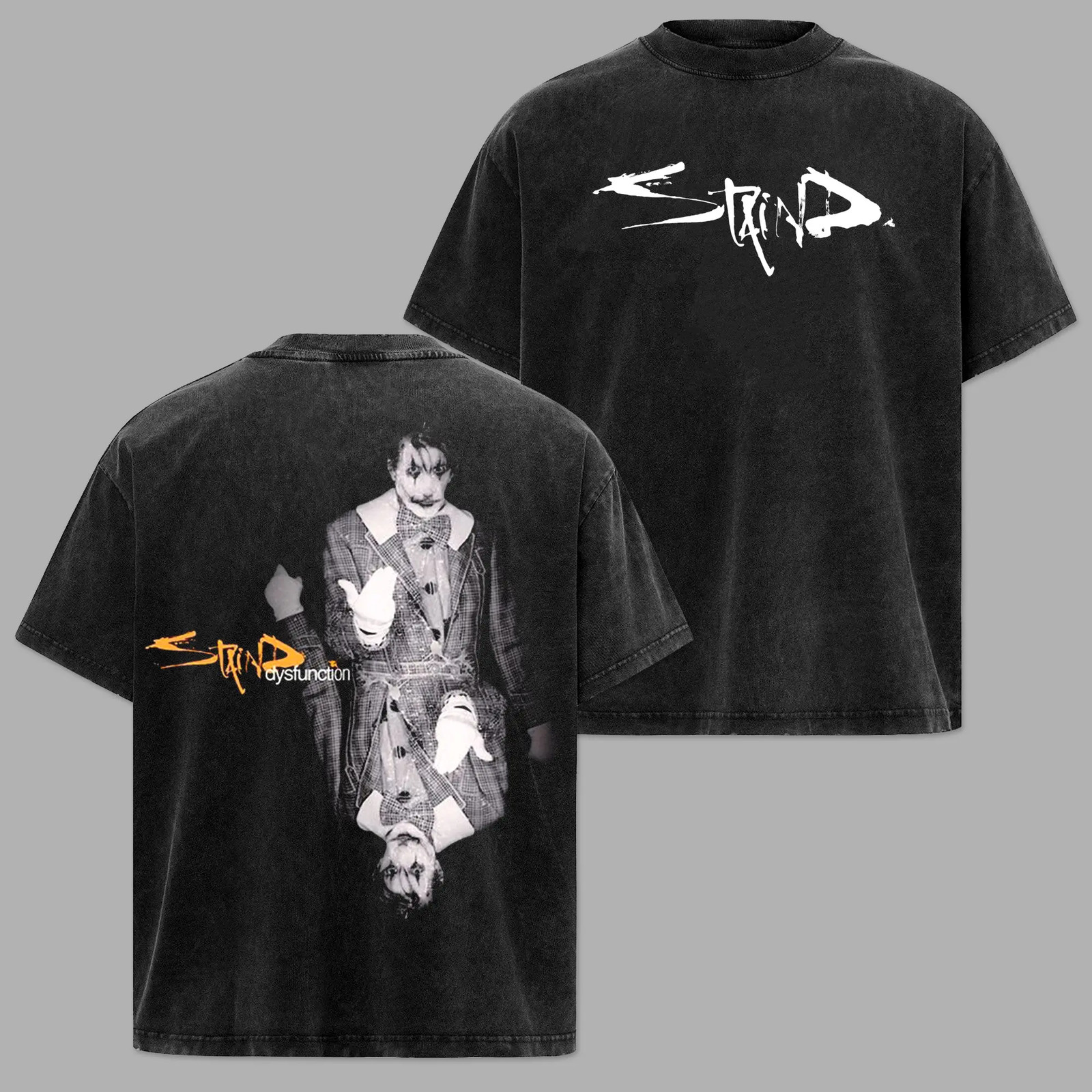
The punk era changed everything. In 1976, the Sex Pistols' shirts, designed by Jamie Reid, were crude, cut-and-paste collages, often printed on cheap, thin cotton. They were meant to be disposable, a middle finger to the rock establishment. But they survived, and their raw aesthetic influenced everything that followed. The Clash's 1977 debut tour shirts were stark, black and white, with a simple photo of the band. They were not licensed by any major company. The band made them themselves, screen-printing in a basement in Camden. That DIY spirit is why many of the most coveted tees from that era are bootlegs, not official merchandise. They have a roughness, a hand-made quality, that official shirts lack.
The early 1980s saw the rise of the big tour, with bands like The Who and Pink Floyd selling shirts with elaborate back prints, often with a list of tour dates. These are the ones you see at vintage stores, but they are less wearable because of the heavy print. The sweet spot is 1977 to 1982, when the print was still simple, the cotton was good, and the bands were at their peak. Think of the iconic photo of Debbie Harry in a tight Blondie tee, or the Ramones in their black leather jackets over plain white tees with the eagle logo. That eagle shirt, designed by Arturo Vega, was not just a band shirt; it was a statement of identity. Vega, who died in 2013, once told me that he wanted the shirt to look like a national emblem, a flag for the disaffected.
The Real Deal: A Story in the Stitches
Every genuine vintage tee has a story, but you have to know how to read it. I once found a 1979 Talking Heads shirt in a thrift store in Austin, Texas. The print was faded, but the label was a small, unknown brand called "Musical Merchandise." It had a single-stitch hem, and the cotton was so soft it felt like a worn-in pair of jeans. The shop owner said it came from a local estate sale, from a woman who had been a sound engineer at the Armadillo World Headquarters. That shirt had been in the pit, at the mixing board, during the recording of "Life During Wartime." You cannot buy that story, but you can feel it when you put it on.

When you are buying, ask the seller for provenance. Not a certificate, but a simple story. Where did they find it? A reputable vintage dealer will have a history. If they say it came from a tour, ask which one. Check the seams, the label, the print quality. A real 1977 Clash shirt will have a photo of the band on the front, not a logo. The print will be slightly off-centre, a sign of a hand-printed job. Do not be afraid to haggle, but respect the object. These shirts are not just merchandise; they are artefacts of a musical era that is fading into history. The bands are ageing, some are gone. The shirts are what remains.
The Final Spin
Wear it, do not archive it. A vintage band tee is meant to be lived in, washed, and worn until it falls apart. That is its destiny. I have a 1974 Dylan shirt, from the Before the Flood tour, that I have worn so many times the print is almost gone. But the cotton is like a second skin, and every time I put it on, I think of the person who wore it before me, at a show in a stadium in 1974, screaming for "Like a Rolling Stone." That connection is what makes these shirts special. They are not investments. They are companions. So buy the shirt that speaks to you, the one that fits well and feels right, and let it age with you. In twenty years, it will be even more beautiful, and you will have your own stories to tell.

Foto: Atlantic Ambience · Pexels
The names
The designers behind the look
The minds behind this story — each with a piece currently on the market.
Levi's
USA · 1850s
The 501 & Americana denim
The 501 & Americana denim
Yohji Yamamoto
Japan · 1970s
Black, drape & poetic deconstruction
Black, drape & poetic deconstruction
Børge Mogensen
Denmark · 1940s
The Spanish chair — honest, functional furniture for everyday life.
The Spanish chair — honest, functional furniture for everyday life.
Calvin Klein
USA · 1960s
Minimalism & the 90s slip
Minimalism & the 90s slip
Continue the edit
Further stories from the same world
Three more walks through the same vintage universe.

The Quiet Power of a Good Chair
A well-made chair is a daily companion, not a status symbol. Here is how to find one that will outlast you.
Read the story →The Vintage Band Tee: Wear It Like You Mean It
A 1978 Rolling Stones jersey from the Some Girls tour. A faded 1991 Nirvana tee with the smiley face. These are clothes, not collectibles. Here is how to wear them without looking like you are in costume.
Read the story →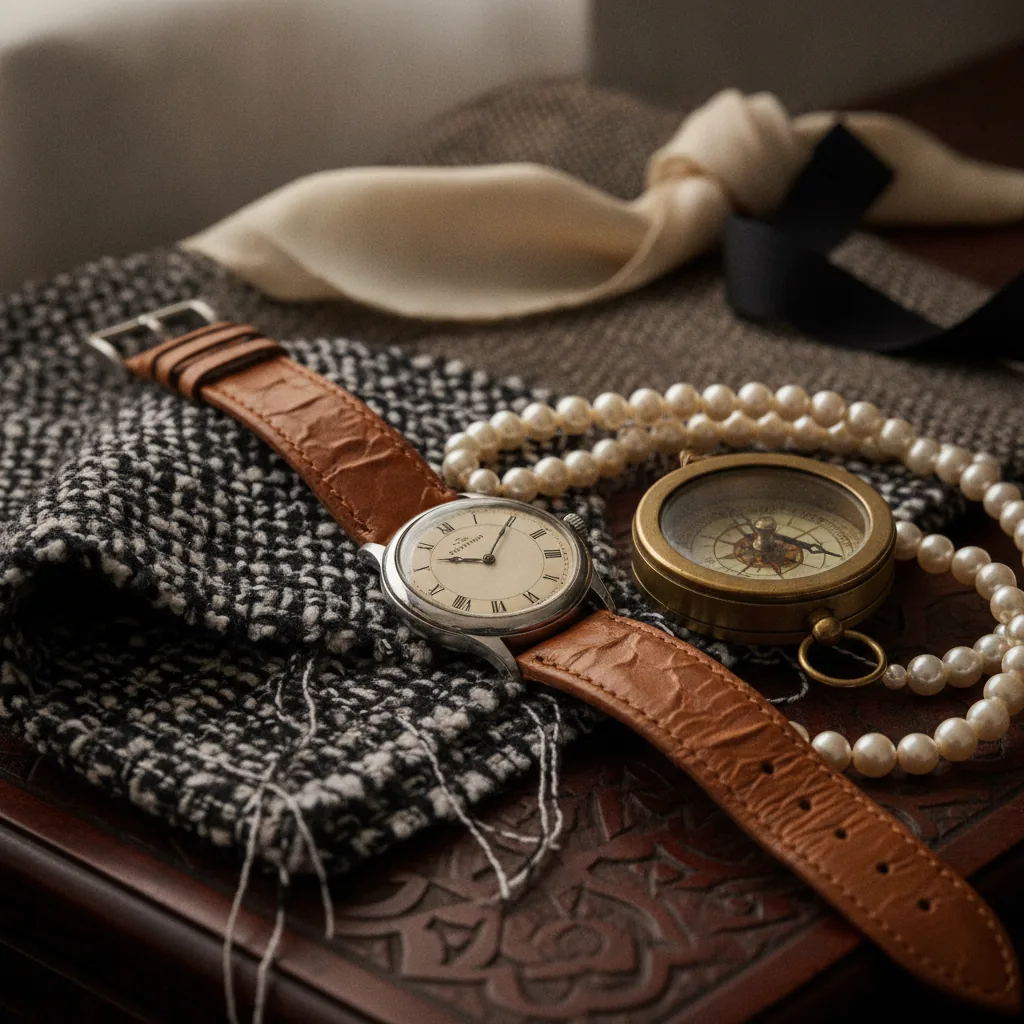
The Quiet Power of a Vintage Watch on a Modern Wrist
A vintage watch is the most personal thing you can wear. It ticks against your skin, keeps its own counsel, and tells anyone who knows how to read it that you are not in a hurry. Here is how to find one worth keeping, and how to wear it like you mean it.
Read the story →