
 Sign in
✦ Culture · Milan
The Band Tee, Worn Well: A Vintage Approach
A vintage band tee is not a relic. It's a piece of cultural armor. Here's how to wear one with intention, spot a keeper, and honor its rock-and-roll lineage.
 By Louis Trash·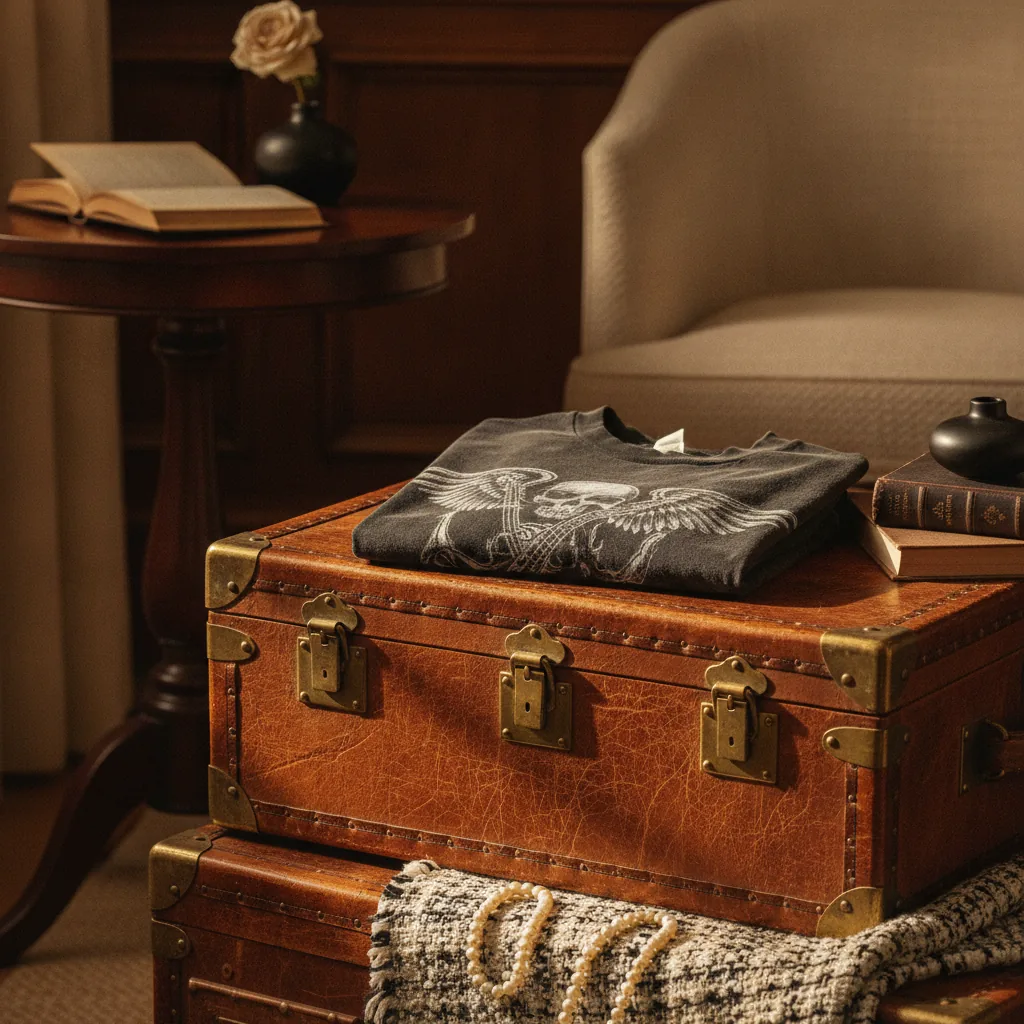
The Right Worn-In Look
A vintage band tee is not a billboard. It's a hand-me-down story. The best ones are soft, thin, and slightly faded, with a collar that's lost its fight. That's the point. You don't want a stiff, black tee that looks like it came from a gift shop. You want one that's been through a few hundred washes, maybe a few tours.
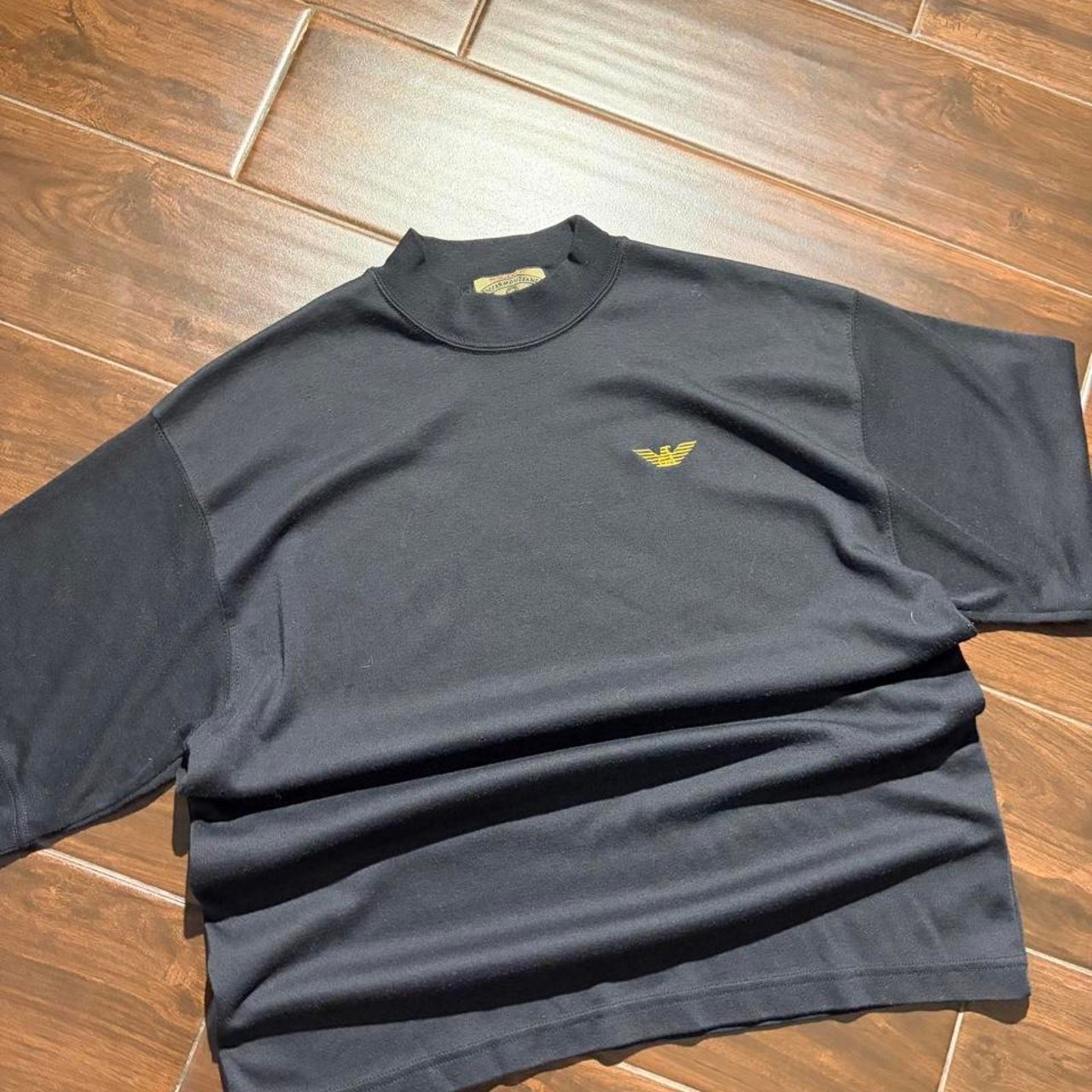
I bought a 1972 Rolling Stones tongue tee at a flea market in Austin for $40. The seller called it a 'dead stock' tee, but it was clearly a reproduction from the 1990s. I didn't care. It had the right weight, the right graphic, and a collar that actually fit. I've worn it to death. It's now my go-to for layering under a blazer.
The secret is to treat it like a neutral. Let it be the centerpiece, but keep everything else simple. Pair it with high-waisted, straight-leg jeans in a dark rinse, or a midi skirt with a slit. Tuck it in, half-tuck it, or knot it at the side. The tee's relaxed vibe calls for polished counterparts: tailored trousers, a leather jacket, or a trench coat. Avoid anything too tight or too baggy; the tee should follow your body's line without clinging.
For shoes, think boots: Chelsea, combat, or cowboy. Or clean white sneakers. Heels work, but they change the energy; they make the look more dressed-up, more deliberate. That can be great for evening.
Accessories should be minimal. A few rings, a watch, maybe a chain. Let the graphic speak.
What to Look For: The Real Deal
When you're hunting for a vintage band tee, you're looking for three things: era, condition, and story. The era tells you about the print and the cut. Condition is about wear and tear. Story is what you'll tell when someone asks.
Foto: Atlantic Ambience · Pexels
For the 1970s, tees were often made by small screen printers, not the bands themselves. Look for a single-stitch hem, where the bottom is sewn with one line of stitching, not a double stitch. The fabric should be a cotton/polyester blend, which gives it a slightly shiny, more drapey feel. The collar should be ribbed and tight, not stretched out. The print should be cracked and faded, but still legible. A 1972 Led Zeppelin 'Swan Song' tee, for instance, will have a certain orange-and-yellow ink that's distinctly of its time.
The 1980s brought bigger graphics, bolder colors, and more licensed merch. Look for a 'Made in the USA' tag, often with a copyright date. The fabric is usually 100% cotton, and the shirt is boxier. Check for pit stains and holes, but don't be put off by a small repair; that can be part of the charm.
Quality matters. A good tee has a thick, substantial print that's slightly raised. If the print is thin and flaky, it's likely a modern reprint. Also, check the inside of the shirt for tags. Original tags from brands like Screen Stars, Hanes, or Fruit of the Loom are a good sign. But some bands, like the Ramones, used blank tees from various makers. So tag isn't everything.
Condition is key. Look for tears, but a small hole can be patched. Look for fading, but that's a plus. Look for stains, but if they're not in the graphic, they can often be removed. The most important part is that the graphic is intact. A cracked, peeling graphic is normal, but it should be complete.
The Icons Who Made It Famous
The band tee as we know it started with the Beatles. In 1964, they released a line of merchandise that included a collarless, three-button shirt with a Beatles logo. It wasn't a tee, but it set the stage. The real breakthrough came in 1968 when the Grateful Dead hired artists Alton Kelley and Stanley Mouse to design their 'Skull and Roses' poster. That image ended up on a tee, and the Dead started selling them at shows. It was a small operation, but it caught on.

Foto: Svetlana Tumina · Pexels
In 1972, the Rolling Stones released their 'Exile on Main St.' album. The cover art, a collage of photos, was turned into a tee, but the most iconic was the tongue-and-lips logo designed by John Pasche. Pasche was a recent Royal College of Art graduate who met Mick Jagger in 1970. He was paid £200 for the design. That logo became one of the most recognizable in rock history, and it was plastered on tees everywhere.
The Ramones took it further. In 1977, the band's manager, Danny Fields, had the idea to put the band's name on a shirt, just like a sports team. The presidential seal parody was designed by Arturo Vega, who said the eagle was a reference to their 'presidential' ambitions. The tees were cheap and readily available, and they became a uniform for punks.
But the real fashion moment came in the 1990s, when supermodels like Kate Moss and Naomi Campbell started wearing vintage band tees with designer pieces. In 1993, Moss wore a tight, faded Rolling Stones tee with a leather jacket and jeans for a photoshoot. Suddenly, the band tee was not just for fans; it was a style statement.
Wearing It Now: Proportions and Pairings
Today, the vintage band tee works best when you play with proportions. If you're wearing a boxy, oversized tee, balance it with a slim bottom, like skinny jeans or a slip skirt. If the tee is more fitted, pair it with wider-leg trousers or a full midi skirt. The contrast is what makes it modern.

Foto: Jefferson Rosier · Pexels
A blazer is your best friend. It instantly dresses up the tee and adds structure. Choose a blazer with a soft shoulder, like a 1980s Armani or a modern unstructured one. Avoid anything too stiff or too long. The blazer should end at your hip.
For a more casual look, layer it under a flannel shirt or a denim jacket, leaving it unbuttoned. Or wear it over a long-sleeve turtleneck in the winter. That's a look that's been around since the 1970s, but it still feels current.
When it comes to color, think about the graphic. If the tee has a lot of red, pair it with neutral tones like black, white, or denim. Let the graphic be the only pop of color. If the graphic is mostly dark, you can add a colorful jacket or shoes.
The Closing Thought
I still have my first band tee: a 1991 Guns N' Roses 'Use Your Illusion' tour shirt that I bought at a thrift store for $5. It's so faded that the graphic looks like a ghost, but I can't part with it. It reminds me of a time when music was a thing you held in your hands, when a concert was an event you dressed for. When you wear a vintage band tee, you're not just wearing a piece of clothing; you're wearing a memory. You're carrying a piece of rock history, and you're adding your own story to it. So find one that speaks to you, treat it with care, and wear it like you own the place. Because, in a way, you do.

Foto: Muhammad Dzaki Zaidan · Pexels
The names
The designers behind the look
The minds behind this story — each with a piece currently on the market.
Adidas
Germany · 1940s
The three stripes & the Samba
The three stripes & the Samba
Calvin Klein
USA · 1960s
Minimalism & the 90s slip
Minimalism & the 90s slip
Diesel
Italy · 1970s
Washed denim & streetwear
Washed denim & streetwear
Gucci
Italy · 1920s
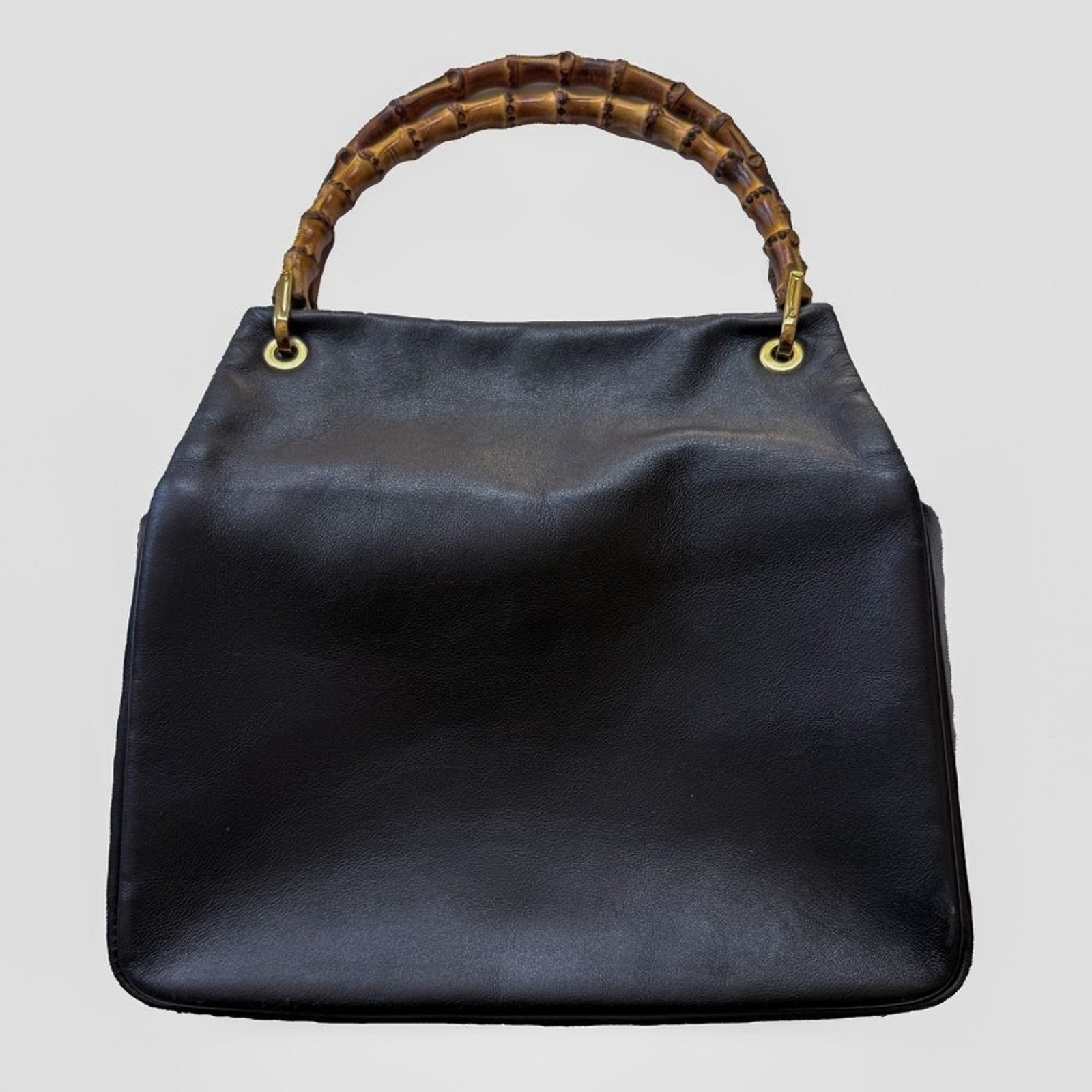
The bamboo handle & the double-G
The bamboo handle & the double-G
Top piece
View →
Continue the edit
Further stories from the same world
Three more walks through the same vintage universe.

The Quiet Power of a Good Chair
A well-made chair is a daily companion, not a status symbol. Here is how to find one that will outlast you.
Read the story →The Vintage Band Tee: Wear It Like You Mean It
A 1978 Rolling Stones jersey from the Some Girls tour. A faded 1991 Nirvana tee with the smiley face. These are clothes, not collectibles. Here is how to wear them without looking like you are in costume.
Read the story →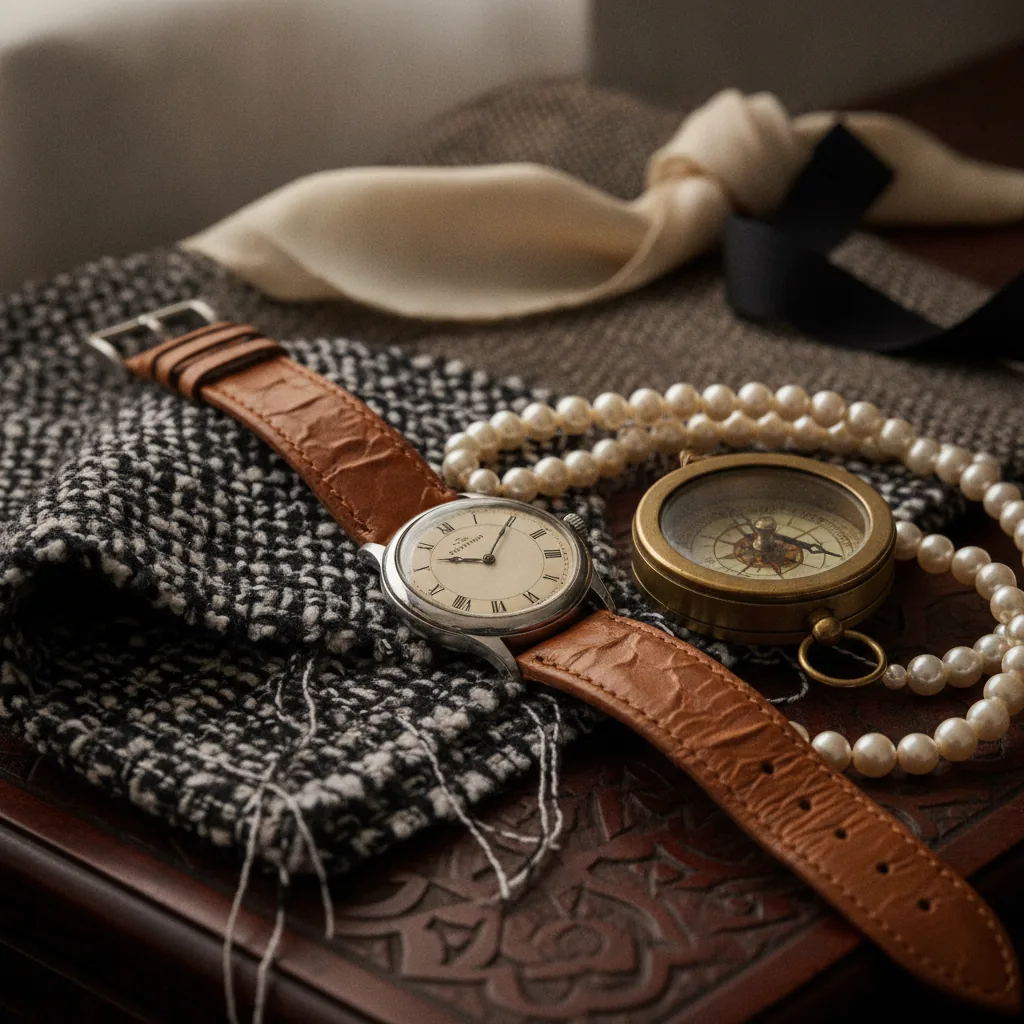
The Quiet Power of a Vintage Watch on a Modern Wrist
A vintage watch is the most personal thing you can wear. It ticks against your skin, keeps its own counsel, and tells anyone who knows how to read it that you are not in a hurry. Here is how to find one worth keeping, and how to wear it like you mean it.
Read the story →