

 Sign in
DIOR · FRANCE · 1946-PRESENT
Buying Vintage Dior: Tailoring, Bags and Jewellery
Navigating vintage Dior requires an understanding of its distinct creative eras, from Christian Dior’s original New Look to John Galliano’s theatrical reign. This guide breaks down what to look for when buying tailoring, leather goods and costume jewellery on the secondary market. You will learn how to identify authentic pieces, assess condition and understand current market values.
The Defining Eras
Vintage Dior is effectively split into distinct chapters defined by its creative directors. Pieces from Christian Dior’s own tenure (1947–1957) are incredibly rare museum-grade finds. Following his sudden death, a young Yves Saint Laurent took the helm (1957–1960), introducing the softer Trapeze line. Early ready-to-wear, introduced as 'Miss Dior' in 1967 under Marc Bohan, is where most vintage tailoring collections begin. Bohan’s three-decade reign (1960–1989) offers conservative, well-constructed garments. Gianfranco Ferré (1989–1996) brought architectural volume, while John Galliano (1996–2011) introduced the bold, logo-heavy aesthetic that currently dominates the resale market.
Tailoring and Ready-to-Wear
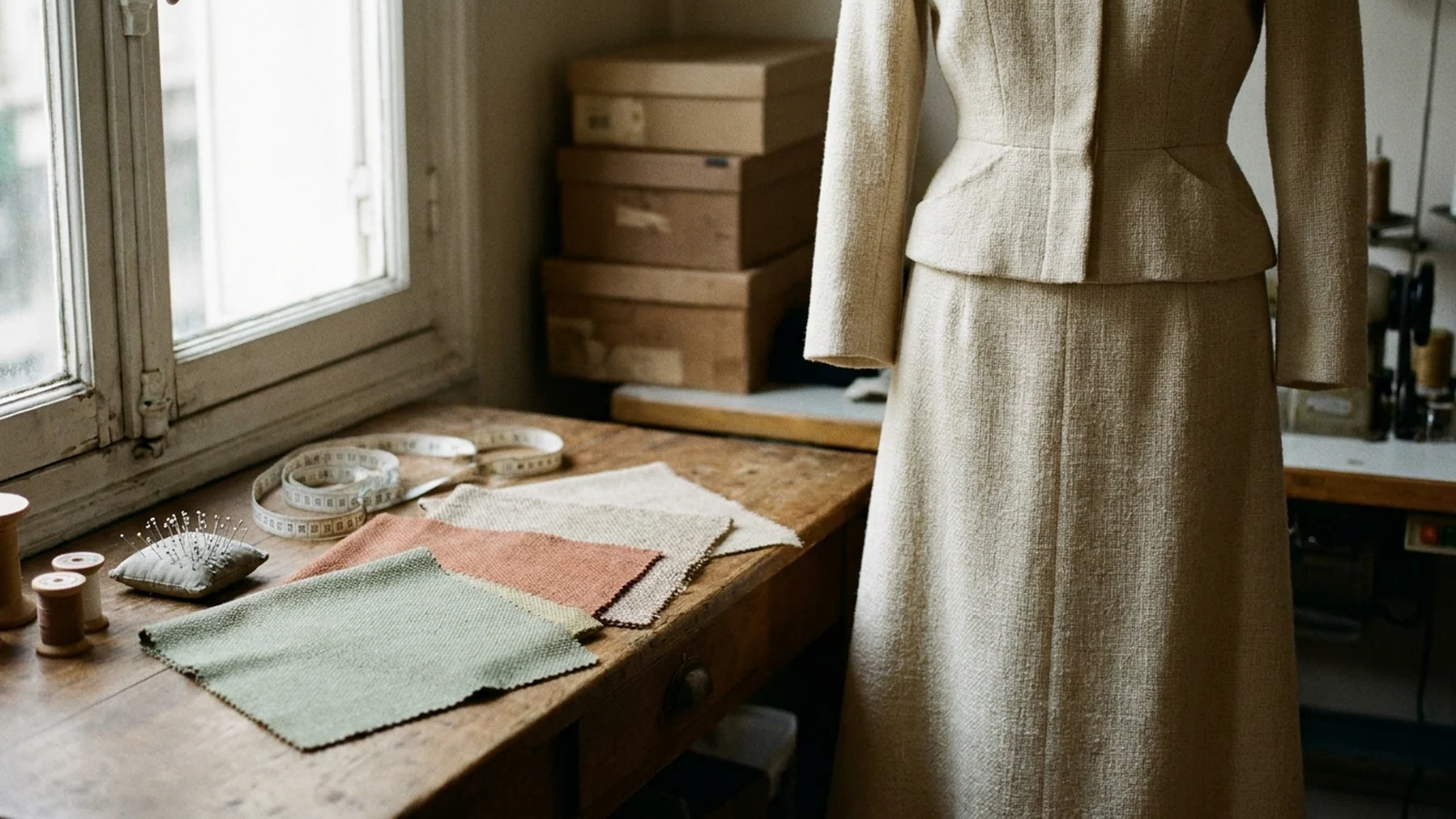
When sourcing Dior tailoring, the primary focus is often the Bar jacket silhouette: nipped waists and padded hips. True 1950s haute couture pieces will feature a large, woven label with a handwritten serial number on the reverse or a secondary stamped tag. These command prices well over €3,000 depending on provenance and condition.
For wearable vintage, Bohan-era Miss Dior tailoring is far more accessible. Look for the 'Christian Dior Boutique' or 'Miss Dior' labels. Check the lining for alterations; vintage tailoring was often modified by previous owners to fit changing body shapes. Seams should be finished by hand in couture pieces, while early ready-to-wear will show neat machine finishing. Expect to pay €300–600 for a 1970s or 1980s wool blazer in good condition, rising to €800–1,200 for complete suits from the Ferré era. Ensure the wool has no moth damage, as re-weaving is costly.
Leather Goods: Bags and Hardware
The vintage bag market is heavily concentrated on the Lady Dior (introduced in 1995) and the Galliano-era Saddle bag (debuted in 1999). You will also find many pieces featuring the signature Cannage stitching, inspired by the Napoleon III chairs used in Dior’s first salon.
Authenticating vintage Dior bags requires close inspection of the leather tag inside. Late 1990s and 2000s bags feature a rectangular leather tag with 'Christian Dior Paris' stamped on the front. 'Made in Italy' or 'Made in Spain' will be stamped below or on the reverse. Crucially, the reverse of this tag holds the date code. Dior uses a format similar to LVMH stablemate Louis Vuitton: two letters, four numbers. The letters indicate the factory, while the numbers indicate the month and year of production.
Hardware on authentic Lady Dior bags is substantial. The 'D-I-O-R' charms should feel heavy and clink with a solid sound. Check the O-rings connecting the handles; they should be completely seamless.
Prices for vintage Saddle bags fluctuate based on the current trend cycle, but reckon on €800–1,500 for classic canvas monogram versions, and up to €2,500 for limited edition embroidered pieces. Early Lady Dior bags in lambskin generally sit between €1,200 and €2,500. Sticky or peeling handles on 1990s patent leather bags are a known issue and cannot be reversed, so avoid these entirely.
Costume Jewellery
Vintage Dior jewellery is highly collectable and relatively easy to date. In the 1950s, Dior worked with Swarovski to develop the iridescent Aurora Borealis rhinestone, which features heavily in early pieces. Production was licensed to makers like Kramer in the US and Henkel & Grosse in Germany. Pieces from the latter are clearly stamped 'Chr. Dior Germany', often accompanied by a copyright symbol and the exact year of production.
Look out for heavy gold-plated chains, poured glass stones and faux pearls. Verdigris (a green deposit) around the clasps or settings reduces the value significantly. Expect to pay €150–300 for 1980s logo necklaces, while elaborate 1960s Henkel & Grosse parures can command €600–1,200.
Where to Hunt
To find the best vintage Dior, you need to visit cities with a strong history of high fashion consumption. In /cities/paris, the concentration of 1970s and 1980s ready-to-wear is unmatched, particularly in the consignment stores of the 16th arrondissement. For Galliano-era pieces, /cities/london offers excellent archival boutiques and market dealers who specialise in early 2000s fashion. If you are looking for pristine Lady Dior bags or well-preserved costume jewellery, /cities/tokyo remains the premier destination due to the strict condition standards of Japanese resellers.
Maintenance and Repair
Vintage Dior requires specialist care to maintain its value. Never dry clean haute couture or early tailoring at a standard high-street cleaner; the internal canvassing will warp and ruin the structure. Seek out a theatrical or couture dry cleaner.
For leather goods, edge paint on early 2000s bags often cracks. This can be repaired by a professional leather worker for around €100–150. Scratched hardware on Lady Dior charms can sometimes be replated, but it is often better to leave minor wear as part of the item's history. Store structured bags stuffed with acid-free tissue paper to prevent the leather from collapsing over time.
Looking for something specific? The concierge searches live listings by era, size and budget.