
 Sign in
✦ The City Edition
Barcelona
Where to Find Designer Silk in Barcelona
A silk scarf is the cheapest way into a serious label. The prints are small paintings, the hand-rolled edges are proper craft, and a good one costs less than a mediocre dinner.
 By Louis Trash·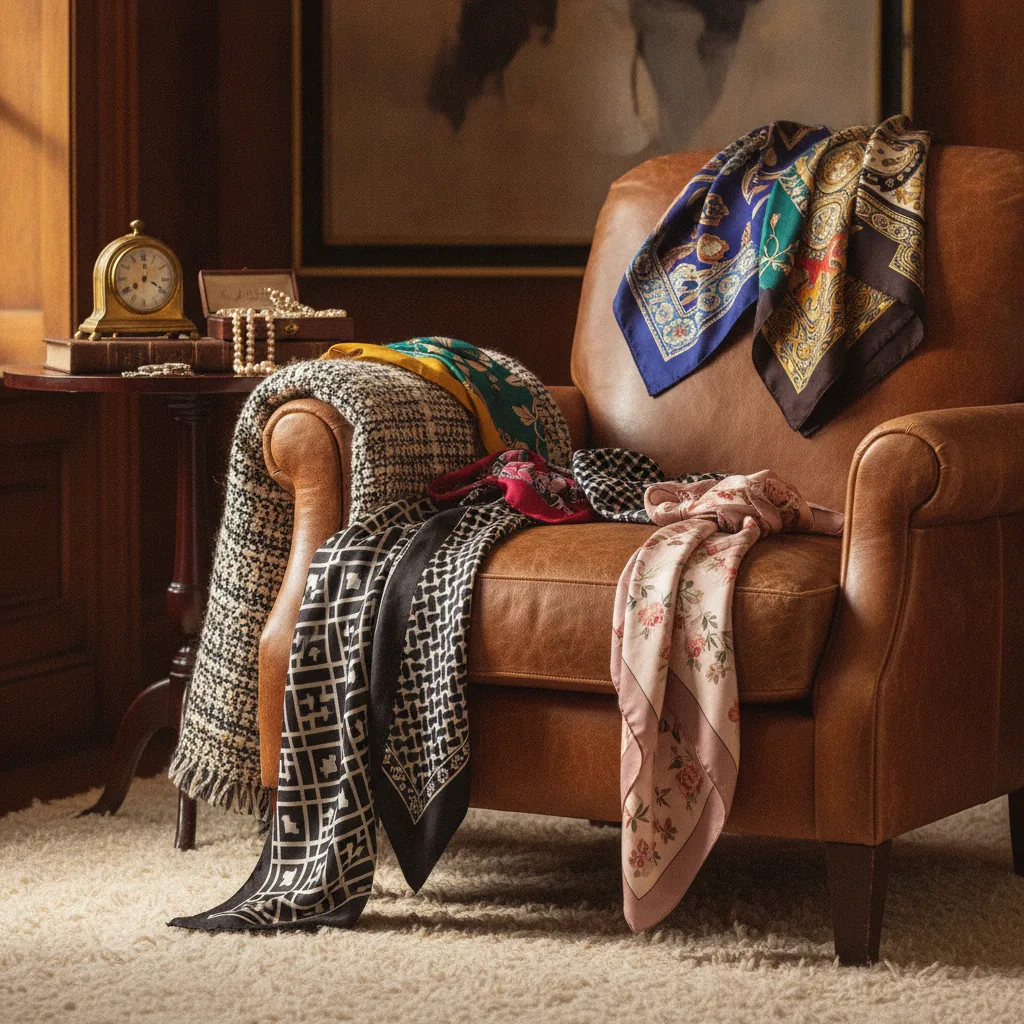
Why Silk Scarves Matter Now
A silk scarf is the cheapest way into a serious label. The prints are small paintings, the hand-rolled edges are proper craft, and a good one costs less than a mediocre dinner. It is also the one accessory that works in every season.
I have seen a woman in a 1970s Pucci square knotted over a faded linen shirt, cycling down the Carrer de Blai with a bag of oranges in her basket. That is the spirit. No museum pieces, no glass cases. The city treats a silk scarf as a working object. It survives a coffee spill and a day at the beach and still looks like a million euros.
I have been wearing vintage silk for fifteen years. The right scarf does more than any other accessory. It adds colour to a plain outfit, hides a stain, and doubles as a sun shield on the Rambla. It is the most portable luxury you can own. In Barcelona, where the light is harsh and the style is effortless, it is the shortcut to looking like you belong.
How to Wear It
Forget the old Hollywood knot. In Barcelona, the scarf is worn loose and low. Tie it at the neck, over a crew neck or an open shirt, and let the tails hang. Nothing fussy. A simple knot, a silk that moves with you, and you are done.
Tie one to a bag handle. A plain canvas tote becomes something else entirely when it has a Hermès twill square fluttering from the strap. I have done this with a 1970s Pierre Cardin scarf I bought for 30 euros. It has started more conversations than any handbag I own.
Use it as a belt. Thread it through denim loops, tie it in a loose bow at the hip. It works with high-waisted trousers too, and it adds a softness to structured fabrics. Fold it into a headscarf for wind and sun. In Barcelona, the tramuntana can pick up without warning. A silk square tied under the chin keeps your hair out of your face and your scalp protected. I wear mine like a 1950s film star on a Vespa, and I get more compliments than I ever did with a hat.
One more: tie it around your wrist. It sounds odd, but a small silk square folded into a bandana and knotted twice looks like a bracelet. It catches the sun, and it is the perfect thing to wipe your sunglasses with.
Where to Find Yours in Barcelona
Barcelona is not Paris. The vintage here is not curated for collectors. It is picked over by stylish locals who want to wear it now. You will not find a pristine 1950s Dior, but you will find a rack of 1980s Missoni and a bin of 1990s Moschino. Here is where I go.
Flamingos Vintage Kilo (Carrer del Tallers 31) is the first stop. It is a chaotic, wonderful mess. Everything is priced by the kilo, so a silk scarf might cost you 20 euros, depending on its weight. You have to dig. I have found a 1970s Givenchy square there, slightly faded, but with a perfect hand-rolled edge. The staff are used to people standing in the aisles, holding scarves up to the light, and they do not mind. Go on a Tuesday morning, when the new stock is out.
Holala! Plaza (Placa Castella 2) is the city's vintage institution. It is bigger, brighter, and more expensive, but the quality is higher. Expect to pay from 45 euros for a decent scarf. The racks are organised by colour, which is dangerous. You will go in for a scarf and come out with a silk shirt from the 1970s and a leather belt you did not need. I bought a 1980s Yves Saint Laurent scarf here for 50 euros, and it is still one of my favourites.
Lullaby Vintage (Carrer de la Riera Baixa 22) is small and sharp. The owner has an eye for the best of the best. The scarves are displayed on a rail by the window, and they are not cheap: from 60 euros. But they are clean, pressed, and often still have their original labels. I found a 1990s Christian Lacroix scarf here, with the bold colours and exaggerated scale that defined the house. It was 70 euros, and I have worn it more than any other scarf I own.
Finally, Els Encants Market (Carrer dels Castillejos 158) is the wild card. It is Barcelona's oldest flea market, and it is open Monday, Wednesday, Friday, and Saturday. Go early, before the crowds. You will find everything under the sun, including a pile of scarves that look like they have been through a war. But there are gems. I once found a 1970s Pucci square buried under a stack of polyester, and the seller did not know what it was. I paid 10 euros. It is worth 300. The key is to go with time and patience.
Go on a weekday morning if you can. The rails are fullest before the weekend crowd arrives, and staff have time to show you what came in overnight. On a Tuesday at Flamingos, I have had a seller pull out a box of scarves from the back room, just because I asked.
What to Look For
Before you hand over the cash, you need to know what you are looking at. The first thing is the edge. Hand-rolled edges are the tell. Run a finger along the hem and feel for a small rolled ridge rather than a flat machine stitch. A hand-rolled edge is a sign that the scarf was made properly, by hand, and it is the standard for the best houses. If the edge is flat and machine-stitched, it is likely a cheaper print.
Next, check the signature in the print corner. Hermès, for example, has a small signature in the design, often hidden in the pattern. Look for it. If the scarf has a label, check the fabric composition. It should say 100% silk, or at least 90% silk with a little cotton or wool. If it says polyester, put it down.
Hold the silk to the light. A fine, even weave with saturated colour on both sides means it was printed properly. The colours should be just as vivid on the back as on the front. If the back is pale or the pattern is faint, the scarf is a lower quality print.
Finally, smell it. A musty smell can be washed out, but a strong chemical smell might be a sign of a bad dye. And check for stains. A small stain you can hide, but a large one will ruin the scarf.
The History in Your Hands
Every scarf has a story, and the best ones have a name behind them. In the 1950s, Hermès was the undisputed king of silk, and their scarves were worn by Grace Kelly and Audrey Hepburn. In the 1960s, Pucci brought bright geometric prints, and Emilio Pucci himself designed for the jet set. In the 1970s, Yves Saint Laurent made the scarf a symbol of bohemian chic, and his Russian-inspired designs were iconic. In the 1980s, Christian Lacroix took everything to excess, with bold colours and theatrical prints.
Barcelona has its own silk history too. The city was a major textile centre in the 19th century, and there is a tradition of Catalan modernismo in design. A scarf from a Spanish house like Loewe, which has been making leather goods since 1846, is a find. I once found a Loewe scarf from the 1970s, with a subtle geometric pattern and a leather label. It is a piece of Barcelona's own design heritage.
Wearing a vintage silk scarf is like wearing a small piece of art. It is a way to carry a bit of history with you, and to look good doing it. In Barcelona, where the sun is always out and the style is always relaxed, it is the perfect accessory.
So go out there. Dig through the bins, check the edges, and find a scarf that speaks to you. It will not just be a piece of clothing. It will be a companion for years to come.
Sourced from the region
Found in Barcelona
Pieces on the market from sellers in and around Barcelona.
zijde-sjaals
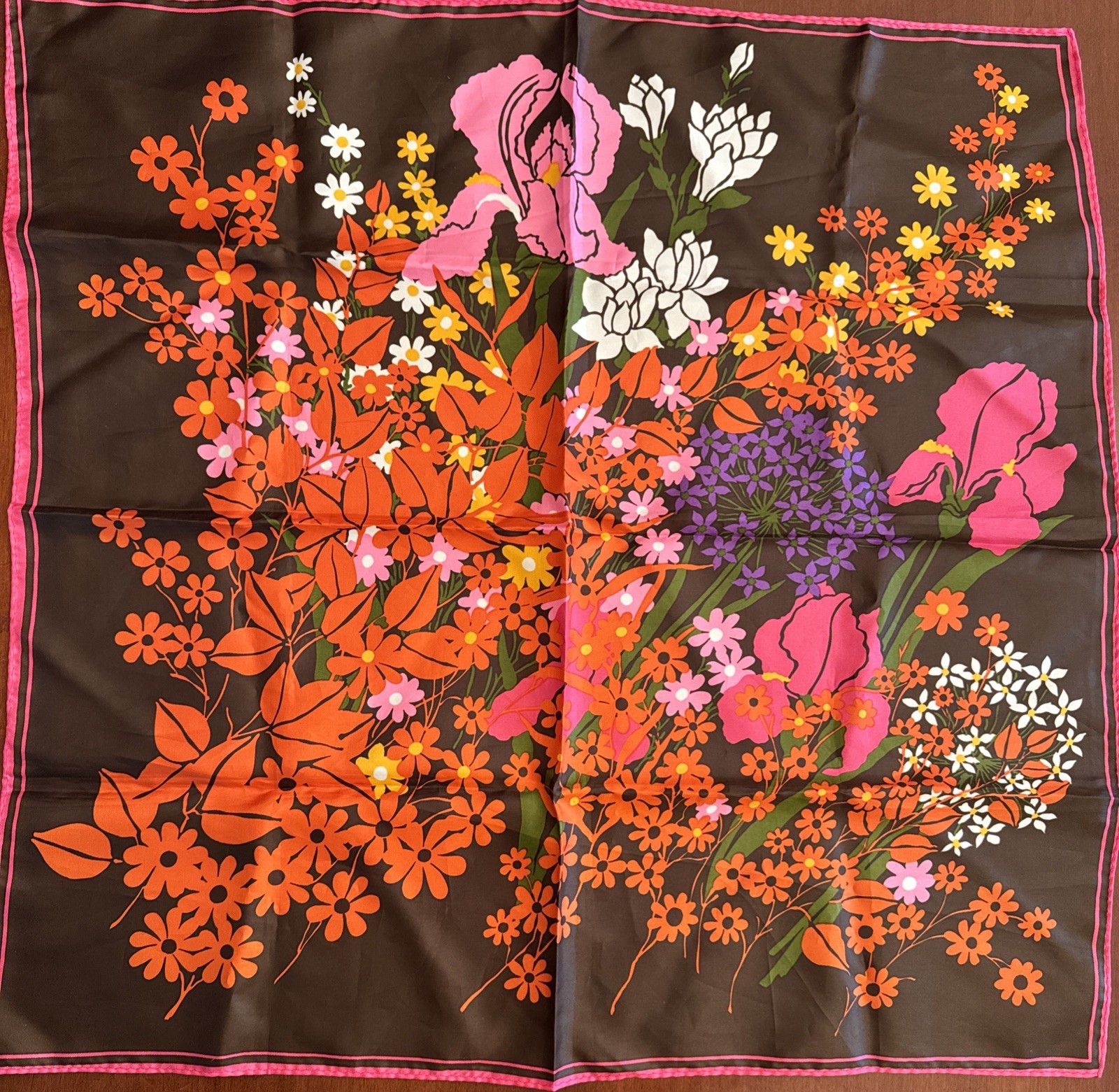
Vtg Silk Twill Scarf Fall Colors Brown Orange Gold Floral 22x22” Hand Rolled 105
zijde-sjaals
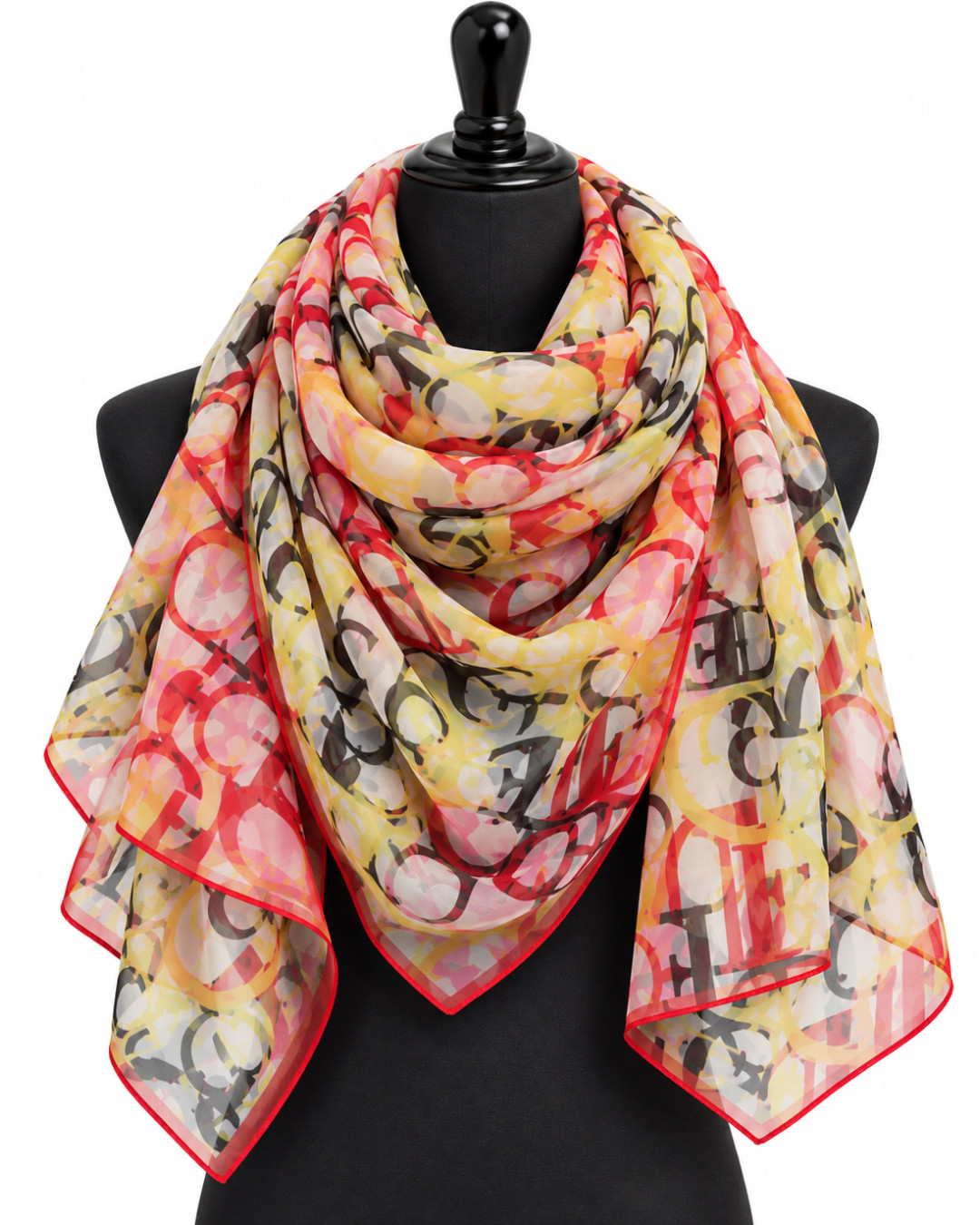
Christian Dior Silk Scarf Stole Shawl DD Trotter for women made in Italy Vintage
zijde-sjaals
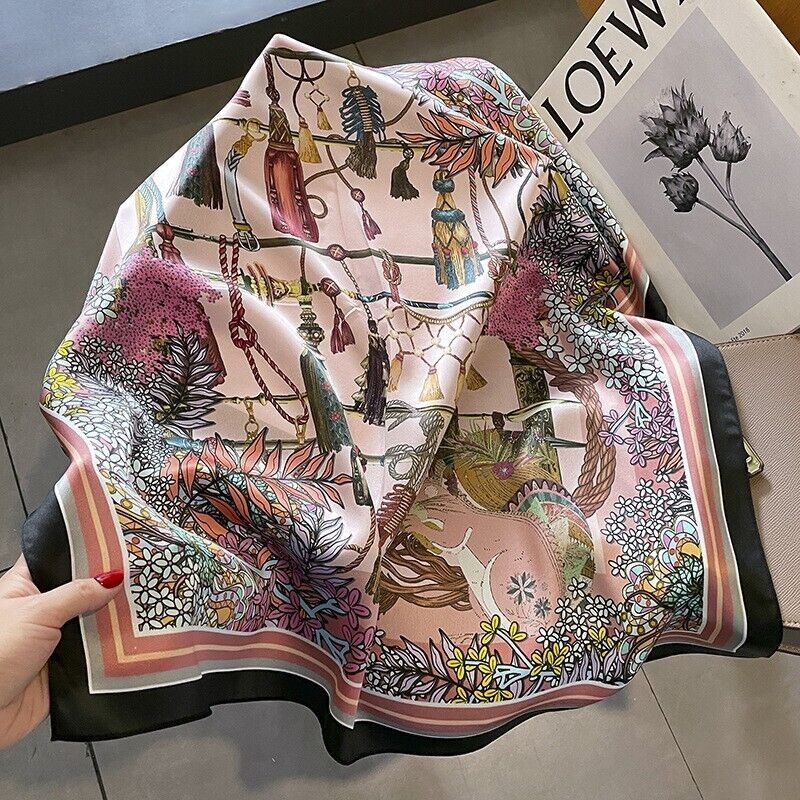
100% Silk Square Scarf Women Vintage Pink Black Kerchief Headscarf Wrap 68*68cm
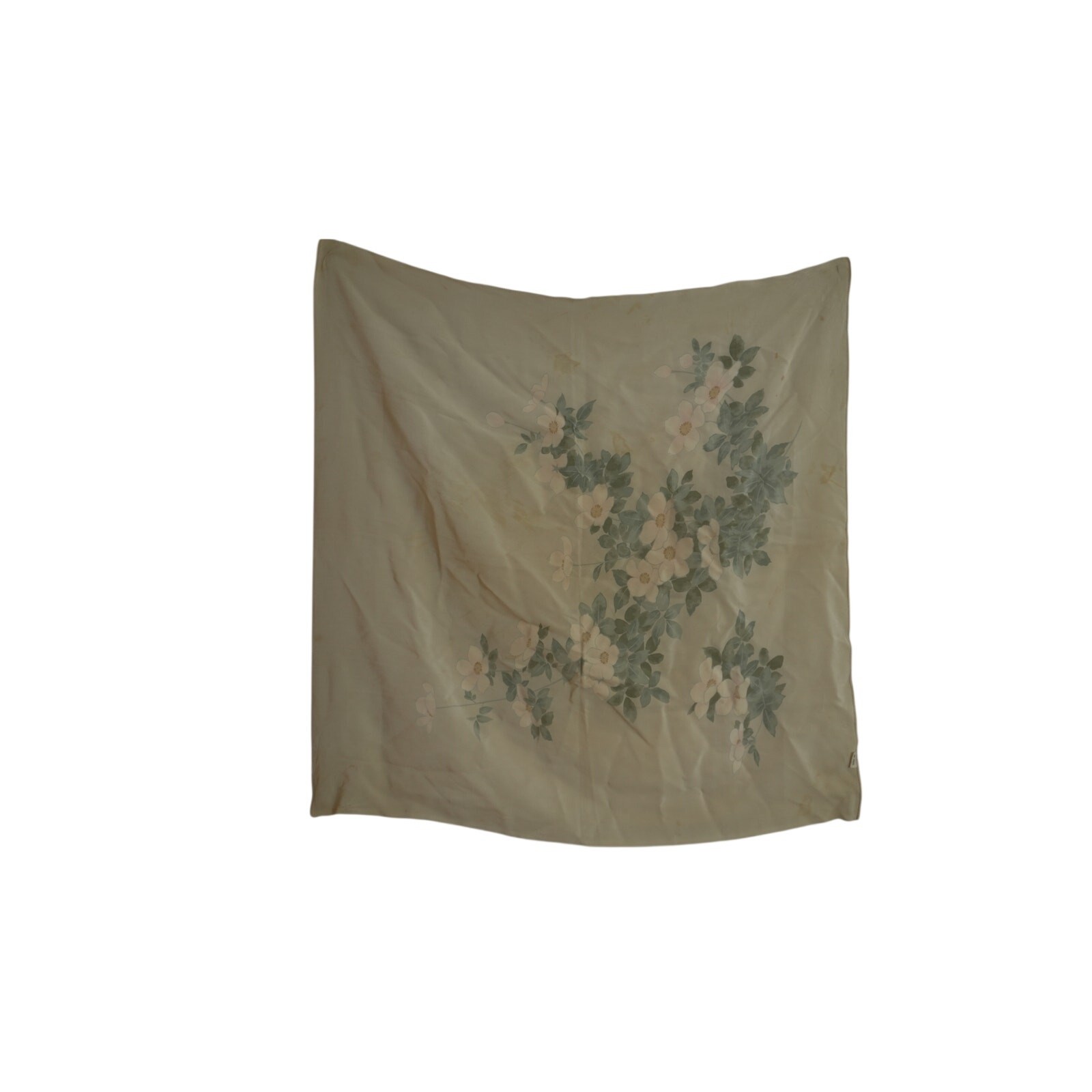
zijde-sjaals
Vintage Cream Silk Scarf Pink Rose Floral Botanical Square Head Scarf 28x28
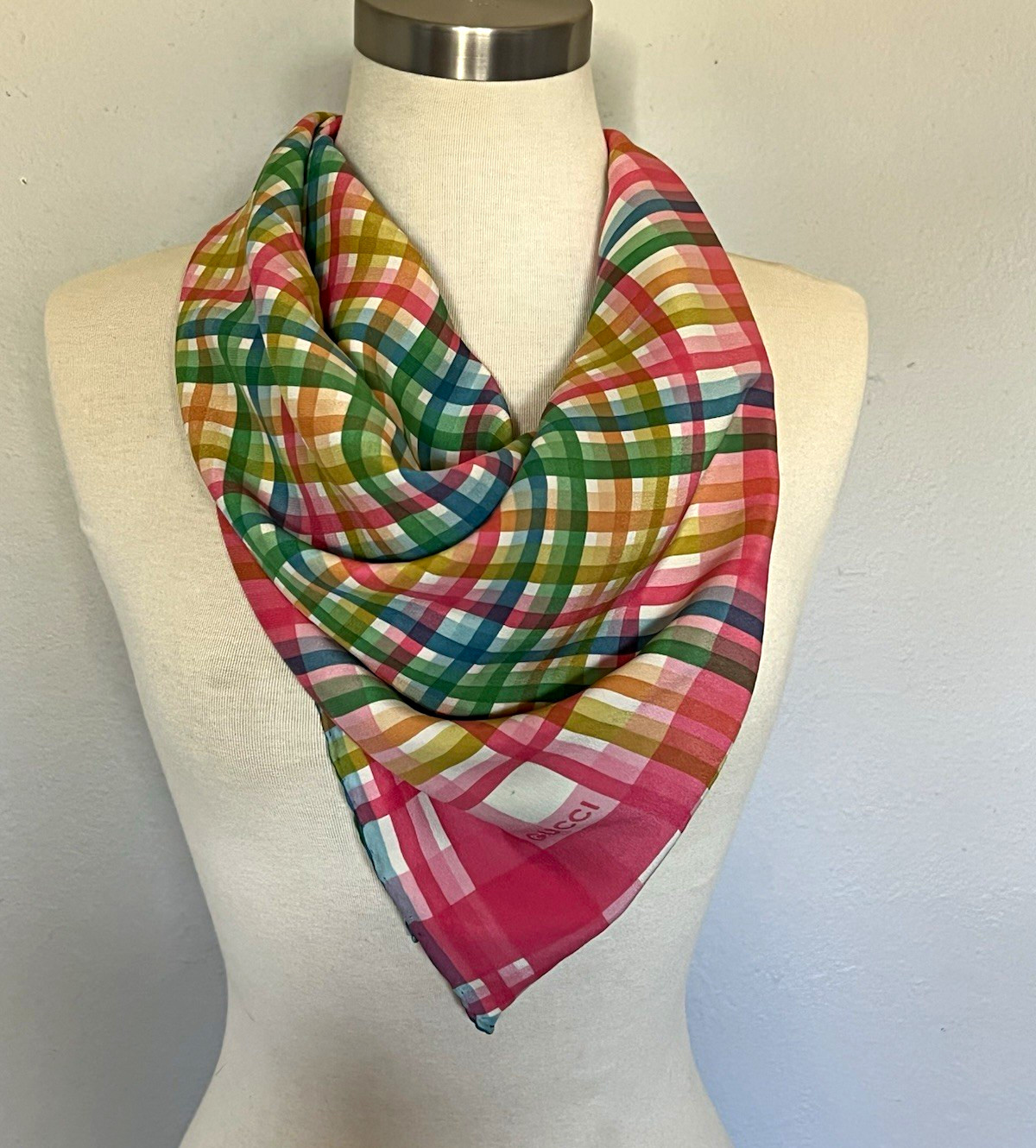
zijde-sjaals
Vintage Gucci Women’s Multicolor Plaid 100% Silk Satin Square Scarf 32”x32”
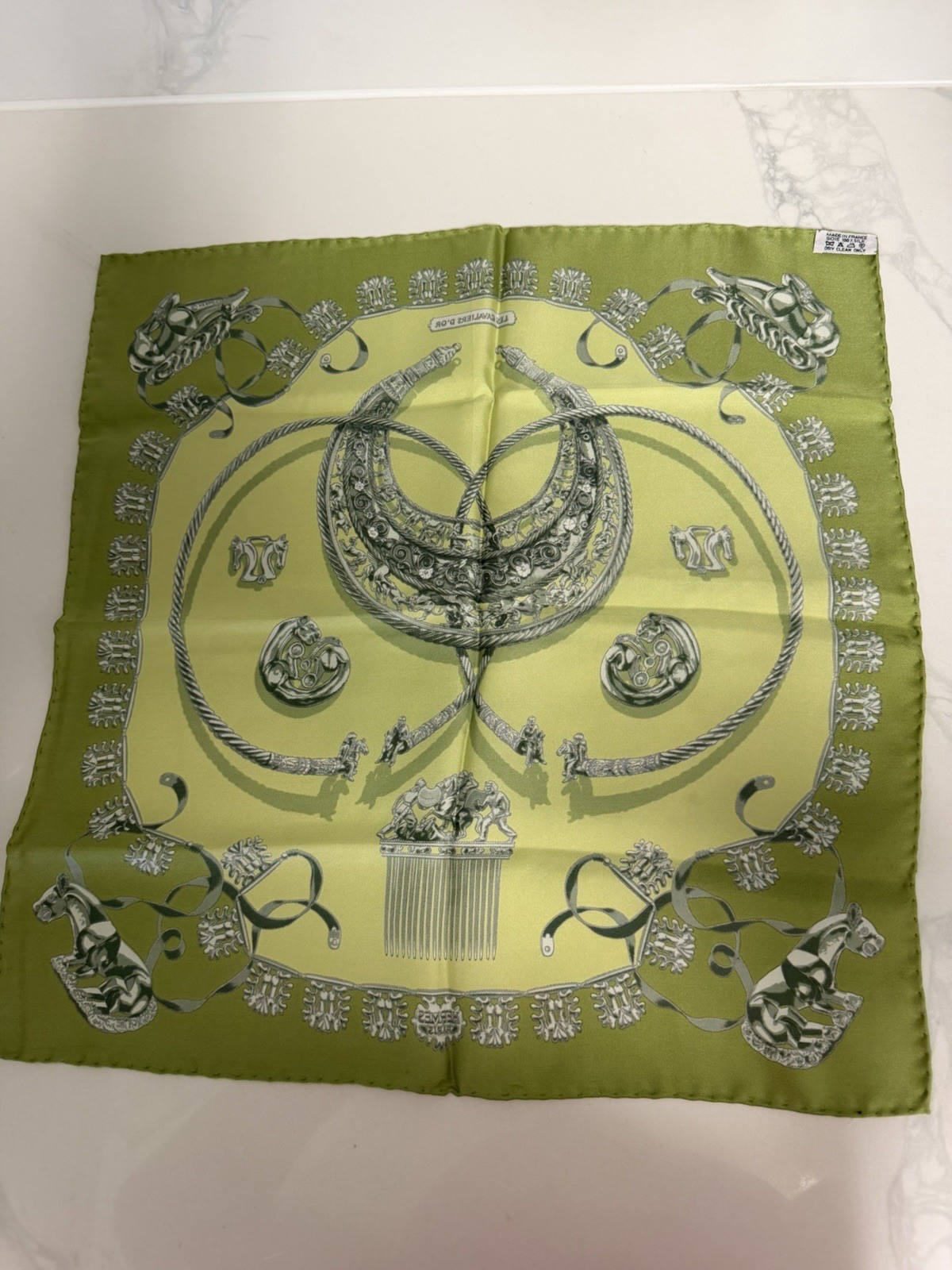
zijde-sjaals
HERMES Les Cavaliers d’Or Carre 90 Silk Scarf Green Vintage Made in France
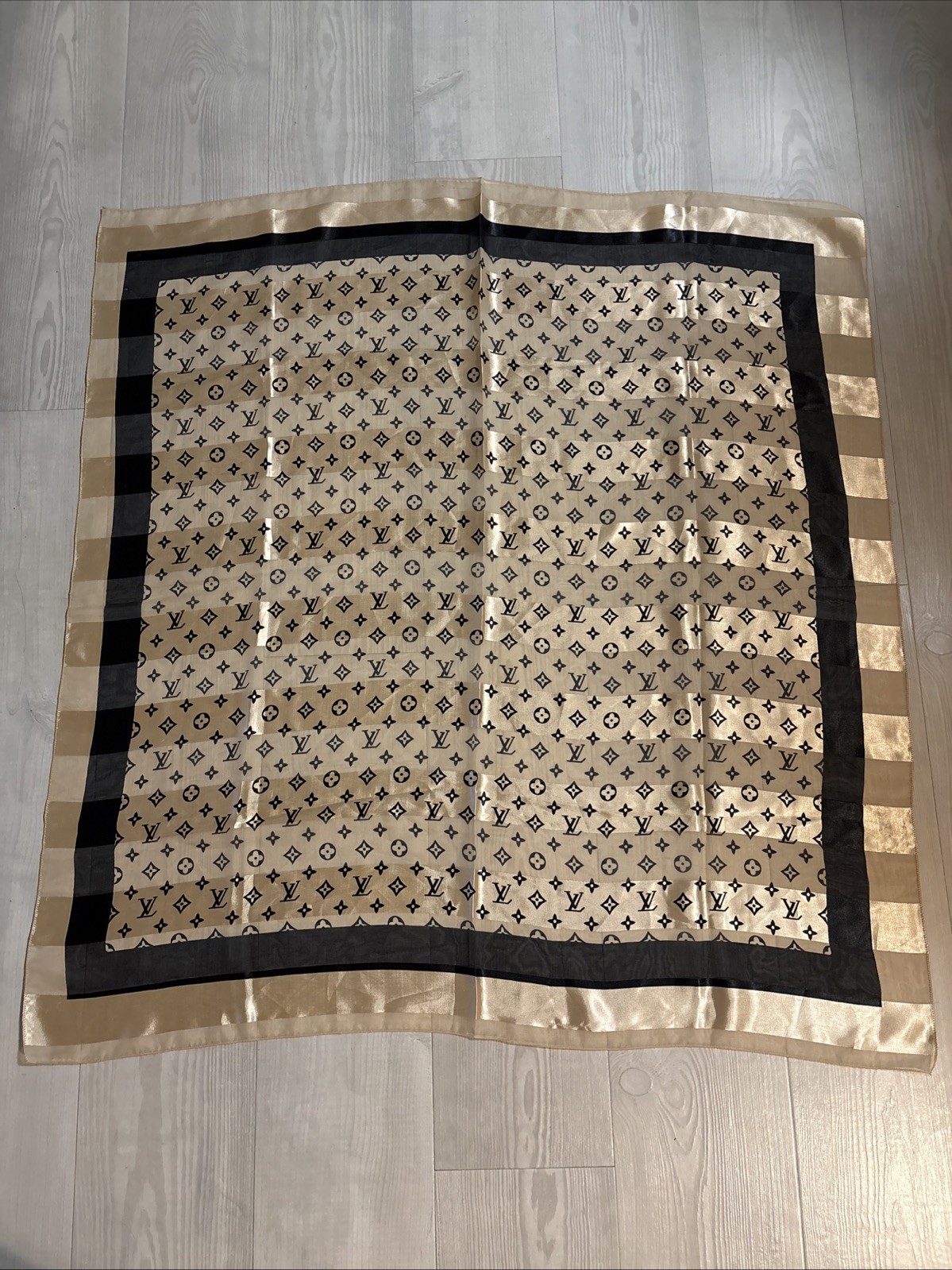
zijde-sjaals
Louis Vuitton Monogram Silk Scarf 38”x 40.5” Thick Stripe Sheer LARGE Wrap VTG
The names
Meet the designers
The minds behind this story — each with a piece currently on the market.
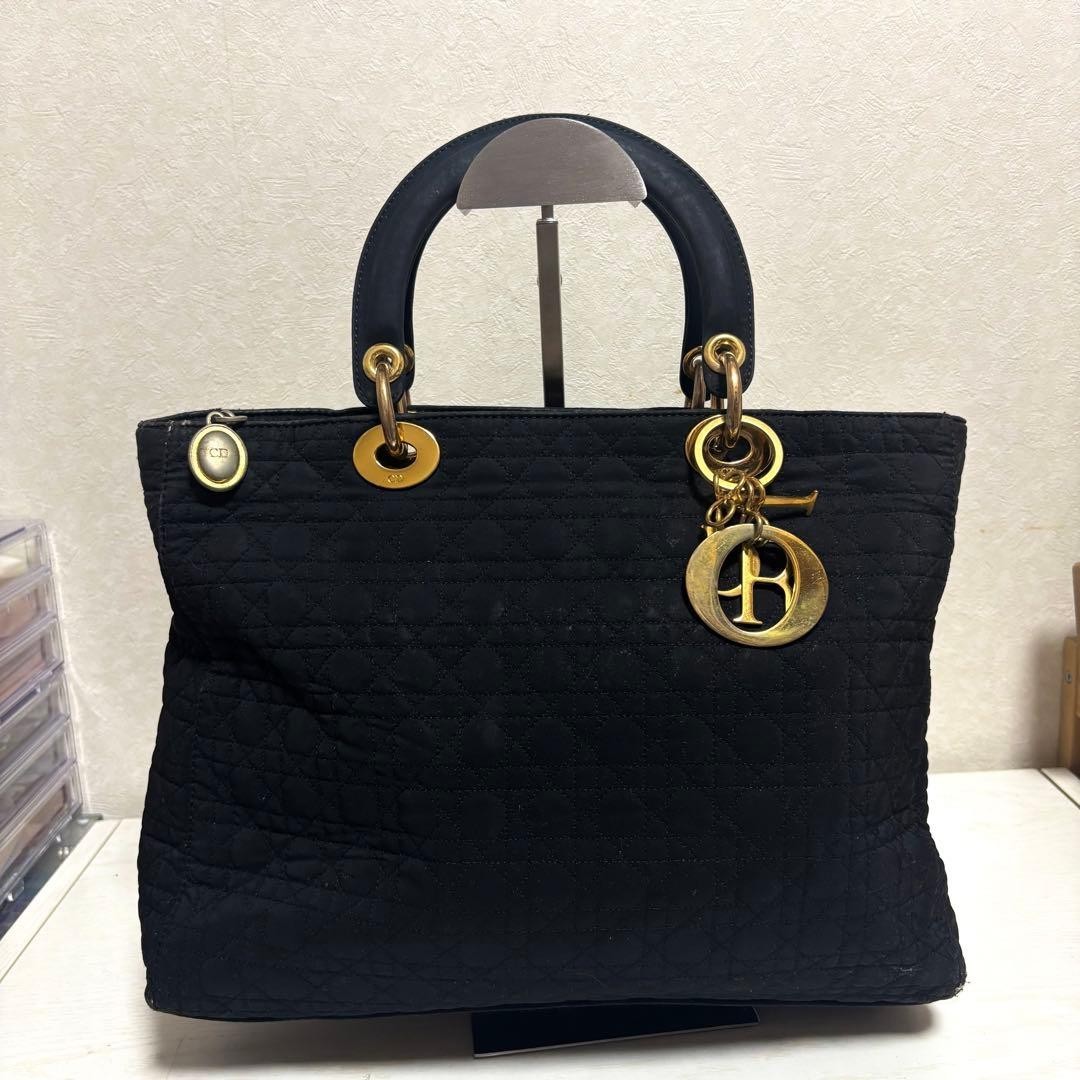
Dior
France · 1940s
The New Look & the Lady Dior
The New Look & the Lady Dior
Top piece
View →
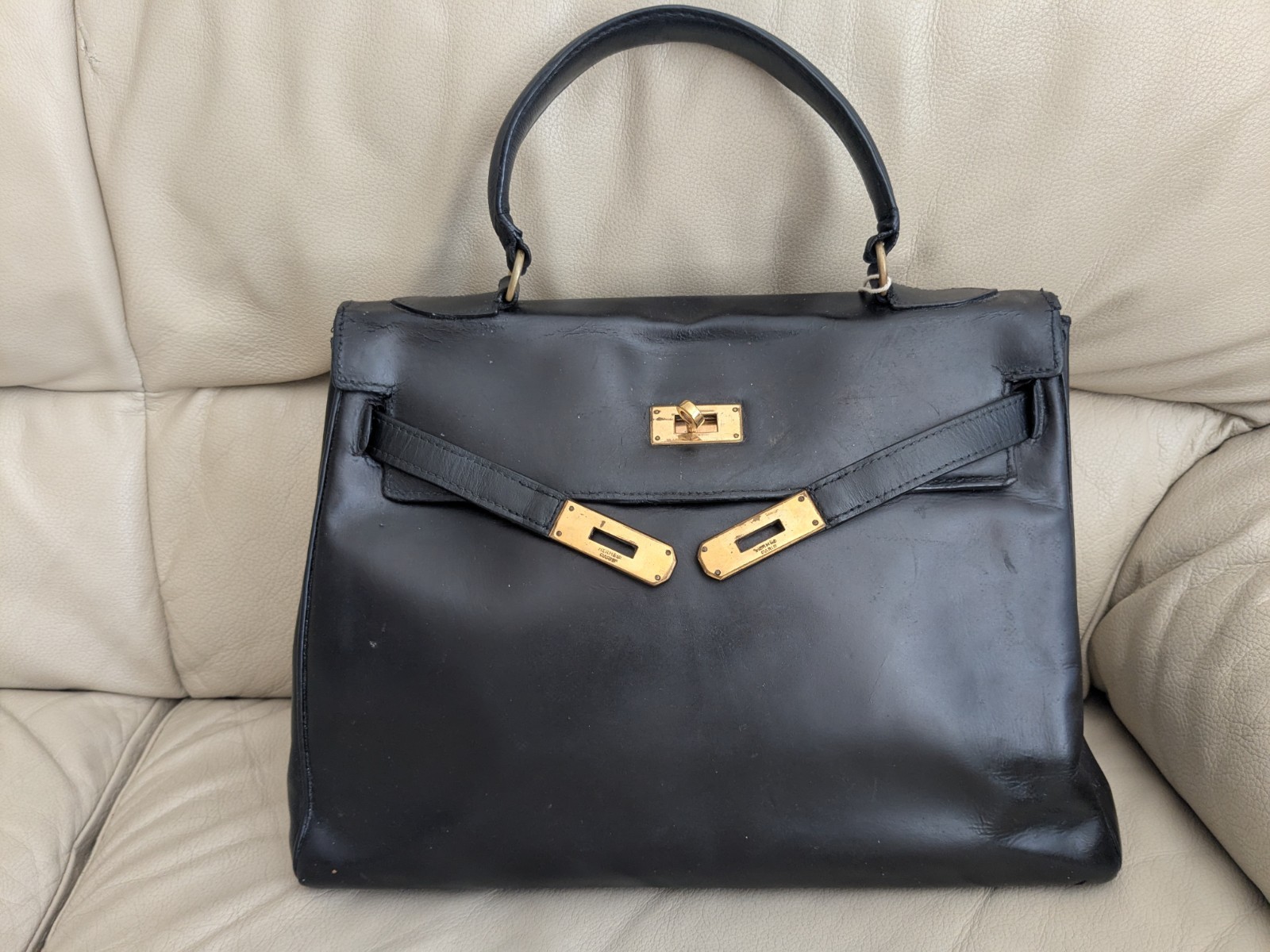
Hermès
France · 1830s
The Birkin, the Kelly & the silk carré
The Birkin, the Kelly & the silk carré
Top piece
View →
Børge Mogensen
Denmark · 1940s
The Spanish chair — honest, functional furniture for everyday life.
The Spanish chair — honest, functional furniture for everyday life.
Top piece
View →
Calvin Klein
USA · 1960s
Minimalism & the 90s slip
Minimalism & the 90s slip
Top piece
View →
Continue the edit
Further stories from the same world
Three more walks through the same vintage universe.

The Vintage Band Tee: Wear It Like You Were There
A 1979 Rolling Stones tee from the Some Girls tour is a shirt, not a collectible. Here is how to wear one without looking like you are curating a museum.
Read the story →
The Perfect Worn-In: A Guide to Vintage Leather Jackets
A vintage leather jacket is not a trend. It's a commitment. Here's how to find one that fits your life, style it with intention, and let it age into something truly yours.
Read →Where to Find Real Leather in Barcelona
A leather jacket is the rare piece that looks better the longer you own it. Vintage ones arrive already broken in. The collar softened, the cuffs scuffed, the lining a little tired in the best way.
Read →