
 Sign in
✦ Culture · London
London's Best Dress Rails
Vintage dresses were cut for a body, not a size chart. Darts sit where they should, hems fall where they were meant to, and the fabrics, real silk, heavy crepe, proper cotton, move in a way that modern jersey never will.
 By Louis Trash·
Why Dresses Matter Now
Vintage dresses were cut for a body, not a size chart. Darts sit where they should, hems fall where they were meant to, and the fabrics, real silk, heavy crepe, proper cotton, move in a way that modern jersey never will. A 1950s wiggle dress in rayon crepe has a weight that swings with you. A 1970s silk chiffon floats. You feel the difference the moment you zip it up.

Foto: ΘSWΛLD · Pexels
A velvet evening dress with scuffed boots. A 1940s tea dress under a leather jacket. That contrast is the city's style. It keeps the past from looking like fancy dress.
How to Wear It
Take the shoulders in rather than the waist. That single alteration fixes most old dresses. Old tailoring often cut wide through the shoulders and nipped the waist; modern bodies are the reverse. A good seamstress can take in the shoulder seams for £20-30, and suddenly the whole line falls right. Leave the waist alone. That's usually where the original fit was spot on.
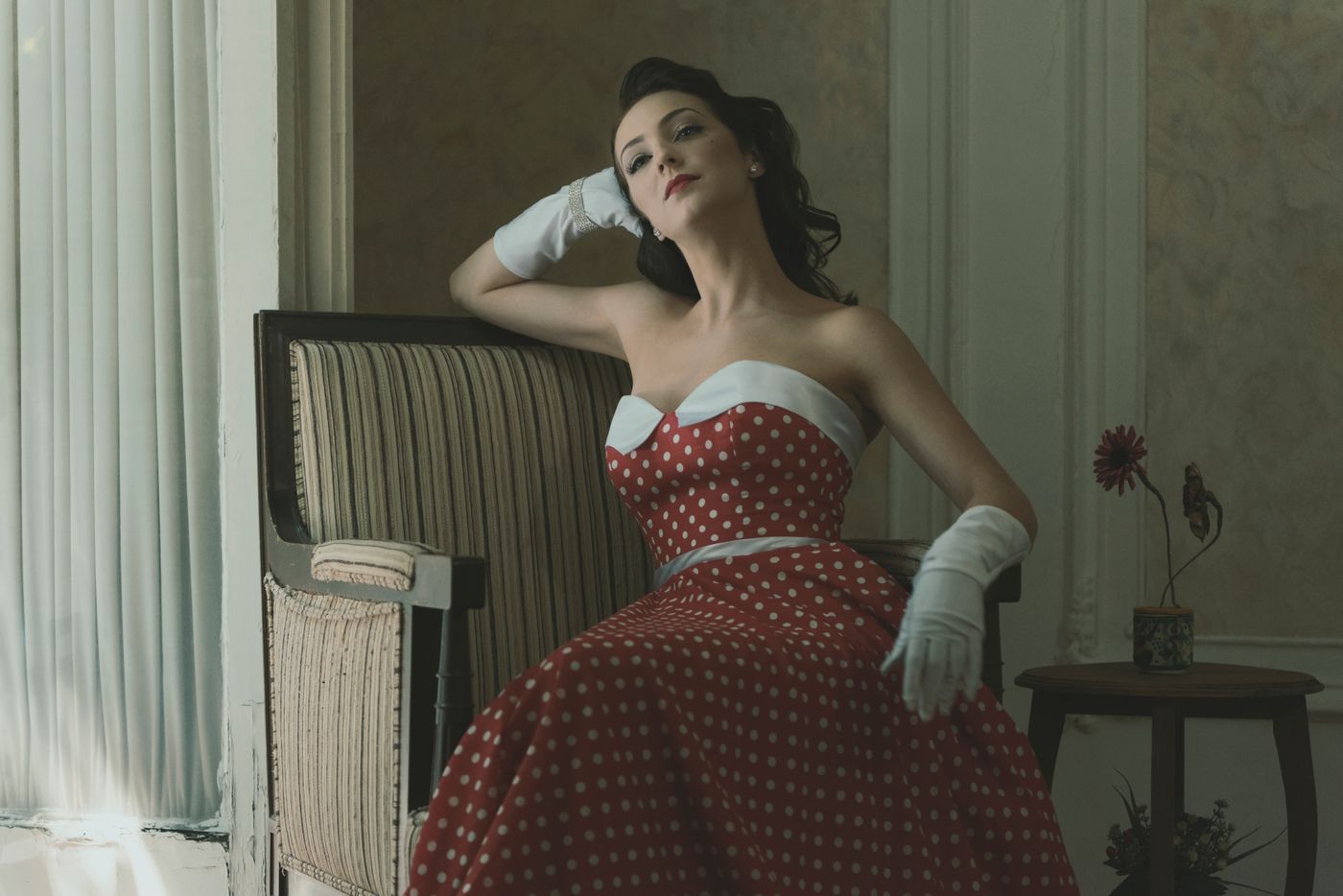
Foto: Odin Reyna · Pexels
Wear a cocktail dress in daylight with flat shoes. It stops it looking like a costume. A black beaded 1920s shift with Converse? Yes. A powder-blue 1950s tulle number with loafers? Absolutely. The contrast makes it modern.
Layer a fine knit over a slip dress and let the hem show. A 1930s bias-cut slip in silk or rayon, worn with a fine cashmere cardigan and ankle boots, is a winter uniform. The hem peeking out adds movement and a hint of what's underneath.
London's Best Dress Rails
Rokit Brick Lane (101 Brick Lane) — dependable, huge, strong on denim and outerwear, from around £20. The dress rail here is a rummage. You'll find 1980s power-dressing shifts next to 1970s floral cottons. Weekday mornings are calm; staff will point you to what came in overnight. Sizes are approximate, so check labels and try on.

Foto: Vika Glitter · Pexels
Blitz London (55-59 Hanbury Street) — department-store scale, everything properly sorted by era and colour, from around £45. This is where to go when you want a specific decade. The 1950s section has real cocktail dresses with original labels; the 1960s rail has shift dresses in bold prints. Prices are higher but the curation saves time.
Portobello Road Market (Portobello Road, Notting Hill) — Friday and Saturday for the serious dealers, from around £60. The arcades near the top of the market have the best vintage clothing. Dealers know their stock and can tell you the year and provenance. Bring cash; some stalls don't take cards. Bargain politely. A small discount is often possible, especially if you buy two.
Retromania (6 Upper Tachbrook Street) — charity-shop prices, genuinely good finds, from around £90. Tucked near Victoria Station, this is a treasure hunt. The stock turns over fast. A 1940s rayon dress for £40? Seen it. A 1960s Courrèges-style shift for £120? Yes, that too. Check the rails thoroughly; good pieces hide among the ordinary.
Go on a weekday morning if you can. The rails are fullest before the weekend crowd arrives, and staff have time to show you what came in overnight. Tuesday through Thursday are the sweet spots.
What to Look For
Check the zip. A metal one usually means pre-1970s. Plastic zips arrived in the late 1960s; nylon later. A metal zip is a good sign of age, but not always quality. Inspect it for rust or broken teeth. A replacement zip is a cheap fix, but note it in the price.

Look at the seam allowance inside: generous fabric means it can be let out. Vintage dresses often had a full inch or more. If the seams are skimpy, the dress is what it is.
Hold the underarms to the light for thinning and old deodorant damage, which is permanent. That's the one area that can't be repaired. Also check the back of the neck, where perfume and hair oil take their toll. Small tears along a seam are an easy fix; tears through the fabric itself are not. A tear in the body of a silk dress is a deal-breaker unless the price is very low.
One last thing: try it on properly, walk around in it, and sit down. A vintage dress that only works standing still is not going to survive your actual life. Raise your arms, bend over, sit in a chair. If it pulls or gapes, walk away. There's always another one.
The best vintage dress is the one you wear twice a week, not the one you save for never. London's rails are full of them. Go find yours.
Get the look
Get the look
The pieces that make this story wearable, live from the market.
The names
The designers behind the look
The minds behind this story — each with a piece currently on the market.
Armani
Italy · 1970s
The power suit & soft tailoring
The power suit & soft tailoring
Top piece
View →
Børge Mogensen
Denmark · 1940s
The Spanish chair — honest, functional furniture for everyday life.
The Spanish chair — honest, functional furniture for everyday life.
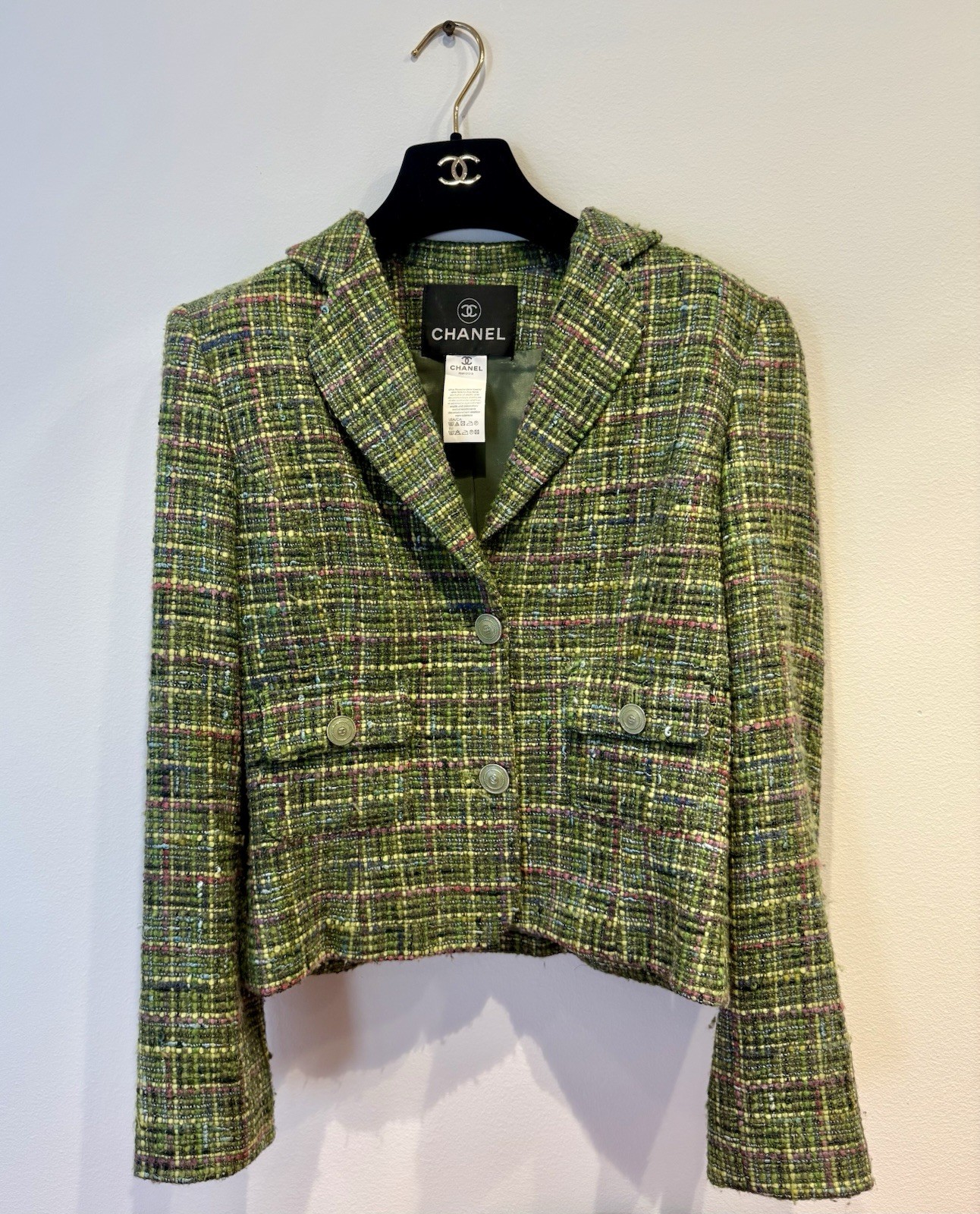
Chanel
France · 1910s
The little black dress & the 2.55
The little black dress & the 2.55
Top piece
View →
Levi's
USA · 1850s
The 501 & Americana denim
The 501 & Americana denim
Continue the edit
Further stories from the same world
Three more walks through the same vintage universe.

The Band Tee Guide for London
A band tee is a souvenir somebody else brought home. The faded print, the softened cotton, the fact that it survived thirty years of washing.
Read the story →
London's Best Bag Hunting, Shop by Shop
The small shoulder bag is back, and the originals are still out there. A nylon bag from 1999 or a mini baguette from the same year carries a specific kind of confidence.
Read →
The Leather Jacket That Earns Its Scars
A good vintage leather jacket is not a costume. It is a second skin with a past, and the trick is learning to wear the story without letting it wear you.
Read →