
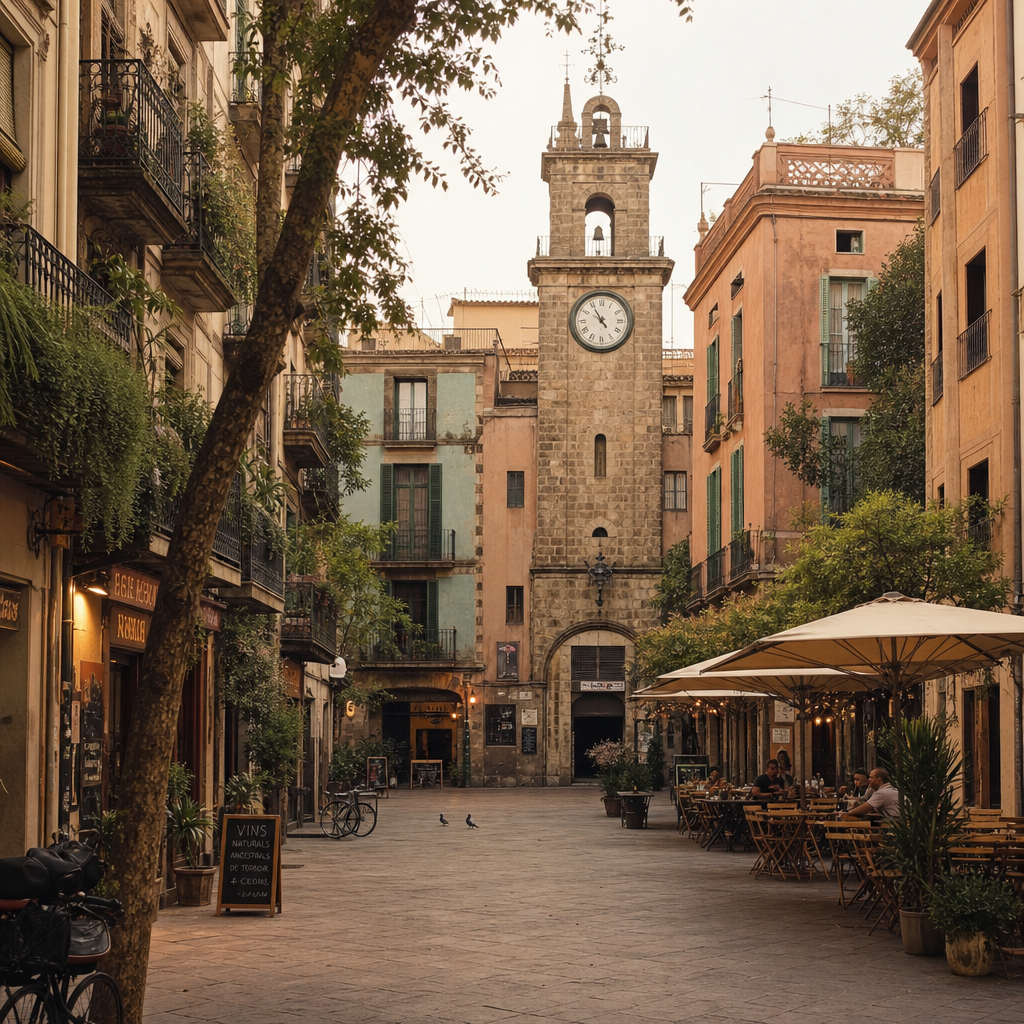
Gràcia was its own town until 1897, and it still behaves like one.
Walk up Passeig de Gràcia, past the designer stores and the Casa Batlló, and turn left at Travessera de Gràcia. Within three minutes, Barcelona's grand boulevard dissolves into a warren of small squares where elderly men play dominoes and children chase footballs. This is Gràcia, the city's bohemian heart.
The neighbourhood was home to Barcelona's artisan class — silversmiths, leather workers, and ceramicists. Their workshops have become vintage stores, but the spirit remains. This is not a shopping destination. It is a place to wander, get lost, and discover things by accident.
The Gràcia Circuit
Start at the Plaça de la Vila, the neighbourhood's central square. The clock tower was built in 1864. On the north side, Lailo Vintage occupies a former silversmith's workshop. The shop specialises in 1960s-1970s Spanish fashion, with a strong selection of leather jackets and printed dresses.
Walk up Carrer de Verdi to Plaça de la Revolució. This square was a barricade during the Spanish Civil War. Today it hosts a vintage market every first Sunday of the month — gràciencs selling old books, vinyl records, and second-hand clothing from their own wardrobes. It is the most authentic vintage experience in Barcelona, because nothing is professionally merchandised.
End at Plaça del Sol, the neighbourhood's liveliest square. The terraces fill up at sunset. Order a vermut — Barcelona's traditional aperitif — and watch the gràciencs go about their evening. This is not vintage tourism. This is Barcelona as it actually lives.