
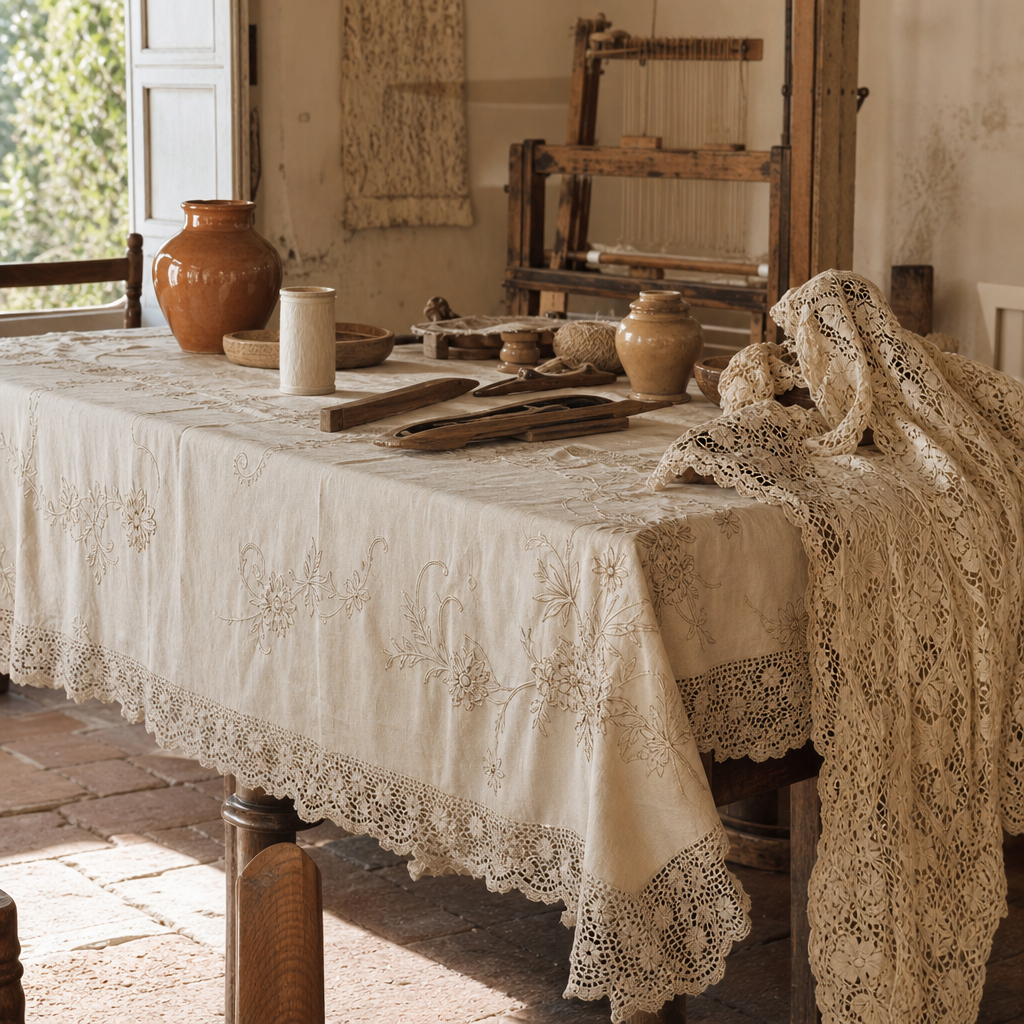
Before Barcelona had Gaudi, it had weavers.
The textile industry built Barcelona. In the 19th century, Catalonia was one of Europe's largest cotton producers, and the factories of the Raval and Poble Nou districts employed tens of thousands. The wealth from textiles funded the Modernista architecture — without cotton, there would be no Sagrada Familia.
The connection between Barcelona's textile past and its vintage present is direct. The same families that ran textile mills in 1880 now run the vintage stores of the Born and Gràcia. The knowledge of fabric — how cotton ages, how silk drapes, how wool holds a shape — has been passed down through four generations.
Where to Find Catalan Textiles
Els Encants Vells, Barcelona's oldest flea market, operates Wednesday, Friday, and Saturday near the Glòries tower. Among the furniture and electronics, dealers sell vintage Catalan linen — hand-embroidered tablecloths, bedspreads, and curtains from the 1920s-1950s. Prices are negotiable and usually start at EUR 20-50.
The Museu Tèxtil i de la Indumentària on Carrer de Montcada documents this history, with a permanent collection spanning 16th century Catalan velvet to 1920s Barcelona fashion.
Almacenes del Pilar in the Born sells vintage mantillas (traditional Spanish lace veils), hand-embroidered shawls, and antique fabric remnants. The shop has been in the same family since 1920 and the current owner still cuts fabric by hand.
What to collect: Vintage Catalan linen in natural colours — the undyed cream, oatmeal, and ecru that Catalan weavers were famous for. These pieces gain value as the global market for antique textiles grows.