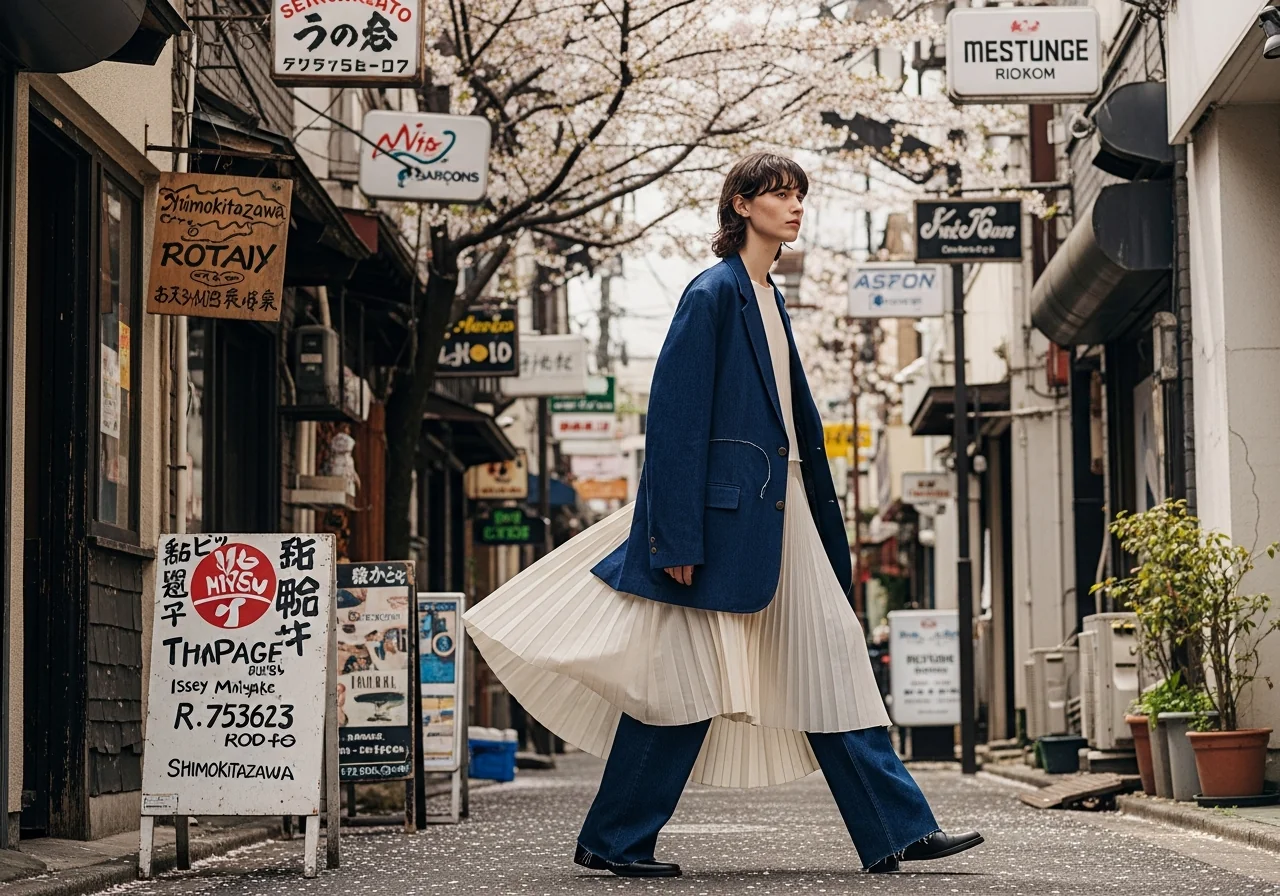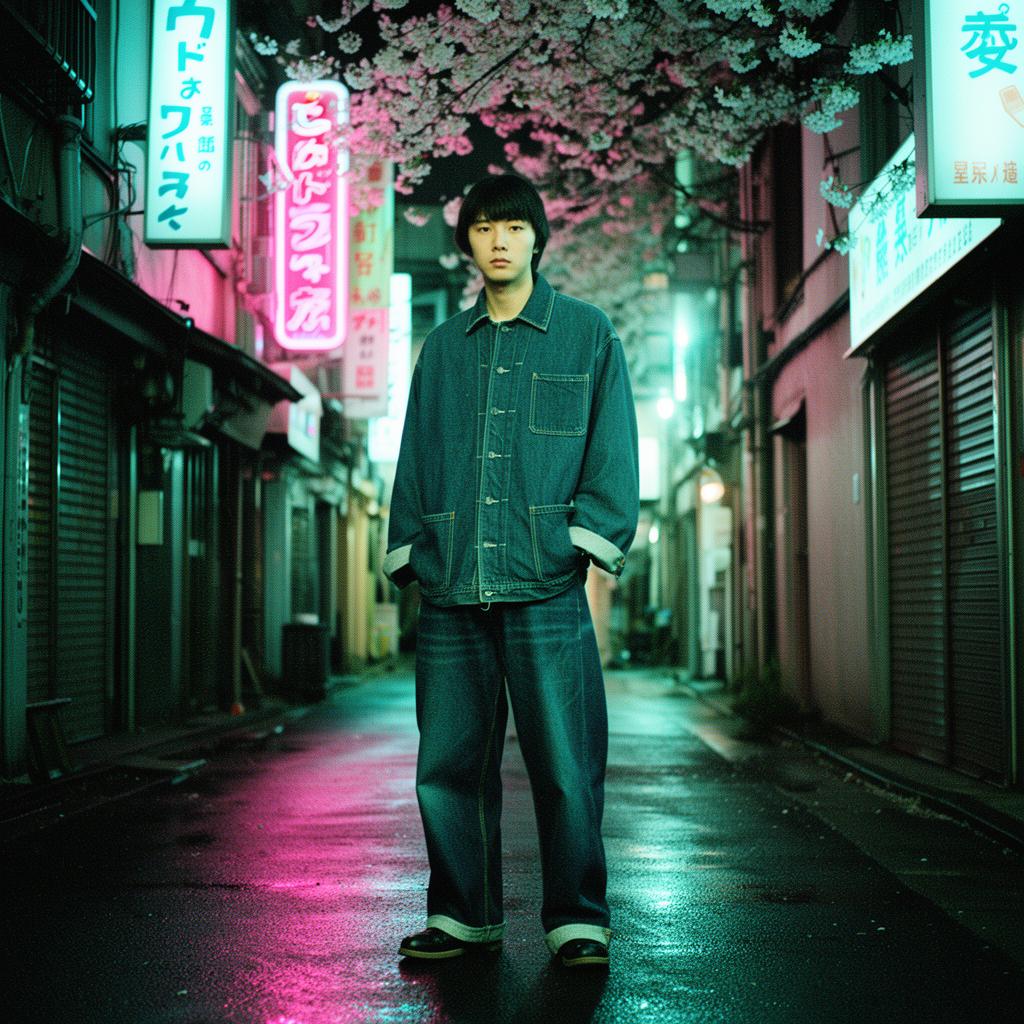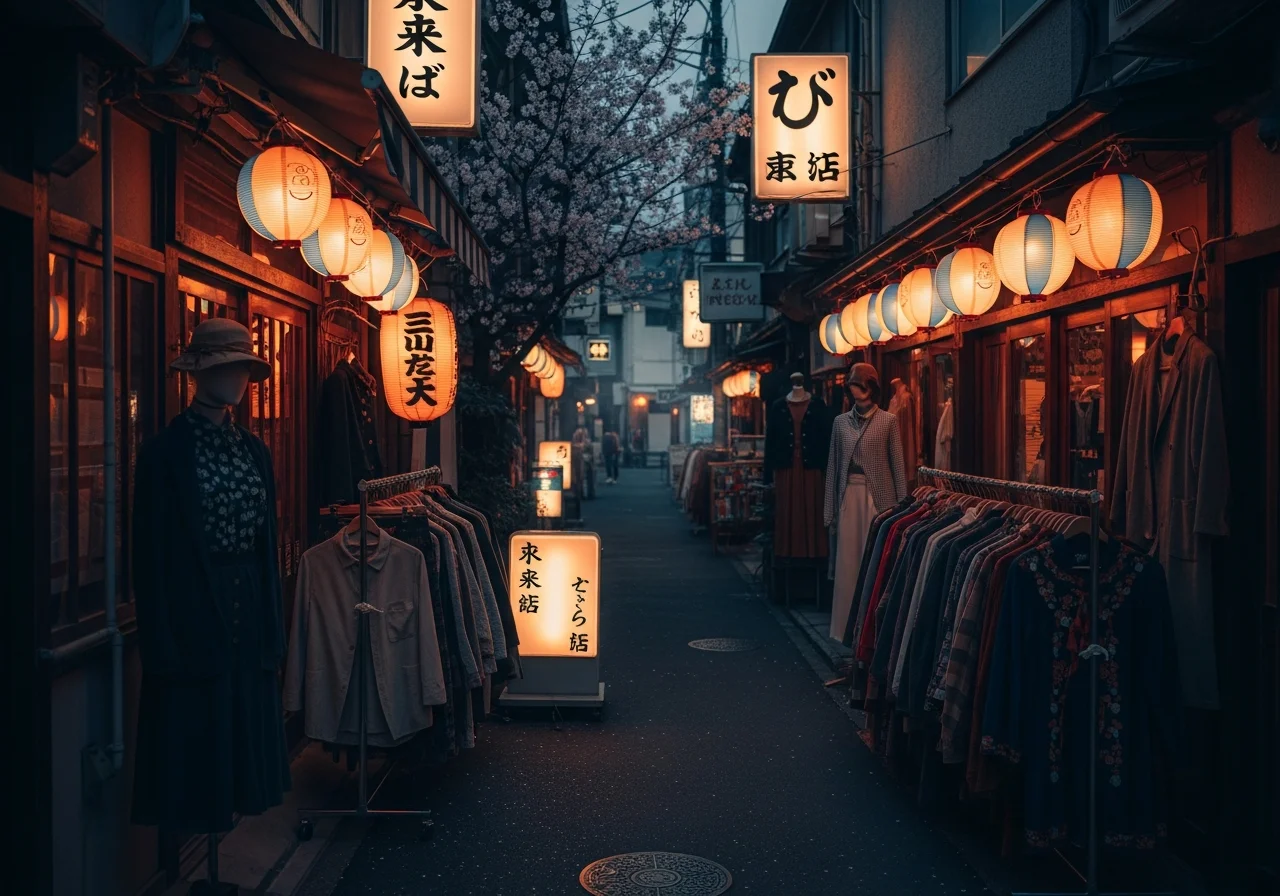
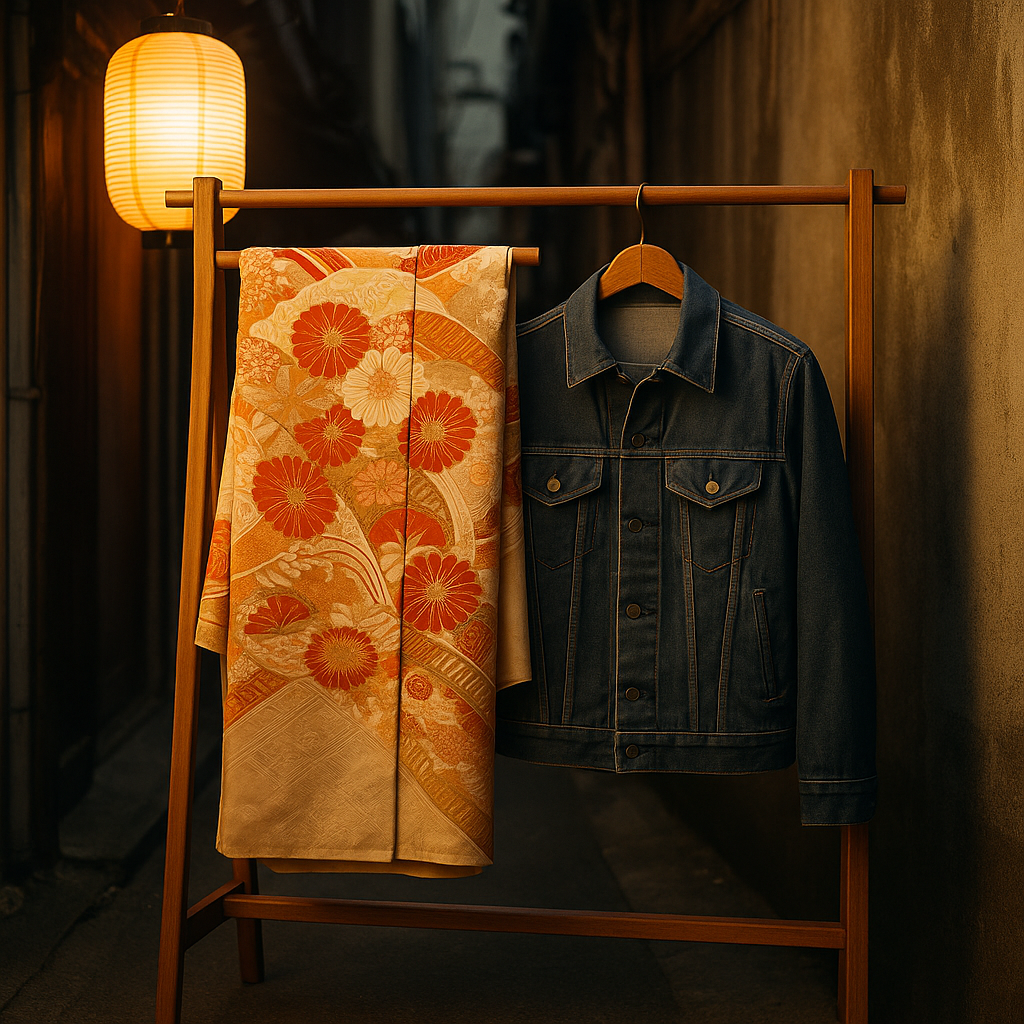
The sun spills gold through the narrow alleys of Shimokitazawa, catching the dust motes that dance above racks of 1950s American denim. You walk slowly, your footsteps echoing off weathered concrete walls, past shopfronts where carefully faded Levi’s hang beside the sharp, asymmetrical cuts of 1980s Japanese avant-garde. The air is layered: the deep, roasted scent of coffee beans from a nearby window mingles with the faint musk of aged cotton, the ghost of decades past. A bicycle bell chimes softly as a local weaves through the crowd; paper lanterns cast a warm, trembling glow over piles of vintage band tees and neatly folded silk kimonos. Inside, shop owners handle each garment with the reverence of a museum curator, smoothing a collar, adjusting a sleeve, as if the denim itself holds memories of a second life. You run your fingers along a worn corduroy jacket, the fabric soft and napped with time, and you understand: this is not just thrifting. This is archaeology of style.
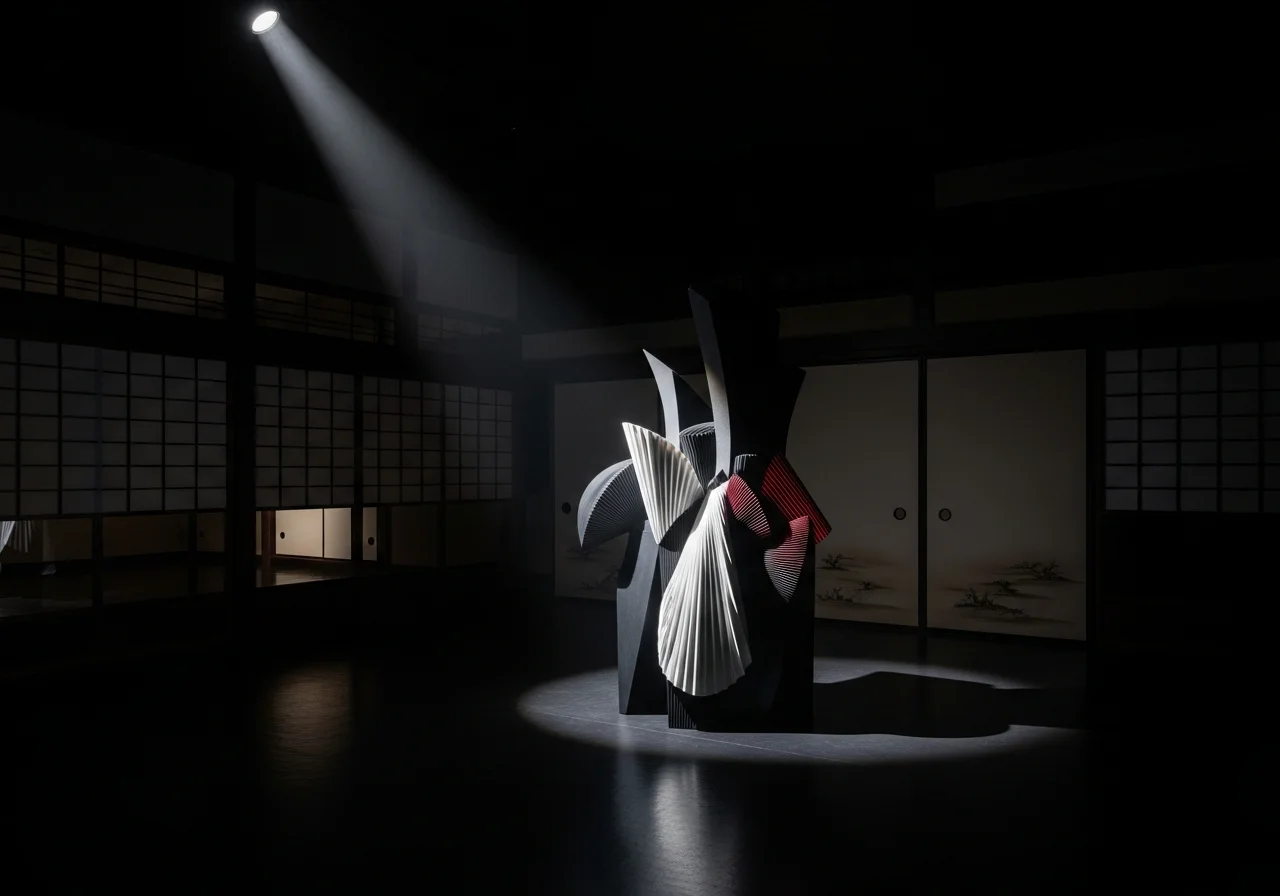
From the gritty, kinetic pulse of Shimokitazawa, you ascend to the calm, deliberate world of Aoyama. The Yohji Yamamoto flagship stands like a monolith of meditation—black concrete, sharp angles, and glass that mirrors the sky. Inside, the air is hushed, almost liturgical. Here, deconstruction is philosophy; oversized silhouettes drape like shadows, black upon black, each garment a study in weight and void. You touch a coat, its seams deliberately exposed, the fabric soft but heavy, and you feel the architect’s hand in every fold. This is the aesthetic that has quietly reshaped how Tokyo approaches vintage: not as nostalgia, but as a palette for reinvention. In the fitting room, you try on a piece that could be from a 1990s collection, yet it feels timeless—as if the past and future have agreed to meet here, in this cathedral of cloth.
You carry that meditative calm to your hotel, the iconic Hotel New Otani. Its main tower, a mid-century modernist sculpture of concrete and glass, rises above the serene expanse of a 400-year-old Japanese garden. You step into the garden at dusk: the air is cool, fragrant with pine and damp earth, and the sound of a waterfall drowns out the city’s distant hum. Koi fish glide beneath a wooden bridge, their scales catching the last light. Inside, the lobby hums with quiet sophistication—leather chairs, polished marble, the faint clink of glasses. You take the elevator to the revolving bar on the 17th floor, order a perfectly balanced highball, and watch the skyline orbit slowly: Tokyo’s neon pulse, the dark ribbon of the Sumida River, the glittering peaks of skyscrapers. The drink is crisp, the ice a single perfect cube, and you taste the city’s rhythm in every sip.
The next morning, you dive into Harajuku’s thrift culture. Takeshita Street assaults your senses: candy-pink crepe stands, the thrum of J-pop, a tsunami of color and noise. But you know to turn left, into the quieter lanes behind Omotesando, where hidden vintage troves wait. Here, Comme des Garçons archive pieces—a deconstructed blazer, a sculptural dress—hang next to carefully distressed band tees, their fabric worn soft by decades of concerts and laundry. You smell cedar and mothballs, hear the soft rustle of hangers being pushed aside. Your fingers trace a silk slip from the 1970s, the fabric cool and liquid, and you feel the weight of curation. In Tokyo, vintage is not cast-off; it is chosen, cherished, reimagined.
For the full Tokyo vintage itinerary, explore more city guides at TheVintageGuide.com.