The Archivist of Authenticity: Nigel Cabourn’s Enduring Legacy in Heritage Fashion
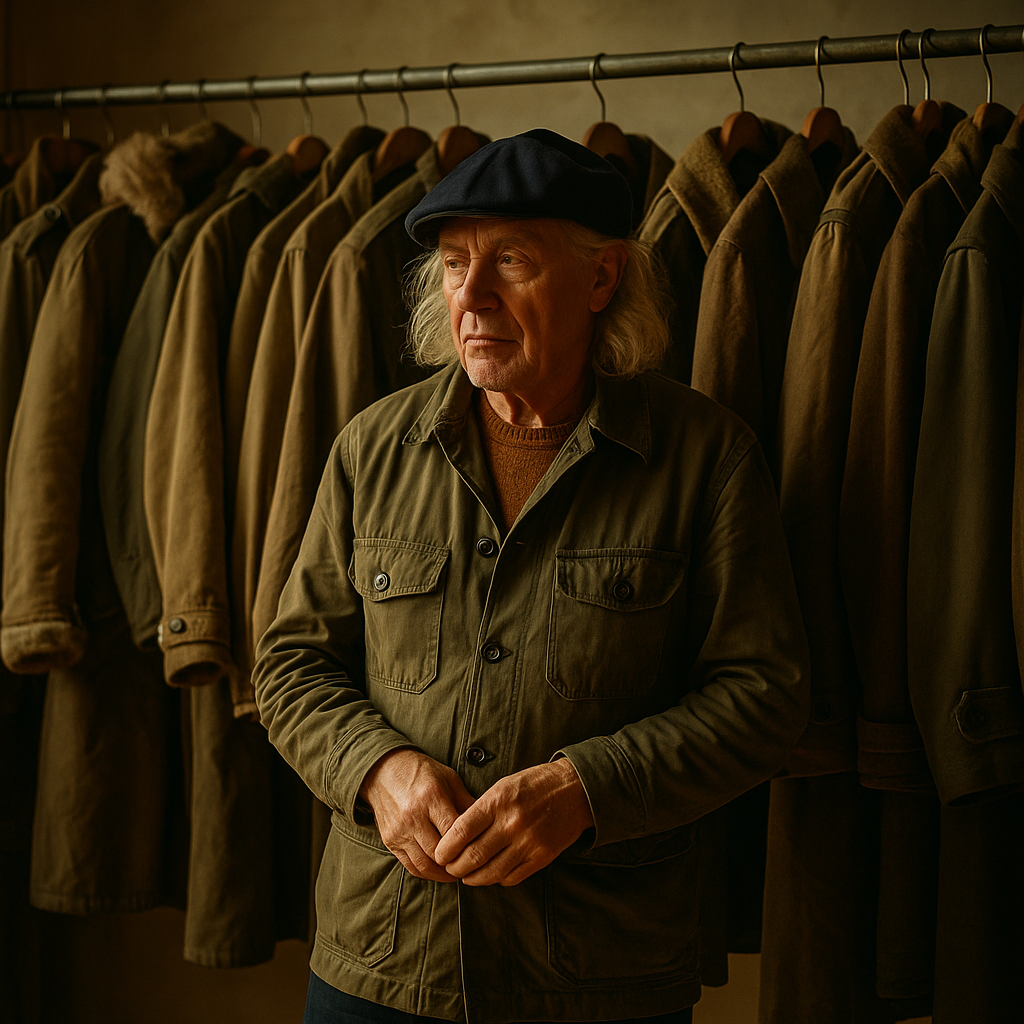
When Nigel Cabourn passed away at 76 in his beloved London, the menswear world lost not just a designer, but a historian, a collector, and a storyteller. For over five decades, Cabourn was the quiet titan of vintage-inspired menswear, a man whose obsession with military and workwear archives translated into garments that felt less like fashion and more like artifacts. His death marks the end of an era, yet his influence on modern heritage fashion remains indelible.
A Life Woven in Fabric
Born in 1947 in County Durham, England, Cabourn’s fascination with clothes began early. He studied fashion design at the University of Westminster and launched his eponymous label in 1971. But it was his move to Hong Kong in the 1980s that crystallized his vision. Surrounded by textile markets and military surplus, he began amassing a vast archive of vintage pieces—WWII British army coats, French workman’s jackets, American denim—that would become the DNA of his collections.
Cabourn wasn’t a trend-chaser. He was a purist. His designs were painstakingly reproduced from original patterns, often using deadstock fabrics and period-accurate hardware. He believed that authenticity wasn’t just about looks; it was about feel, weight, and the story woven into every seam. This philosophy earned him a cult following among those who valued substance over flash.
The Archive as Muse
Cabourn’s archive was legendary: over 4,000 pieces spanning two centuries. He didn’t just collect; he dissected. Each garment was studied for its construction, its function, its flaws. From this sprang his signature lines: the Authentic collection, direct reproductions of vintage pieces; the Original line, inspired by but not exact copies; and the Camden range, more accessible but still steeped in heritage.
His collaborations amplified his reach. A partnership with Red Wing produced boots that honored the brand’s workwear roots. With Barbour, he reimagined the classic Beaufort jacket in Japanese waxed cotton. These weren’t marketing stunts; they were dialogues between kindred spirits. Cabourn once said, “I don’t design fashion. I design clothes that have a purpose and a history.”
Influence on Modern Heritage
Cabourn’s impact is visible in the rise of heritage brands like Engineered Garments, The Real McCoy’s, and RRL. He paved the way for a generation of designers who treat vintage as a foundation, not a gimmick. His emphasis on provenance and durability resonated in an era of fast fashion, offering an alternative: buy less, but buy better.
He also helped popularize the “worker” aesthetic—cargo pants, chore coats, field jackets—that now dominates menswear. But Cabourn’s versions were never costume-like. They were functional, layered, and lived-in. He wore his own designs, often paired with a battered leather satchel and a knowing smile. That authenticity was his greatest marketing tool.
A Personal Legacy
Cabourn was notoriously private, shunning the fashion circus. He preferred the quiet of his studio, surrounded by old sewing machines and bolts of cloth. His death, confirmed by his family, prompted an outpouring from admirers. Designer Tommy Ton called him “the ultimate storyteller.” Nigel Cabourn the brand will continue under his family, but the man himself is irreplaceable.
In his final years, Cabourn focused on preserving his archive for future generations. “These clothes have a soul,” he said. “They deserve to be understood.” And thanks to him, they are. His legacy is not just in the garments he made, but in the way we now look at old clothes—not as relics, but as repositories of memory.
Nigel Cabourn taught us that true style is timeless, that authenticity is an act of devotion. He may be gone, but his archive of authenticity will inspire for decades to come.