Martin Margiela Paris: From Tabis to Barbie Clothes
In the hushed salons of Paris’s Hôtel Drouot, a peculiar auction unfolded this spring—one that seemed to belong more to a fever dream than a conventional estate sale. The collection of Martin Margiela, the elusive Belgian designer who revolutionized fashion in the late 1980s and 1990s, went under the hammer, offering an intimate glimpse into the mind of a man who has remained largely invisible since his departure from his eponymous label in 2009. The lots ranged from the expected—a pair of his iconic Tabi boots, estimated at a staggering 300,000 euros—to the utterly unexpected: a set of Barbie clothes, meticulously crafted by Margiela himself.
The auction, titled "Martin Margiela: Personal Collection," was not a retrospective of his greatest hits but a cabinet of curiosities. It included early prototypes, unfinished samples, and personal artifacts that traced the arc of his career. The Tabi boots, with their split toe inspired by Japanese tabi socks, were the undisputed stars. One pair, from his debut spring/summer 1989 collection, was painted with a trompe-l’oeil effect that made the leather look like worn, cracked wood. Another lot featured a series of dolls dressed in miniature versions of his most famous designs—the painted nails on gloves, the wig jackets, the oversized shoulders—all executed with the same obsessive precision as the full-scale garments.
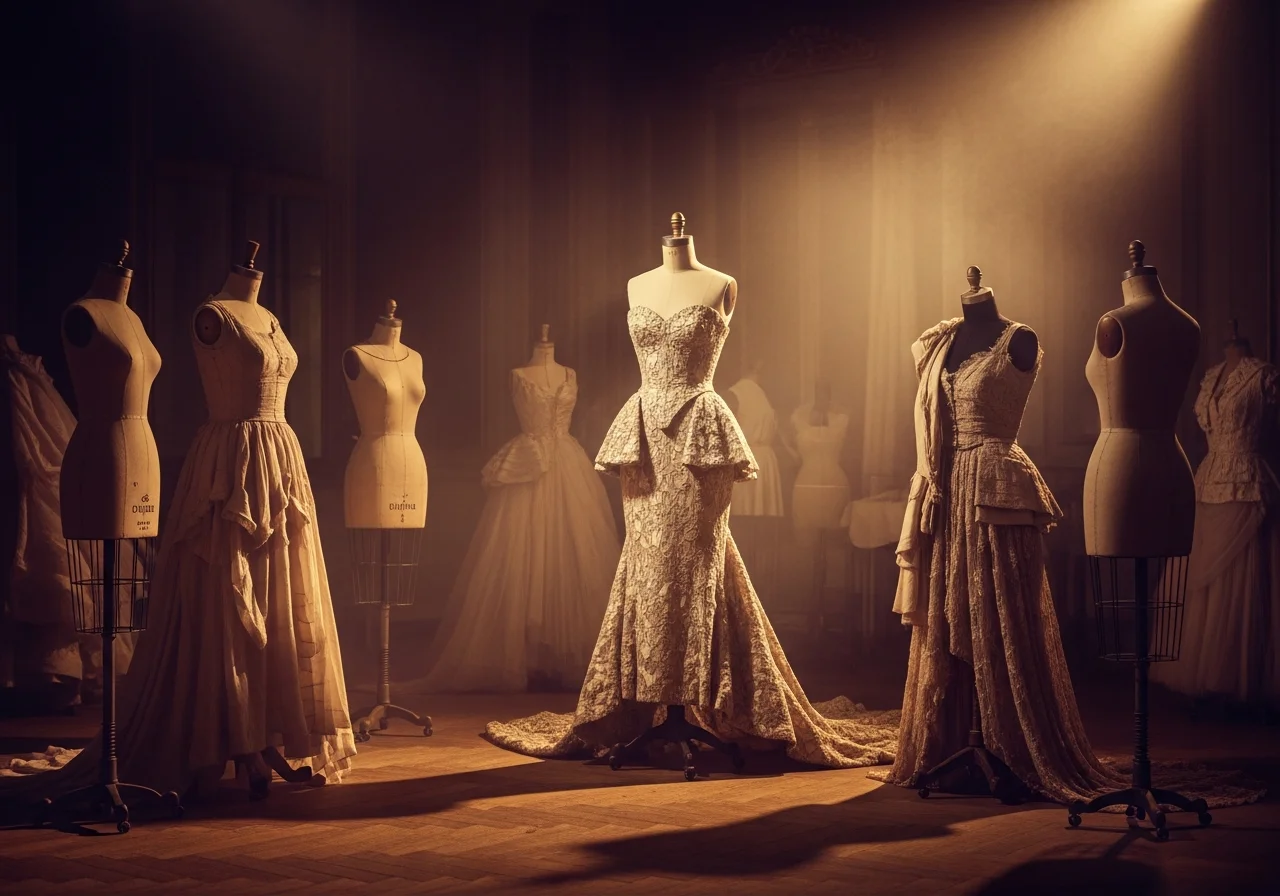
But the Barbie clothes were the true revelation. Here was Margiela, the high priest of deconstruction, playing with the ultimate symbol of mass-produced femininity. The tiny outfits included a reconstructed Barbie wedding dress, its train made from a single strip of tulle, and a miniature version of his infamous "Doll's Wardrobe" from 1995, where garments were scaled down to fit a 12-inch frame. These pieces were not mere souvenirs; they were proof that Margiela’s conceptual rigor extended to every scale. They also hinted at a playful, almost tender side to the designer who famously refused to be photographed or interviewed.
The sale underscored Margiela’s enduring influence. His techniques—raw seams, oversized proportions, garment deconstruction, and the use of found objects—have become the lingua franca of contemporary fashion. Designers from Raf Simons to Demna Gvasalia have cited him as a primary inspiration. Yet the auction also revealed a paradox: Margiela’s work, once a radical critique of consumerism and luxury, now commands prices that place it firmly within the very system he challenged. A pair of his Tabi boots, originally priced at a few hundred dollars, can resell for tens of thousands.
As the auctioneer’s gavel fell on the final lot—a white lab coat stained with paint, worn by Margiela during his early years—the room fell silent. For those who had followed his career, it was a poignant moment. The coat was a relic of a time when fashion was still a craft, not a spectacle. Margiela’s legacy is not just in the objects he left behind but in the questions he raised: What is the value of anonymity? Can fashion be art without an author? And why did he choose to preserve these particular things?
Perhaps the answer lies in the Barbie clothes. In their perfect, tiny imperfections, they remind us that Margiela’s vision was never about size or scale—it was about the idea. The idea that a garment, whether for a doll or a woman, can be a vessel for memory, for critique, for play. As the Barbie clothes found new owners, they carried with them a whisper of Margiela’s voice, still refusing to be seen but leaving his indelible mark on the fabric of fashion history.