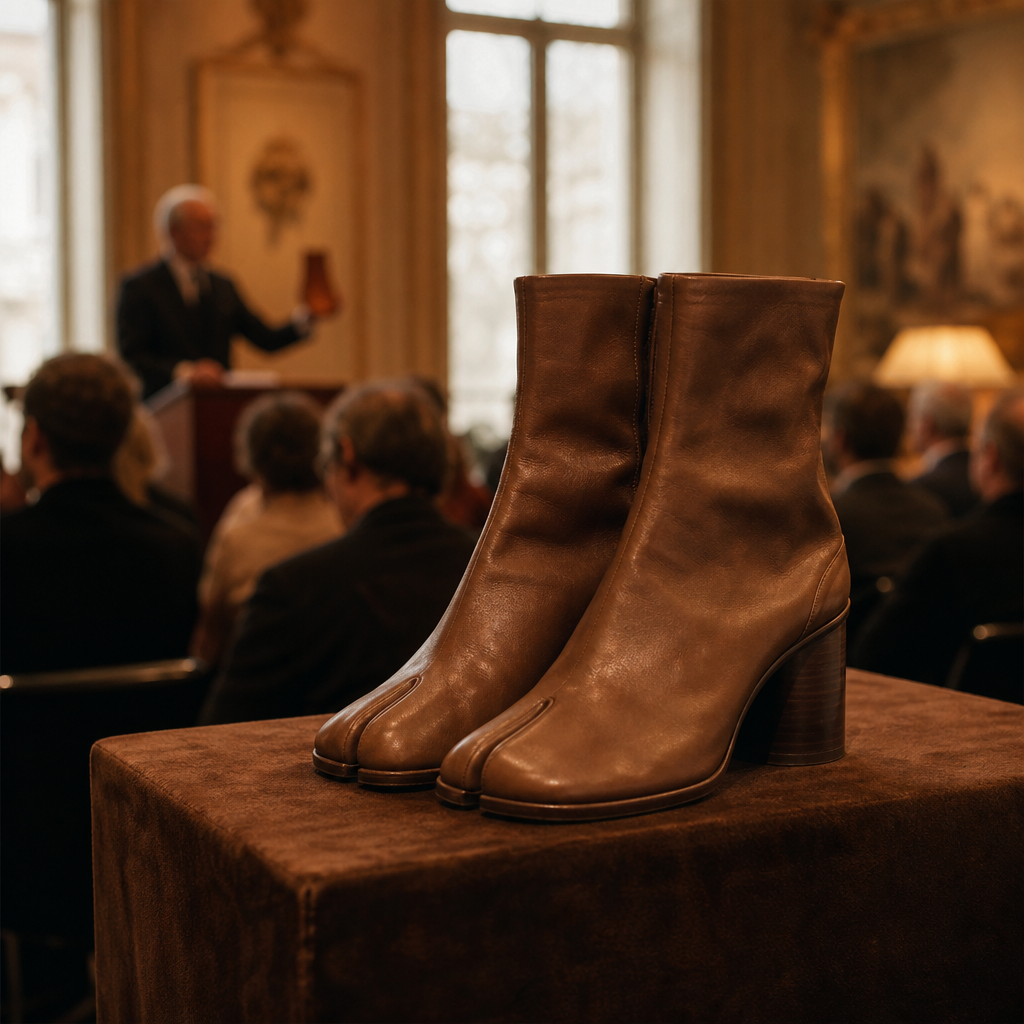
The Auction Room Buzz
The auction room in Paris was electric. Bidders from Tokyo, New York, and London competed via phone and paddle for lots that looked more like museum artifacts than clothing: a deconstructed blazer with raw seams, a tabi boot with its iconic split toe, and a series of enigmatic garments from Martin Margiela's early '90s collections. Prices soared past estimates, with a rare 1992 'doll's wardrobe' jacket fetching over €50,000. For vintage collectors, this wasn't just a sale—it was a pilgrimage.
Why Margiela? Why Now?
Martin Margiela, the Belgian designer who shunned the spotlight and built a cult around anonymity, has become the holy grail of avant-garde fashion collecting. His work from the 1990s—defined by deconstruction, raw edges, and intellectual play—resonates with a new generation of collectors who value authenticity and rebellion over logos. The recent auction, featuring pieces from a private archive, signals a surging demand for this rare, unlabeled fashion.
The Collector's Perspective
For seasoned vintage collectors, Margiela represents the pinnacle of conceptual design. "Each piece tells a story," says one anonymous collector who acquired a '90s tabi boot lot. "The imperfections are intentional—the frayed hems, the visible stitching. It's fashion that questions itself." Unlike the polished luxury of other houses, Margiela's work feels raw, almost unfinished, yet meticulously crafted. This paradox drives its value.
The Hunt for Rarity
The pieces in this auction were not from Margiela's later, more commercial lines but from his early, unlabeled period—when garments were tagged with plain white cloth and four white stitches. These items are incredibly scarce, as many were produced in limited quantities and often discarded by original owners who didn't understand their value. "Finding a pristine Margiela from 1991 is like discovering a lost painting," says a London-based dealer. "The condition and provenance are everything."
Investment or Obsession?
While some see Margiela as an investment—prices have appreciated 300% in five years—most collectors are driven by passion. "You don't buy Margiela to flip it," explains a Japanese collector who flew to Paris for the auction. "You buy it because it changes how you see fashion." The anonymous nature of the designer adds mystique; without a face or brand logo, the work speaks for itself.
The Future of Margiela Collecting
As the market heats up, experts predict more archives will surface, but the golden era of early Margiela is finite. "Each piece that comes to auction is a treasure," says the dealer. "Soon, they'll only exist in museums or private collections." For now, the hunt continues—and the prices keep rising.
Conclusion
The Margiela auction was a reminder that fashion's true value lies not in trends but in ideas. For collectors, owning a piece of this deconstructed history is a way to preserve the rebellious spirit of the '90s. As one bidder whispered after winning a lot: "He never wanted to be seen, but his work will never be forgotten."