The Thrill of the Hunt
It was a gray Saturday in the East Village, the kind of afternoon that smells like wet pavement and ambition. I had a list of thrift stores to hit, but no real expectations — that's the first rule. You can't hunt for treasure if you're hunting for treasure. You just have to let the racks speak.
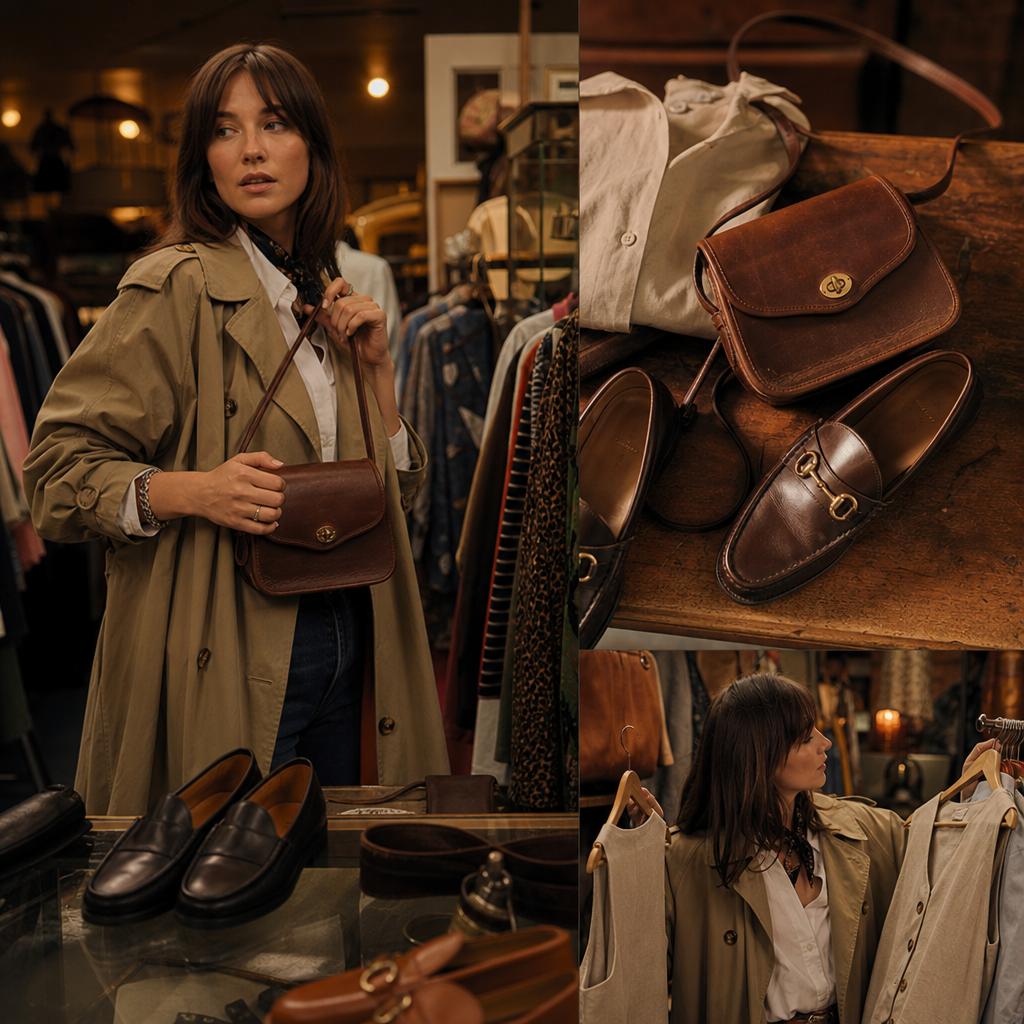
I was elbow-deep in a bin of scarves and belts at a cramped shop on St. Mark's Place when my fingers brushed something solid. Not the flimsy pleather of fast fashion, but thick, dense cowhide. I pulled it out: a vintage Coach bag, circa 1970s, in British Tan leather. The brass turnlock was tarnished but heavy. The leather had that deep, honeyed patina that only decades of wear can produce. My heart stopped.
The Bag: A 1970s Coach Willis
This was the Willis — a classic crossbody with a structured silhouette, originally designed for utility. The British Tan leather was supple, with a few light scuffs that told stories. The brass hardware, including the iconic turnlock and two front pockets, had that warm, aged glow. I flipped it over and found the creed stamp: "No. 9920" — a pre-1994 serial number that confirmed its authenticity. The leather was thick, the stitching even. This was a bag built to last decades, not seasons.
Why Vintage Coach Is Surging in Value
In the past few years, vintage Coach has become a holy grail for fashion insiders. Why? Because pre-1990s Coach was made in the USA with full-grain leather and solid brass hardware. The brand was founded in 1941, but it was designer Bonnie Cashin who defined its iconic aesthetic in the 1960s and '70s. Cashin introduced the turnlock closure, the use of glove-tanned leather, and the simple, functional shapes that are now revered. After the 1990s, Coach moved production overseas and shifted to logo-covered canvas and lighter leathers. The vintage pieces — especially the Willis, Court, and Dinky bags — are now seen as investment pieces. Prices on resale sites like The RealReal and Vestiaire Collective have doubled in the last five years. A pristine 1970s Willis can fetch $400–$800, and rare colors or limited editions go higher.
NYC's Best Thrift Zones for Vintage Designer Finds
New York is a treasure map for vintage hunters. Here are the zones I swear by:
- East Village: Shops like L Train Vintage, Monk Thrift, and the St. Mark's Place bodega-style thrifts are unpredictable but gold mines for leather goods. Go often, dig deep.
- Williamsburg, Brooklyn: The vintage scene here is curated but still yields surprises. Check out Awoke Vintage, Buffalo Exchange, and the Brooklyn Flea. You'll pay a bit more, but the curation is better.
- Upper East Side Consignment: For higher-end finds, hit consignment shops like Encore, Designer Revival, and the Salvation Army on East 79th Street. Upper East Side donors have impeccable taste — I've found Chanel tweed jackets and Hermès scarves there.
How to Authenticate Vintage Coach
Before you buy, know these five checkpoints:
- Creed Stamp: Look for a leather patch inside the bag with the Coach logo and a serial number. Pre-1994 bags have serial numbers with a dash, like "No. 9920." Post-1994 bags have alphanumeric codes.
- Hardware Weight: Vintage Coach uses solid brass, which is heavy and will not feel hollow or flimsy. The turnlock should have a satisfying weight and a smooth action.
- Leather Quality: The bag should be made of thick, full-grain leather that smells like leather, not plastic. The grain should be natural, not embossed.
- Stitching: Coach used single-needle stitching on vintage bags. The stitches are even and slightly angled. Fakes often have machine-perfect, straight stitches.
- Serial Number Format: For pre-1994 bags, the serial number is a four-digit code (e.g., 9920) or a number followed by a dash and a letter. If the code has letters in the middle (like "C9P-9920"), it's post-1994 and less desirable to collectors.
The Takeaway
I bought that Willis for $45. It now sits on my shelf, a time capsule of American craftsmanship and a reminder that the best finds come when you're not looking. Vintage Coach isn't just a trend — it's a piece of fashion history that you can carry on your shoulder. So grab your tote, hit the thrift, and dig deep. The hunt is half the joy.