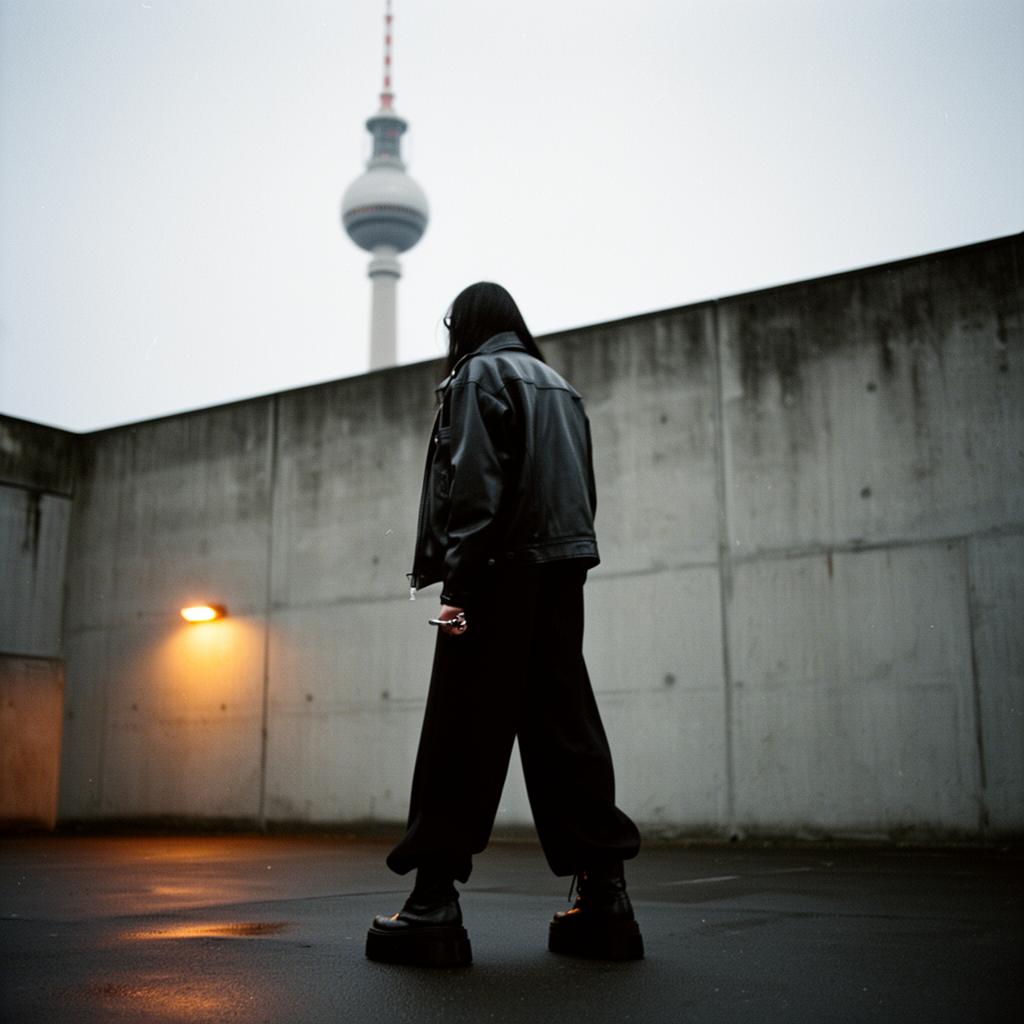
Boxhagener Platz Every Sunday
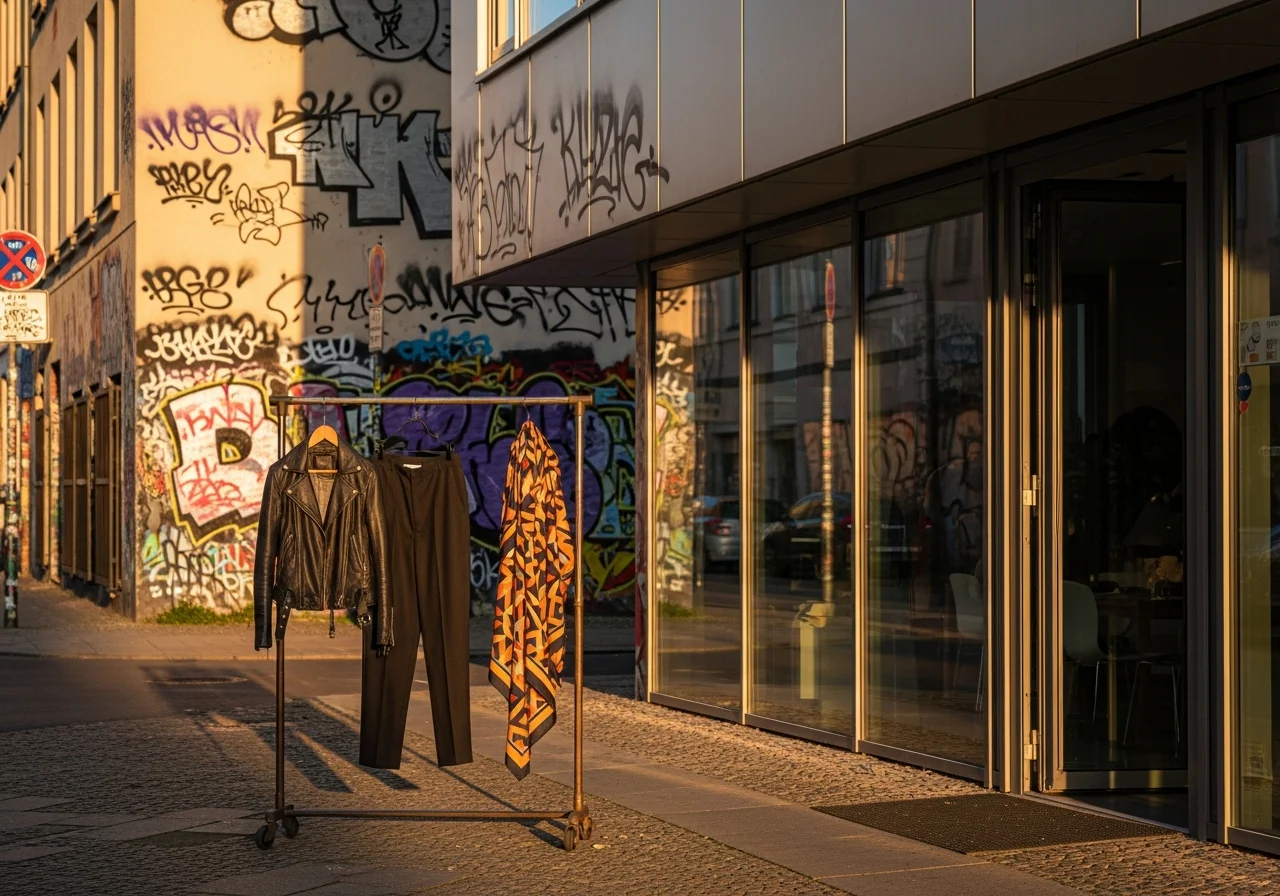
From 9am, Boxhagener Platz fills with locals picking through tables of East German workwear, 1990s club kid leather, and military surplus. The mood is unpretentious — dealers quote prices in euros, no haggling theater. Look for NVA parkas (Stasi-issue olive wool, still plentiful at €20–40) and GDR-era denim from Fortschritt: stiff, selvedge, cut boxy.
RAW-Flohmarkt Under the U-Bahn
Saturdays at the RAW Gelände, a former railway repair yard, attracts a younger crowd seeking 2000s techno-wear and sample sales from local designers. The concrete arches shelter stalls selling PVC minis, chunky Buffalo boots, and nylon rave vests. Check the bin of unbranded leather jackets — often 1980s West Berlin manufacture, heavy cowhide, brass zippers.
East Berlin Specifics
Friedrichshain’s flea market stock differs from Kreuzberg: less art deco, more utilitarian. You find GDR glassware (SuHL amber tumblers, €2 each), Moka-Espressos from the 1970s, and printed cotton dresses from VEB Moda. Sellers are older Berliners clearing attics — ask in German and they’ll tell you the garment’s original owner.
The Vibe
No curated displays. You dig through bins of wool scarves, sort through boxes of medals, inspect torn linings. Bring cash and a reusable bag. The ritual is constant: coffee from the stand, then circling back for that €5 leather doctor’s bag before someone else claims it.
Insider Tip
Arrive by 10am for best selection. The eastern edge of Boxhagener Platz yields more men’s militaria; near the playground, women’s separates from the 1970s. At RAW, the south end near Revaler Straße has the cheapest prices — vendors clear inventory fast.
Friedrichshain’s flea markets remain a working-class tradition, not a tourist set piece. That’s the point.