
 Sign in
✦ Culture · Berlin
The Band Tee, Worn Right
A band t-shirt is not a costume. It's a relic with a job: to make you look like someone with a story. Here's how to wear one without looking like you raided a prop closet.
 By Louis Trash·
The T-Shirt That Refuses to Die
A faded Black Sabbath logo on a washed-out cotton tee. The collar is stretched, the hem is frayed, and the print is cracked like a dry riverbed. This is the badge of a specific kind of cool. It says: I was there, or I wish I was. It says: I know what a Marshall stack sounds like at 2 a.m. It says: I don't need to explain myself.
And yet, the band tee has become a uniform for people who have never heard a single track from the band on their chest. That's fine. The band tee is a language, not a membership card. But to wear it well, you need to speak it fluently. You need to know why a 1972 Rolling Stones tongue tee feels different from a 1994 Nirvana smiley. You need to know how to pair it with a tailored blazer or a silk skirt so it doesn't look like a museum piece. And you need to know what to look for when you're digging through a rack of worn cotton, because not all band tees are created equal.
The Art of the Fade
The first rule of band tee styling: respect the age. A genuine vintage tee is not a crisp, boxy streetwear drop. It has been washed a hundred times. It has shrunk just enough to hug your shoulders. It has a soft, almost flannel-like hand. So don't ruin it by pairing it with stiff, new denim. Instead, let the tee lead.
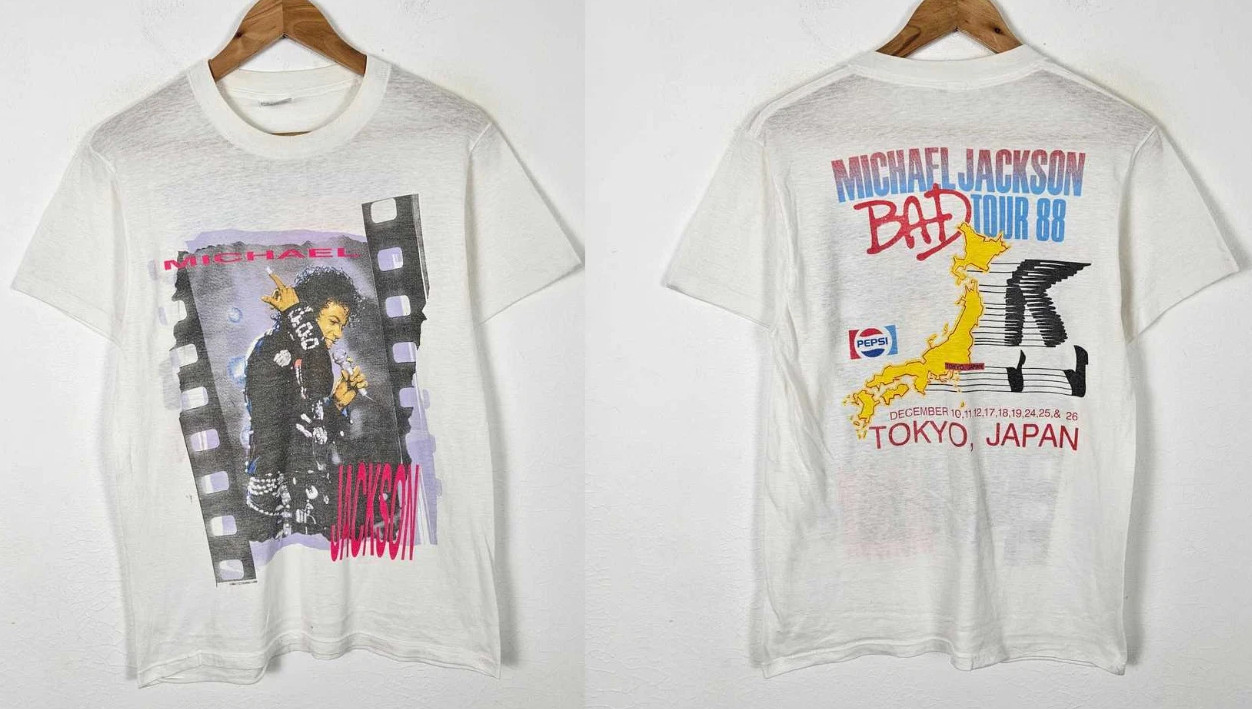
For a day look, tuck it into a pair of high-waisted, wide-leg trousers. Think 1974, not 1994. Choose a heavy wool or a drapey crepe. Add a slim leather belt. The contrast between the slouchy top and the structured bottom is the whole point. Finish with low-heeled ankle boots or a pair of minimalist white sneakers. You want to look like you're on your way to a studio, not a theme park.
For the evening, layer a vintage tee under a sharply tailored blazer. A single-breasted, notch lapel, in a dark charcoal or a deep navy. The tee's faded print becomes a subtle texture, not a loud statement. Wear it with black cigarette pants and loafers. Or, if you're braver, with a full, tea-length tulle skirt. That works because the tee grounds the fairy-tale bottom. It keeps you from looking like a costume.
Proportion matters. A large, boxy tee from the late '80s can be knotted at the side or cropped at the hem. But do it neatly, with a small safety pin or a quick hem stitch. A loose, unhemmed tee can be worn over a slip dress. That's a 1994 look, but it still holds up. The key is to avoid looking like you just rolled out of bed. A band tee is a statement, not a pajama top.
What to Hunt For
When you're shopping, you need to develop a sharp eye. The first thing: the label. A genuine vintage band tee will have a manufacturer's tag that tells a story. Look for labels like Screen Stars, Hanes, or Fruit of the Loom. But each era has its own tells. A Screen Stars tag with a thin, blue border often indicates a late '70s or early '80s tee. A tag that says "Made in USA" with a fabric content of 50% cotton, 50% polyester suggests a mid-'80s tee. The date is in the details.
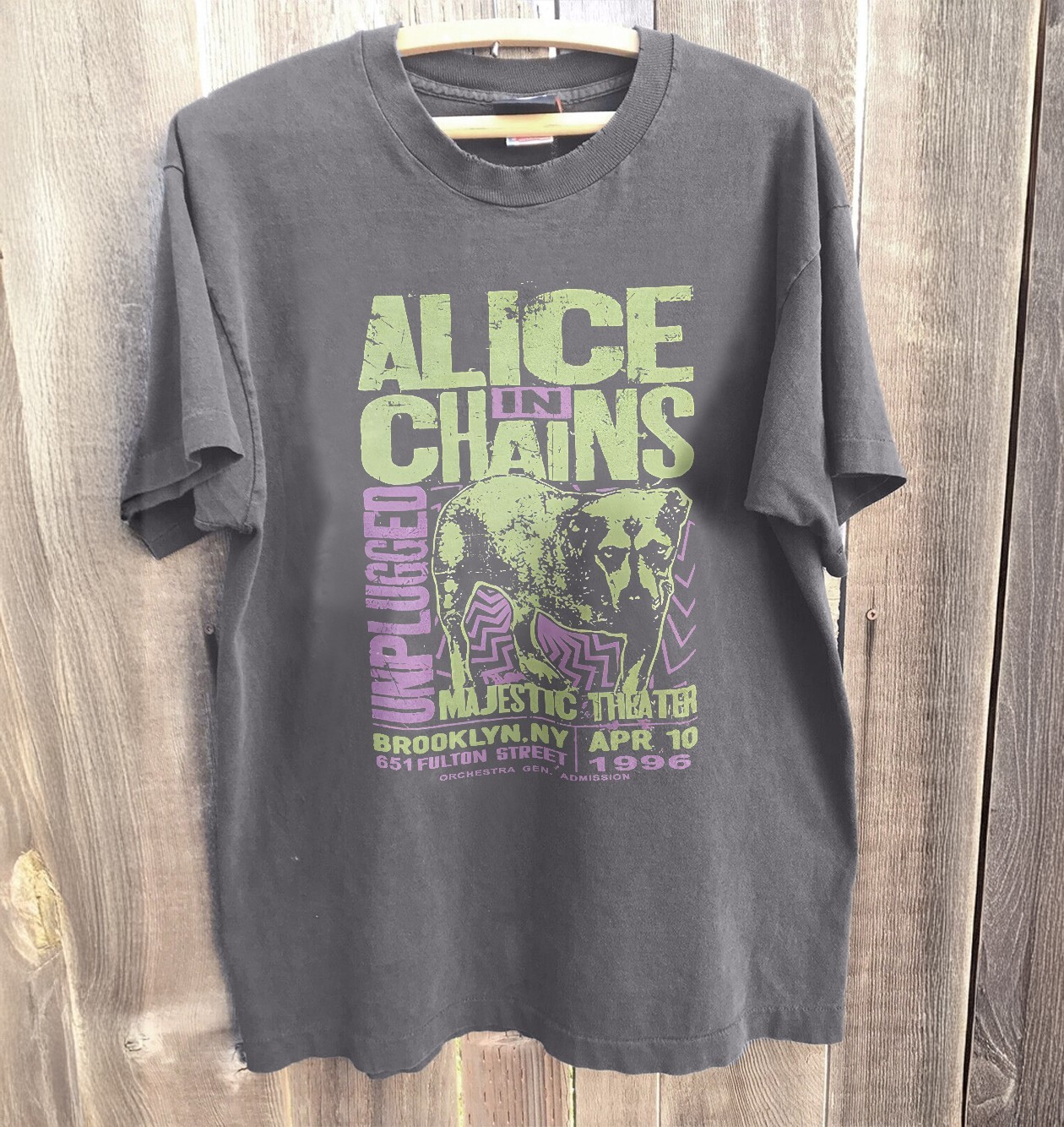
Check the print. Original band tees were often silk-screened with a limited number of colors. The print may be cracked or faded, but it should still be legible. Look for the copyright date on the bottom of the design, often in tiny letters. A 1977 tee might say "©1977 Led Zeppelin." That's a good sign. But beware of reprints. A genuine vintage tee will have a certain weight and a certain drape. It will not feel like a stiff, new cotton. It will have a softness that comes only from decades of washing.
The condition matters too. A small hole at the hem is acceptable. A collar that's stretched out of shape is fine. But avoid shirts with large stains, excessive fading that obscures the design, or fabric that's thinning to the point of transparency. You want to wear it, not preserve it. A tee with a few pulls in the fabric is a tee with character.
The Backstory
The band tee as we know it was born in the late 1960s. Before that, bands sold programs and posters. But in 1968, the Grateful Dead—always the innovators—started selling tees at their shows. They were simple, black and white, with a skeleton and a rose. They were made by a local San Francisco printer. By 1970, the trend had caught on. The Rolling Stones launched their infamous tongue logo in 1971, designed by John Pasche, a student at the Royal College of Art. Mick Jagger paid him £50 for the design. That logo ended up on millions of tees.

The 1970s were the golden age of the band tee. Designers like Milton Glaser, who created the iconic Bob Dylan silhouette in 1966, and Stanley Mouse, who designed for the Dead, turned concert merch into art. The tees were printed on American-made cotton, often in small batches. They were sold at concerts, at head shops, and through mail-order ads in the back of Rolling Stone. To wear one was to signal your allegiance to a tribe.
By the late '80s and early '90s, band tees had become a fashion statement. Designers like Katharine Hamnett used slogan tees for political statements. But the grunge movement of '91 took the band tee to a new level. Kurt Cobain wore a vintage tee under a cardigan, and the world followed. Suddenly, the faded, worn tee was the ultimate anti-fashion. It was a rejection of the glossy, expensive clothes of the '80s. It was about authenticity.
One of the most famous band tees in history was worn by Audrey Hepburn in the 1957 film Funny Face. She wore a black turtleneck, not a band tee. But that film set a precedent for the chic, intellectual look that a simple top can convey. The band tee is its descendant, but it carries its own history.
The Price of Memory
You'll pay more for a piece with a story. A genuine vintage band tee from a major tour—say, a 1972 Rolling Stones or a 1973 Led Zeppelin—can set you back around $200. That's a fair price for a piece of wearable history. But don't be fooled by a high price tag. The market is full of clever fakes. A well-worn, faded reprint can be made to look vintage with a few washes and some sandpaper. So always check the labels and the print quality.
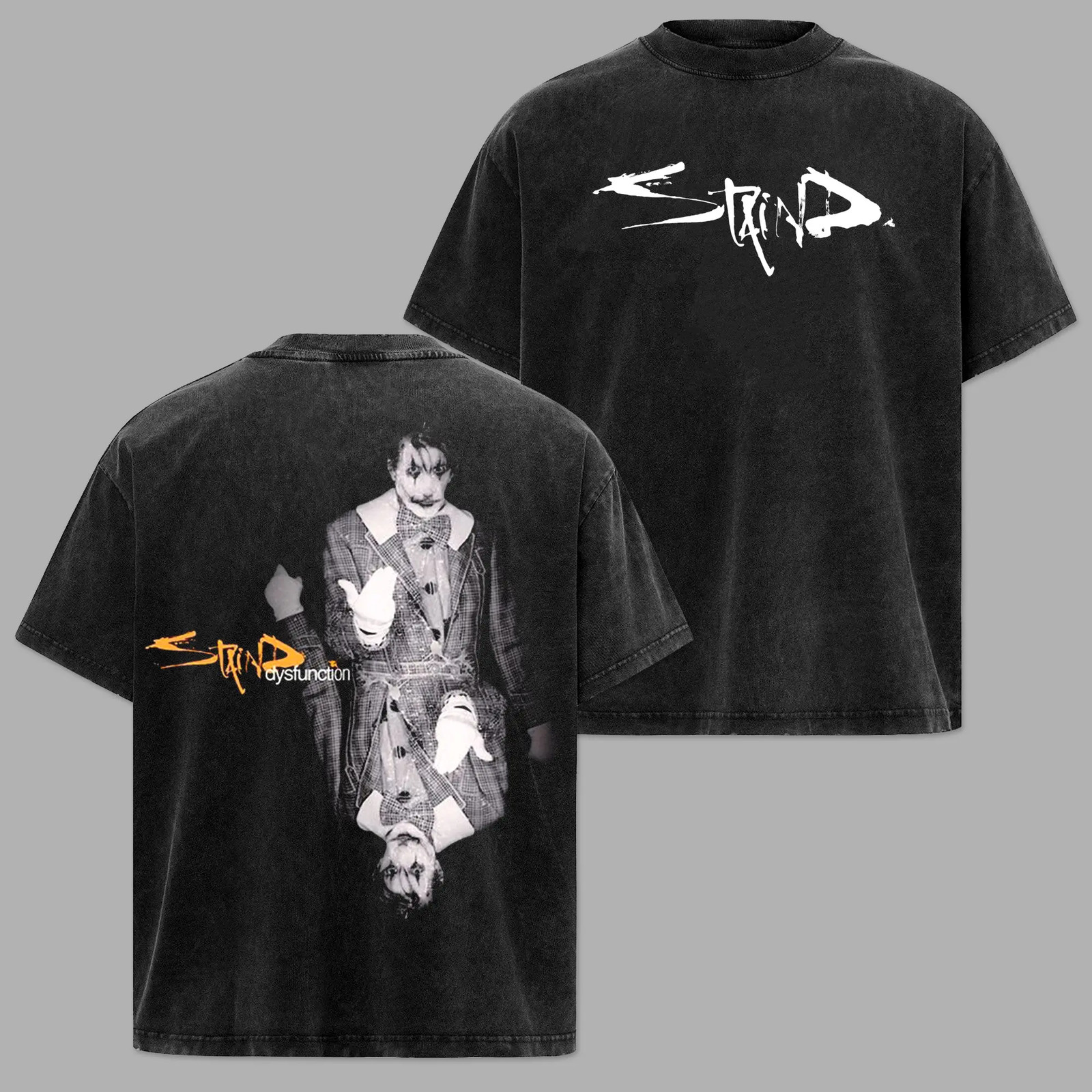
I once found a 1978 Sex Pistols tee at a flea market in London. It was crumpled in a box, and the seller didn't know what he had. He asked for £5. I gave him £20 because I'm not a monster. That tee has a hole under the left arm, and the print is barely there. But I wear it with a tailored suit, and it's the best conversation starter I own.
The Last Word
A vintage band tee is not a costume. It's a relic with a job. It can make you look like you have a past, even if you don't. It can make a tailored suit feel less stiff, a silk skirt less precious. It can say more about you than a designer label ever will.

Foto: Atlantic Ambience · Pexels
So when you find that perfect tee, treat it right. Wash it inside out, in cold water, and hang it to dry. Don't iron the print. And when you wear it, wear it with confidence. Because the best accessory is the story you tell.
And if someone asks you about the band, be honest. Say, "I love the shirt." That's enough.
The names
The designers behind the look
The minds behind this story — each with a piece currently on the market.
Børge Mogensen
Denmark · 1940s
The Spanish chair — honest, functional furniture for everyday life.
The Spanish chair — honest, functional furniture for everyday life.
Calvin Klein
USA · 1960s
Minimalism & the 90s slip
Minimalism & the 90s slip
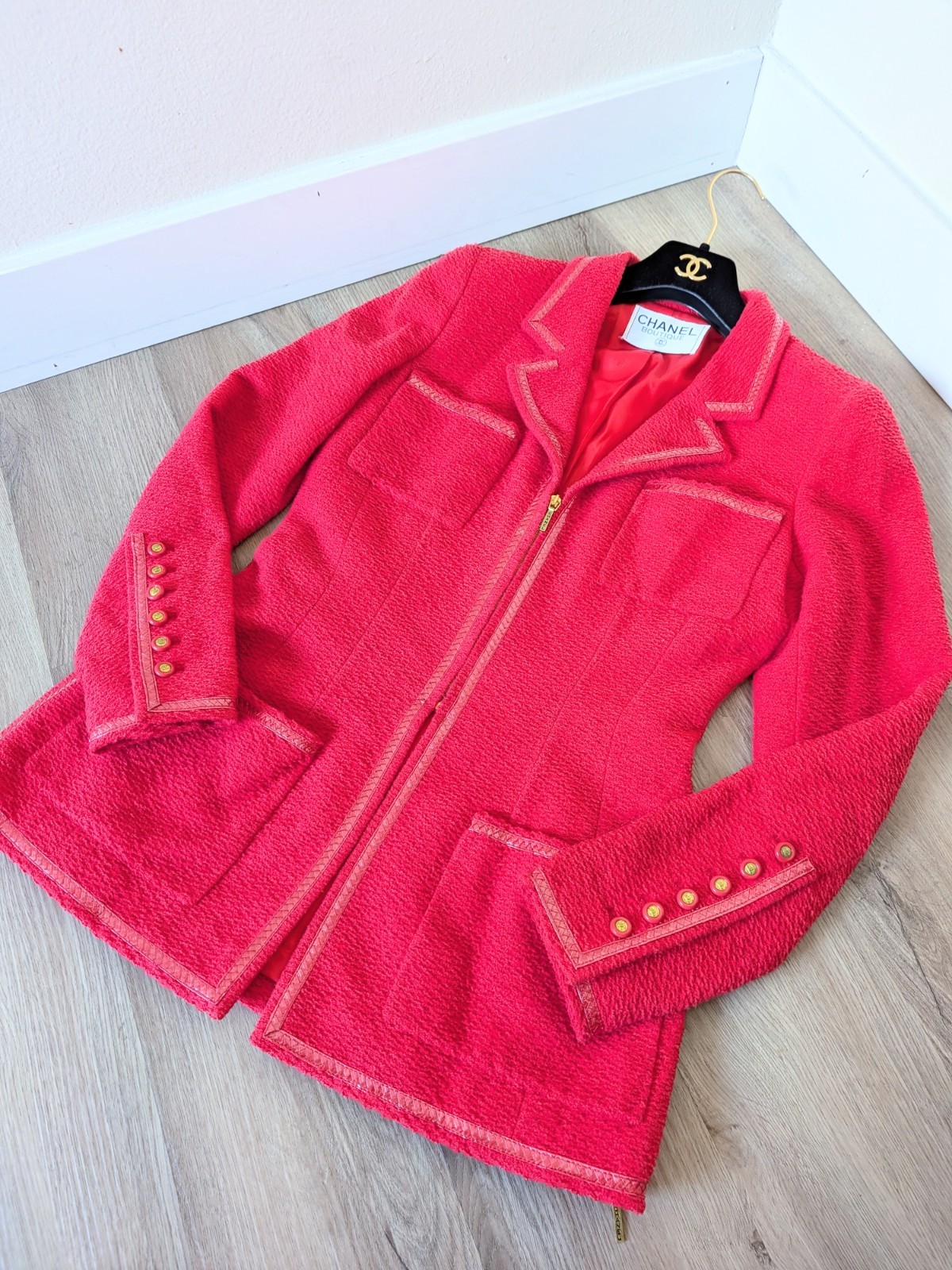
Chanel
France · 1910s
The little black dress & the 2.55
The little black dress & the 2.55
Top piece
View →
Diesel
Italy · 1970s
Washed denim & streetwear
Washed denim & streetwear
Continue the edit
Further stories from the same world
Three more walks through the same vintage universe.

The Silk Scarf That Wears You Back
A vintage Gucci silk scarf is a tool for living. Here is how to tie one on, what to look for, and why the best ones still cost less than a decent dinner.
Read the story →The Art of Wearing Vintage Band T-Shirts
A guide to styling, sourcing, and understanding vintage band tees, for the wearer who values history and fit over hype.
Read the story →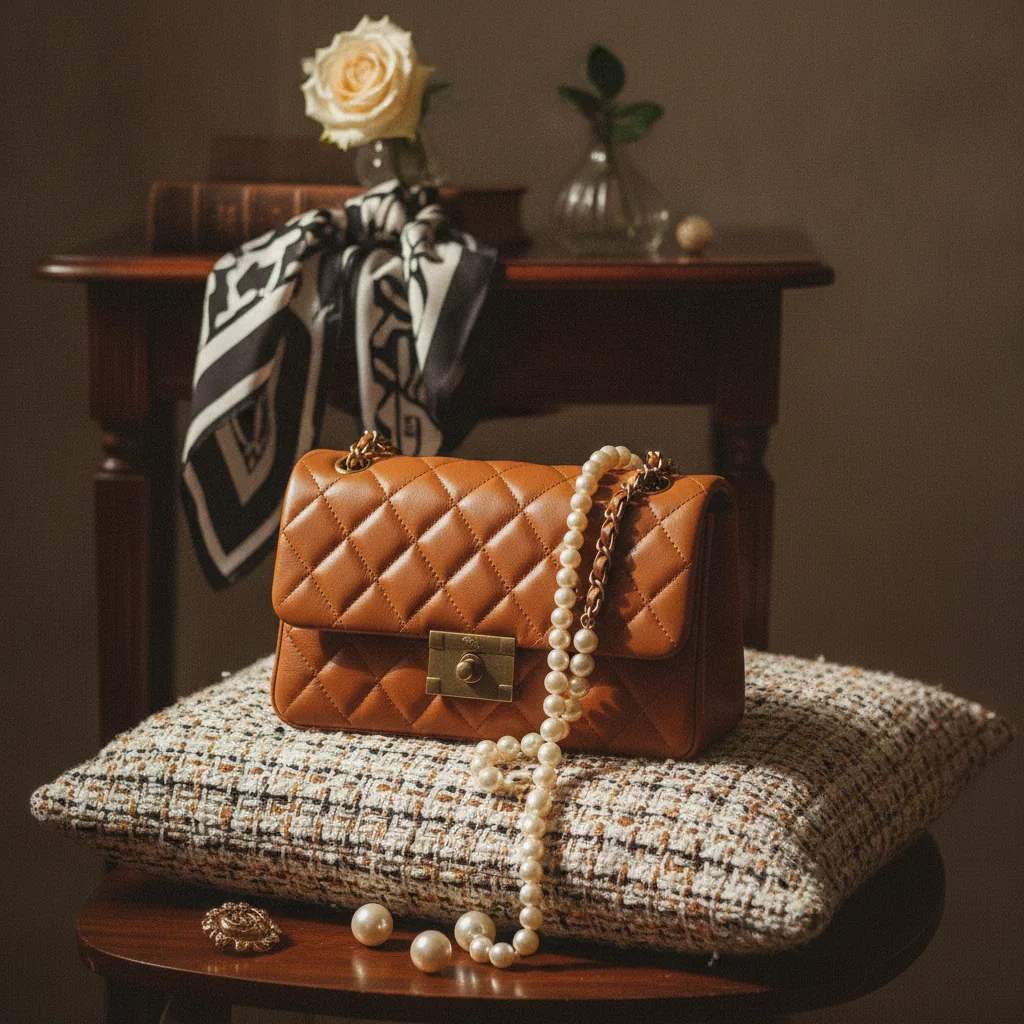
The Vintage Designer Bag You'll Actually Wear
A Fendi Baguette from 1999, a Versace Medusa clutch from 1992, a Chanel quilted lambskin from 1985. These are clothes, not investments. Here is how to wear them without looking like a museum docent, and what to check before you hand over your card.
Read the story →